










The Waste Law, approved by Congress in 2022, was welcomed as a valuable initiative. But its high degree of non-compliance and insufficient application or regulatory development exasperate citizen organizations. “We can keep approving laws and adapting on paper to European obligations, but a law that is not developed, not controlled, and not enforced does not reduce a single piece of waste.” This is stated in a manifesto signed by more than 130 social, consumer, environmental, and social economy organizations grouped in the Zero Waste Alliance and the #LeydeResiduosYa platform.
Read more Apocalyptic alarm in AI
1) Fresh bulk fruit and vegetables remain in contact with plastics
Apples, grapes, mangoes, lettuces, cucumbers, and many other whole bulk fruits and vegetables continue to be wrapped in plastic in supermarkets and large stores, despite the law establishing that these practices must be eliminated to prevent waste and curb the proliferation of plastics in direct contact with food. The requirement had an exception for fruits and vegetables packaged in lots of 1.5 kilograms or more, as well as those that could suffer risk of deterioration or loss, for which a Ministry of Agriculture order was expected to prepare the list of exceptions. But that list has not arrived and has accumulated years of delay without the Ministry of Agriculture specifying the exceptions.
2) The return of beverage containers to stores must wait
A glaring delay is the implementation of the deposit, return, and refund system for beverage containers to stores, intended to increase the insufficient flows of beverage containers from the yellow container. Its launch was scheduled for November 22, 2026. Just over two months before that date, the authorization procedure for the four entities aspiring to manage the system remains paralyzed in the Community of Madrid with no known schedule for resolution.
“The deposit system clearly demonstrates the problem: we have an approved obligation, a date set by law, and a necessary measure to meet European objectives, but its application may fail because the administrative procedure remains blocked. It is useless to establish new obligations if administrations then allow deadlines to be missed without consequences, especially when it comes to truly prioritizing waste reduction and reuse,” these entities say.
3) Phthalates and bisphenol A in packaging, banned but without clues
The Waste Law approved the ban on plasticizers phthalates and bisphenol in food packaging to protect public health. These substances are considered endocrine disruptors and have been linked to numerous diseases. Social entities emphasize that clear control, monitoring, and verification procedures are lacking to ensure that marketed products comply with these prohibitions.

4) At festivals, plastic cups that are not returnable
Ensuring the regulation of reusable cups is another pending task. For example, practices detected at large cultural and musical events where the cup is only theoretically reusable; in practice, it is not. “These containers are charged for, but the deposit is not returned, and thus, the containers become another single-use waste. There are no systems to recover these cups and then reuse them,” says Carlos Arribas.
5) Without the ability to buy reusable containers
The Government has already said it is abandoning the application of another provision included in the regulation: the obligation for large commercial establishments to offer the public (from January 1, 2025) various options, references, or brands of reusable containers. “The rule has not been repealed but the Government has said it is abandoning this requirement and plans to remove it from the new packaging regulation,” says Arribas. Citizens – adds this expert – are deprived of their right to consume reusable or refillable beverage containers. The option remains only in the distribution channel of hotels, restaurants, and bars (horeca).
Read more Anthropic X-rays the risks of its AI and believes it can still monitor it
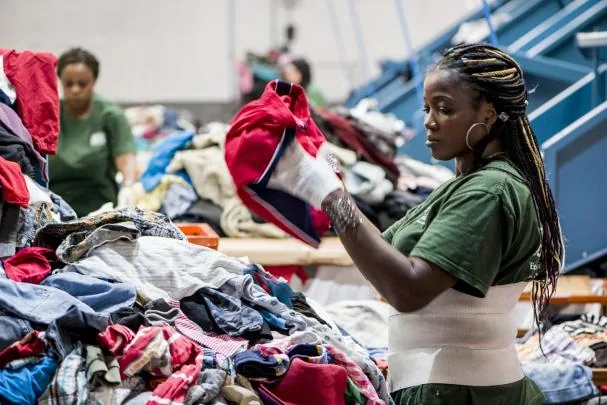
6) Municipalities obliged to collect textiles and without producer funding
Since 2025, municipalities are obliged by the Waste Law to guarantee separate collection of clothing and textile material, but they find that specific funding to organize and sustain the entire system does not yet exist. The paradox is that the municipal obligation is already in force, while the extended producer responsibility system – the textile sector must assume the costs of managing this waste – is not yet fully operational. The approval of the royal decree that must develop the new operating scheme and its legal framework (including collection, transport, and many other issues, such as the relationship with entities and companies already involved in this activity) is still pending. Meanwhile, an operational and financial vacuum is created in which the cost temporarily falls on social economy operators currently sustaining the service, instead of being covered by the textile industry. European regulations set April 17, 2028, as the maximum deadline for certain extended producer responsibility obligations for textiles to be operational, although Spain could approve and deploy its own royal decree earlier.
Also read
7) Food waste
The law to combat food waste is being diluted due to lack of prevention and inspection policies to prevent food from spoiling and to organize donation systems so that food can be reused. The image of leftover food thrown on the street in front of the store itself while the neediest sneak to collect it is unacceptable. The different actors in the chain still lack clear tools and mechanisms to make many of the planned actions effective. A real quantification of food waste at the different links in the chain is missing to design effective public policies. Inspection systems also need to be strengthened, responsibilities of the different administrations clearly defined, and an effective and fair sanctioning regime developed.
Also read
8) Environmental taxation
The Zero Waste Alliance and #LeydeResiduosYA propose reviewing environmental taxation so that economic signals truly favor the most beneficial options. The entities propose that the revenue from the plastic tax be earmarked and allocated to prevention and reuse policies (currently paid by manufacturers and indiscriminately passed on to consumers). They also consider that taxation should not only penalize non-recycled plastic but all single-use plastics, regardless of their recycled content, to prevent the tax from consolidating the throwaway model.
In parallel, they propose a VAT reduction for second-hand and repaired products so they can compete economically with new items. They call for banning the destruction of new devices that have been returned, as well as avoiding the destruction of complete computer equipment for data protection reasons when alternatives exist that guarantee secure data erasure without unnecessarily turning the entire device into waste.
9) “Circularity cannot be toxic”
Civic entities demand effective monitoring mechanisms and measures to prevent recycling or preparation for reuse of products from containing persistent organic pollutants (POPs). “Circularity cannot serve to keep toxic substances circulating indefinitely among materials and products. Before closing material cycles, we must ensure those cycles are safe for people and the environment,” they warn.
10) A law that is paper if controls and inspections are missing
Four years after the approval of the 2022 Waste Law, the main problem is no longer only non-compliance with the law, “but also the lack of development of many already approved measures, control and monitoring mechanisms, and a sanctioning regime capable of acting against non-compliance,” these platforms indicate. The organizations consider it essential to bridge the gap between the legal obligations established on paper and the real capacity of administrations to verify and enforce compliance. Therefore, they call for strengthening inspection, monitoring, and traceability systems, clearly defining the responsibilities of the different administrations, and developing an effective, proportionate, and deterrent sanctioning regime.
Read more Vorágine