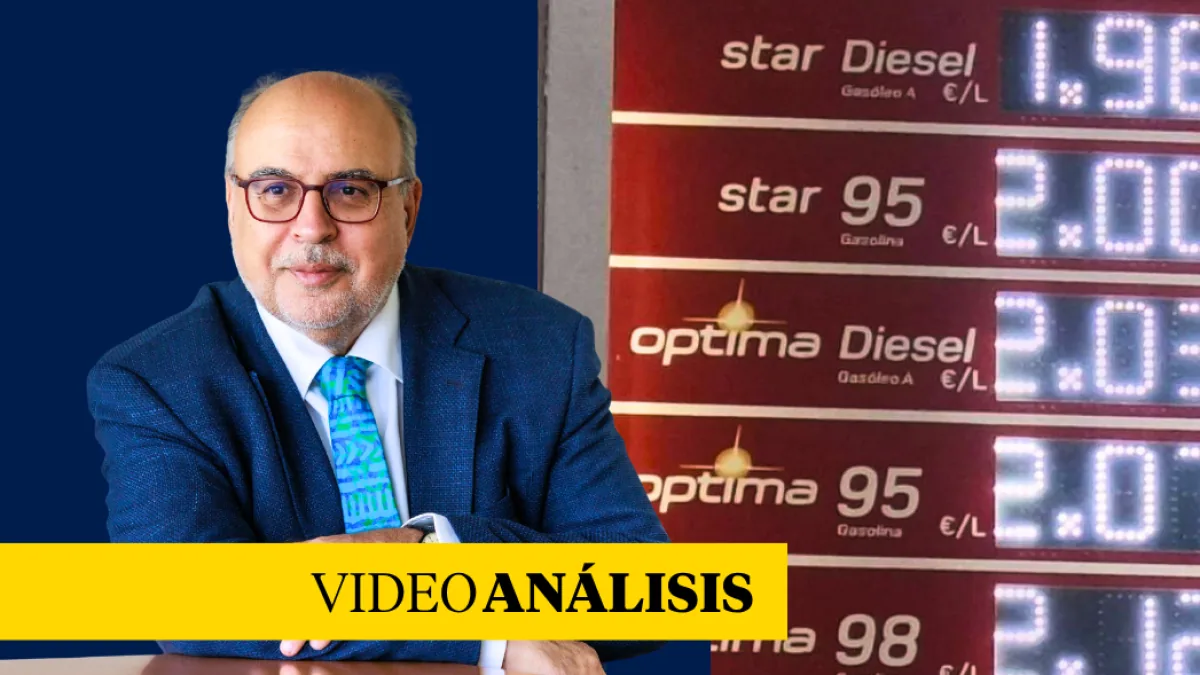
The president of Òmnium Cultural, Xavier Antich, has made an urgent call to the Catalanist, sovereigntist, and independence forces to articulate a “broad, majority, and radically democratic civic front” capable of facing the threat of the far right and rebuilding social hegemony in Catalonia within the framework of the entity’s political event held this noon on the occasion of the Diada.
Read more The independence movement is rallying to come back stronger in 2027
Before hundreds of attendees, Antich warned about the dangers of polarization, catastrophism, and populism spreading globally and which, he emphasized, are already present in Catalan politics in the form of PP, Vox, and Aliança Catalana. During his speech, the president of Òmnium quoted the Austrian philosopher Karl Popper to frame the current ideological dilemma: “You are either in favor of the open society or in favor of its enemies,” Antich pointed out, stressing that “deep down, this is the great debate of our time, still today.”

The president of Òmnium, who delivered his speech flanked by the entire board of the entity, was very harsh against the far-right parties “whether Catalan or Spanish.” “It is a threat to national construction and to the liberation of the country,” he warned, then placing Aliança Catalana, Vox, and the PP in the same basket as options that promote or embrace these discourses: “This is not the only option on the global geopolitical map and, of course, not one we can take as a model even though some like the PP, Vox, or Aliança Catalana defend it. Let them be!”
Harshness against the far right
In his plea, the Òmnium leader called the leaders and promoters of these discourses “apprentice sorcerers” before whom the independence movement “must not be intimidated.” Antich strongly criticized their proposals, calling them “abominable,” “toxic,” “irresponsible,” and “reprehensible.”
He thus defined as a “politically irresponsible, morally reprehensible, and socially toxic attitude” the act of “turning base passions — rage, anger, or hatred — into a guide for action and criminalizing a part of Catalan society.” He considered “abominable” the political options that try to “expel migrants, subject them to permanent suspicion, ignore the diversity of origins, erode institutions, and contribute to social fracture.” Likewise, he warned that far-right populism leads to the proliferation of “monsters” that grow “in the absence of a collective project.”
Tradition of hospitality in Catalanism
In contrast to these hate discourses, Antich defended the tradition of hospitality of historical Catalanism by evoking the words of philologist and politician Jordi Carbonell on the historic Day of Sant Boi de Llobregat in 1976: “Newcomers are welcome, they are new Catalans,” he declared.
He also warned against attempts to use diversity to divide society: “We are committed to the national construction of a country that wants to count on all Catalans, regardless of their origin, religion, or family language. And we will fight against anyone who wants to divide us and break our common future.”
“Reweaving the country’s central lane”
Antich called to “reweave the country’s central lane” through frank dialogue and the articulation of majorities: “It is time to meet again. It is time to sit down, talk, and act, not to resist, but to build and move forward. We need, again, a great agreement of all democratic Catalanism, sovereigntism, and the independent country,” he insisted.
The president of the entity emphasized that “it is not enough to react against” nor to fall into a “resistentialism that diminishes us.” Therefore, he urged the parties to overcome discouragement and close a new great agreement that includes the country’s major strategic lines, as was done, in his view, in the great unitary meetings of 2010, 2013, 2016, and 2022.
Read more The spirit of Sant Boi
He also insisted that the resolution of the political conflict between Catalonia and the Spanish State inevitably passes through democracy: “The full application of amnesty will resolve repression, but only self-determination will allow the political conflict still ongoing to be resolved democratically,” he warned.
A message of hope
To close his speech, Antich appealed to the “discipline of hope” and recalled words from jurist and activist Magda Oranich, present at the event as a board member, about perseverance in the fight for civil and national rights: “The night is very long, but it always becomes day;” With this reflection, Antich reinforced Òmnium Cultural’s commitment to put all its territorial strength at the service of social cohesion, language, and Catalonia’s sovereignty.
Manifesto for the language
As a prelude to Antich’s intervention, representatives of entities from across the Catalan linguistic domain read a unitary manifesto to denounce the serious threats weighing on the language. The text warns about the judicial and political offensive suffered by Catalan, the decline of its social use among young people, and the marginalization of the language in the digital, audiovisual, and public service spheres: “Language is not a barrier, as they want us to believe, but a tool for rapprochement. Always maintaining the people is not disrespect, but an invitation,” it states.
The reading of the manifesto, carried out by representative voices from all the Catalan countries — from Northern Catalonia to l’Alguer, passing through the Valencian Country, the Balearic Islands, and the Principality — calls for firm actions and a collective commitment to guarantee the future of Catalan as a central axis of cohesion and hospitality.

The manifesto also sets immediate priorities in the educational and judicial fields, calling to “rush to the streets” of Catalonia when the Constitutional Court’s ruling on the Catalan school model is announced. It also reaffirms support for families demanding full schooling in Catalan in Catalonia, Valencia, and the Islands.
Despite the forcefulness of the warnings, the document rejects any identity retreat or the proliferation of hate discourses, urging to face the future from diversity and the sum of wills to gain public space and linguistic rights.
The Òmnium event had a large attendance of political, institutional, and civil society leaders. Among the audience was a prominent delegation of sovereigntist and independence parties. From Esquerra Republicana were present former president of the Generalitat Pere Aragonès, former minister Ester Capella, and former president of the Parliament Carme Forcadell. From Junts per Catalunya attended its secretary general, Jordi Turull, along with Mònica Sales, Albert Batet, and Eduard Pujol.
Read more Several dead and injured as a bus with 48 Dutch tourists overturns in the Swiss Alps