“Your country will make you pay. Set a date and we’ll see each other at the polls,” Alberto Núñez Feijóo urged Pedro Sánchez. “Of course there will be elections in 2027. We will see each other at the polls and we will beat you again,” the Prime Minister replied to the opposition leader. Both have thus agreed to settle their political clash in the next general elections, amid the confrontation over the Ceuta migration crisis, while the ERC spokesperson, Gabriel Rufián, has urged the head of the Executive to react if he intends to renew his mandate after the next elections. “The numbers don’t add up for me,” he warned. On the contrary, he alerted that the Popular Party and the far-right Vox could add up to an overwhelming absolute majority of up to 210 deputies, according to some polls, in the next legislature.
Read more U.S. destroys five Iranian tankers in response to attack on warship
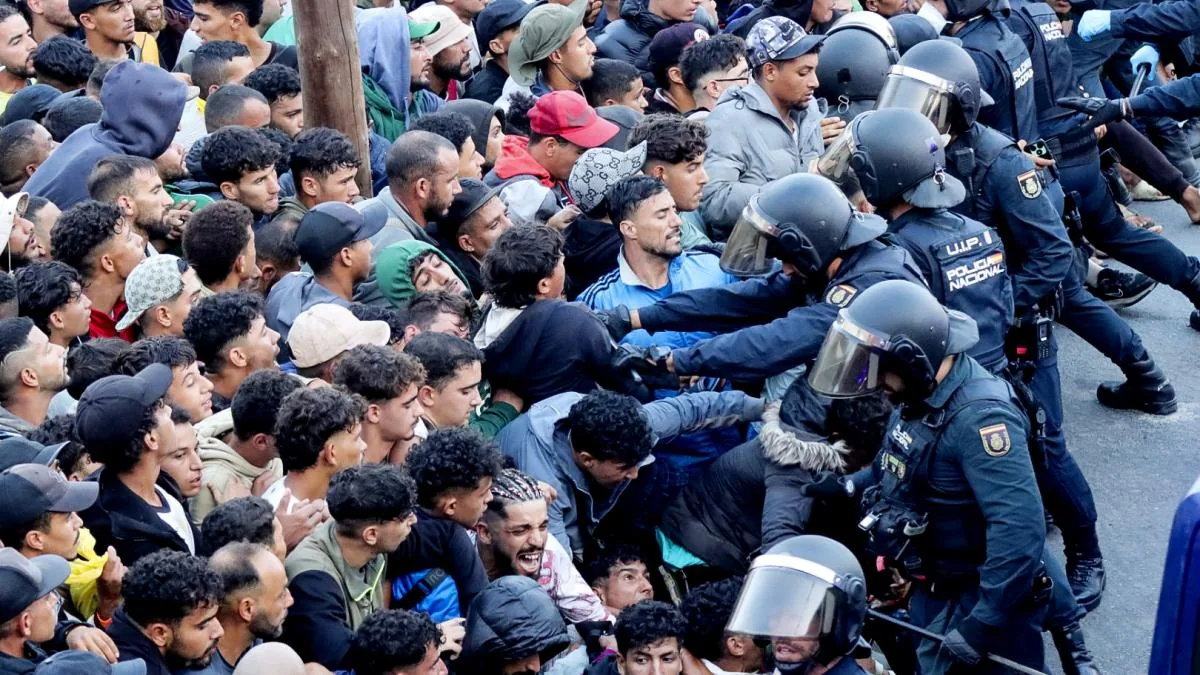
It already happened with the coronavirus pandemic, with the Valencia storm, and now with the Ceuta migration crisis: every disaster in Spain fuels the harsh war without quarter waged by the Government and the PP that prevents any political consensus and common effort to overcome the drama with unity, while Vox continues to gain electoral benefits. And this was staged again this Wednesday, in the first parliamentary duel of the new session between Sánchez and Feijóo, after the August break, in the first government control session held in Congress following the massive entry of immigrants to Ceuta on July 30 and 31.
Feijóo insisted on denouncing a “consented or promoted aggression by Morocco” in the autonomous city. And he warned that “the political and procedural future of the Prime Minister depends on the silence of too many people.” Among others, he emphasized, the authorities of Rabat. “If Morocco sings, you go,” he stressed.
Sánchez avoided any reference to the Ceuta crisis during his face-to-face with Feijóo, but afterwards the Vox leader, Santiago Abascal, again accused the head of the Executive of having “betrayed the Spanish,” by turning Spain into a “Moroccan protectorate.” “Are you being blackmailed by Morocco?” he asked Sánchez. And Abascal himself answered: “All of Spain knows that yes.”
Read more Back to school without safety for everyone in Ceuta
“They call me a dog, but I have no master,” Sánchez replies to the Vox leader, whom he sees as submissive to the interests of Trump and Netanyahu
“This Government does not accept blackmail from any party, any country, or any power,” Sánchez replied. And he accused Abascal of being submissive to the interests of Washington and Tel Aviv, of Donald Trump and Benjamin Netanyahu. “They call me a dog. And I may be a dog, but I have no master,” the head of the Executive concluded, amid applause from the socialist bench.
Rufián insisted, for his part, on warning Sánchez of a political cycle change, given the upcoming absolute majority of the PP and Vox predicted by all voting intention polls: “My mouth hurts from saying it.” “And what do we do? Deny it, pretend it’s not happening?” he urged the Prime Minister to react.
Sánchez said he shared the ERC spokesperson’s diagnosis about the threat of a right-wing wave and pointed out that one might think “it is normal in a democracy to have alternation,” after more than eight years of progressive government. “But the incorporation of Vox into that governability equation and the far-right shift of the PP does not question that alternation, but opens the doors to a regression in rights, freedoms, and the territorial diversity of our country, that is evident,” he argued. “What we have to do is continue advancing, making the path by walking,” the head of the Executive prescribed.
Read more The Government limits mobility this Wednesday and closes schools in five regions due to rain