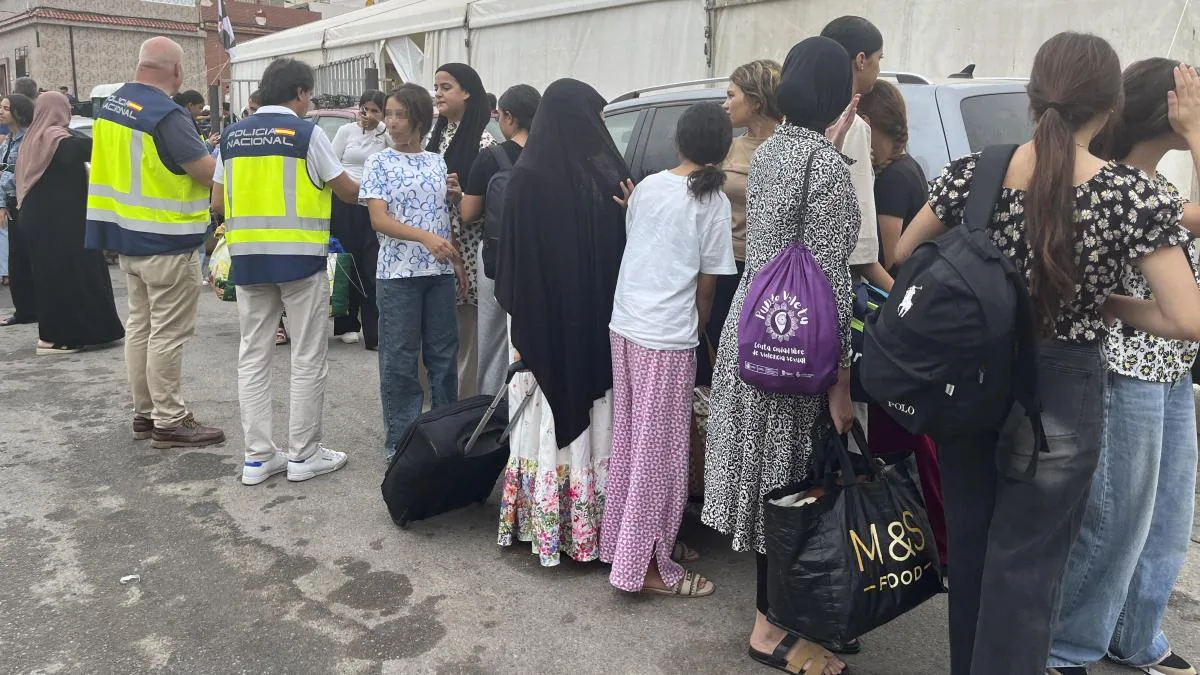
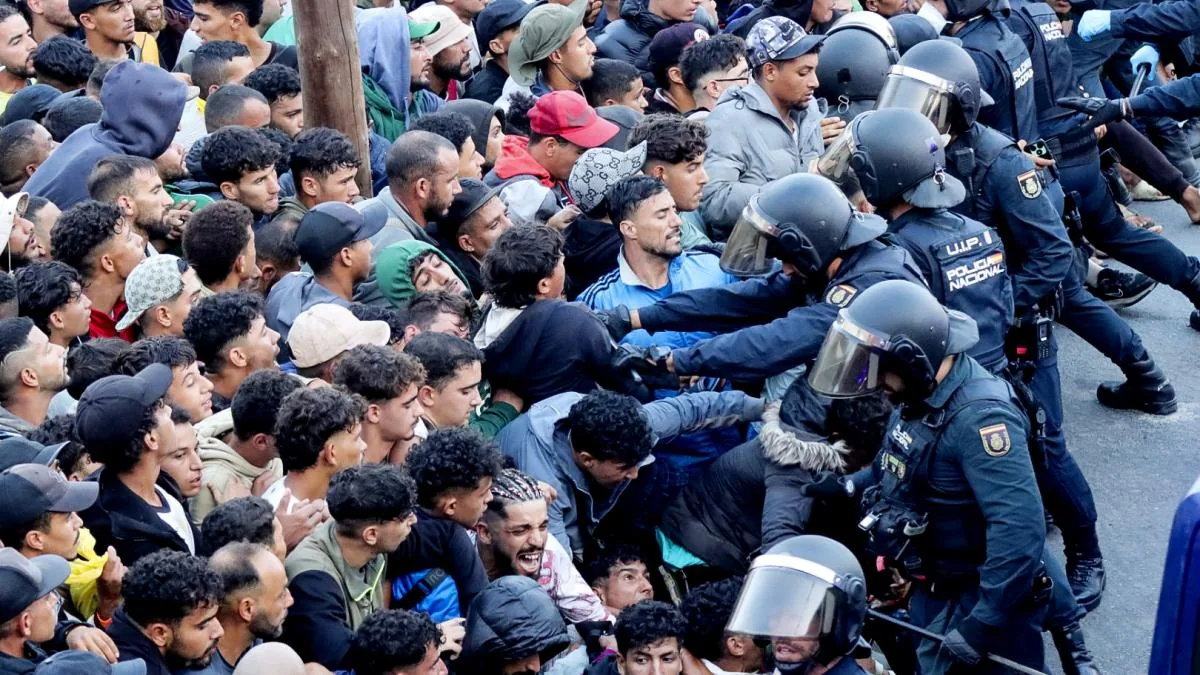
The president of Ceuta, Juan Jesús Vivas, traveled to Brussels this Tuesday to try to Europeanize the migration crisis and demand a “stronger” response from the European Union towards Morocco, which, in his opinion, “maintains a constant policy of harassment” towards the city.
“We believe that there must be a strong response from Europe, telling Morocco that if we want a fruitful and beneficial cooperation policy, we must start from respect. And respect begins with respecting our borders, respecting our territorial integrity,” he emphasized at a press conference at the start of his day at the European institutions.
A “specific status”
The popular party proposes a special category that addresses State aid or greater European funding
So far, the EU has opted, like the Spanish Government, for caution in its relations with Morocco, with whom it maintains an Association Agreement. “We are the neighbors, we are the most interested in the relations between the EU and Morocco being fruitful and collaborative, but the reality cannot be denied, Morocco has twice used border control and authorized migratory pressure to put the territorial integrity of Ceuta, Spain, and Europe in check,” he stated from the European Parliament, alongside the president of the Committee on Civil Liberties, Justice and Home Affairs of the Eurochamber, Javier Zarzalejos.
Vivas will hold meetings in the community capital with the president of the European Parliament, Roberta Metsola, with the European Commissioner for the Mediterranean, Dubravka Suica, and with the Interior Commissioner, Magnus Brunner, in order to gain more support for the autonomous city to recover normality after the massive crossing at the end of July. Among other things, he demands a permanent presence of Frontex to prevent similar future episodes and also proposes the creation of a “specific status” for Ceuta and Melilla as the only land borders the EU shares in Africa.
Also read
This “specific status” would not necessarily have to be the status of an outermost region of the EU, like the Canary Islands, or entry into the customs union, two ideas proposed by the Prime Minister, Pedro Sánchez, last week. “It could be an option, but a specific status is needed that helps in matters such as State aid, that products from Ceuta enter the EU without restrictions, or greater funding from European structural funds” that take into account “the threats” they face. Among other things, it could also regulate greater financial support from the European Union to build stronger infrastructure to protect the border and also relieve reception centers, another of the demands of the Ceuta president.
In Brussels, however, he will not coincide with the Minister of Foreign Affairs, José Manuel Albares, who is in Brussels this Tuesday and Wednesday to present some of Sánchez’s demands to some commissioners, such as granting a permanent seat for Ceuta and Melilla in the European Committee of the Regions and their possible inclusion in the Customs Union. Albares must also meet with Brunner and with the head of the community diplomacy, Kaja Kallas.
Brussels will send a “technical mission” to Ceuta this week to “analyze the situation”
Officials from the European Commission (EC) will travel at the end of this week to the Spanish autonomous city of Ceuta and will also hold technical-level meetings in Madrid while community services continue to “advance as a priority” in the request for financial support made by the Spanish Government two weeks ago.
The objective of these meetings, which were requested by the Spanish authorities, is to “analyze the situation on the ground,” according to the community spokesperson for Interior and Migration, Markus Lammert, at the institution’s daily press conference this Tuesday.
Read more Spain has an educational problem (and it’s not just because of the mobile)