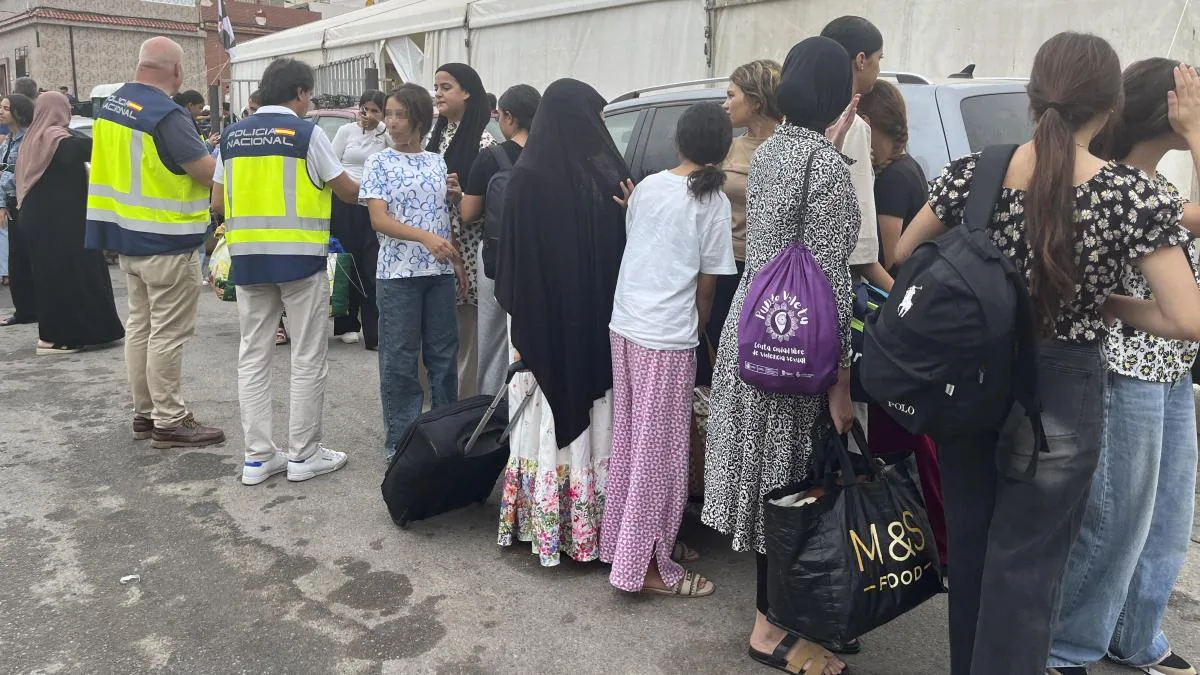
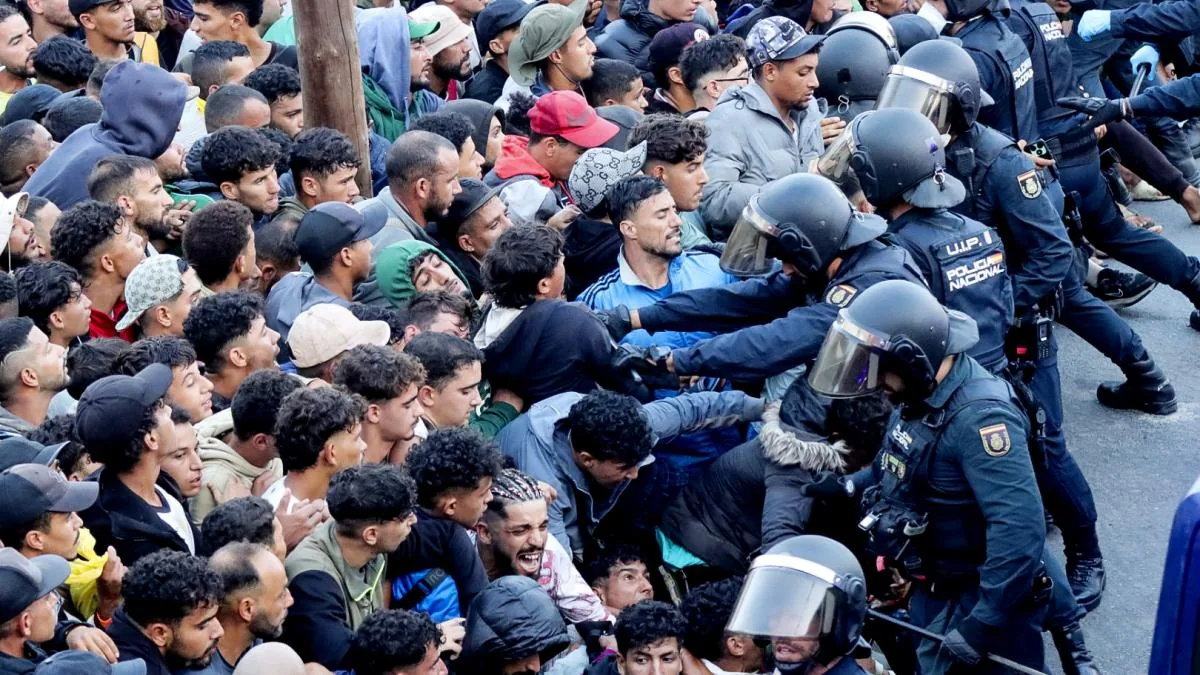
The worst scenario a ruler can face in a crisis is that citizens do not believe their version of an event that has impacted public opinion, without even considering whether those explanations are true or not. This is what is happening to Pedro Sánchez. A majority of the population, including his voters and the entire parliamentary spectrum, do not support his cautious stance towards Morocco regarding the Ceuta influx. The delay in reacting and the consequent poor management of the situation on the ground is now compounded by a greater danger for the president: a dissonance between what he claims and what public opinion holds. And the public has ruled that it was Morocco.
Read more Eurofighters take off
For various reasons, both the right and the left point to the neighboring country’s responsibility in the assault. The president insists there is no evidence to directly accuse it. The consequences of such an accusation would not be minor. It would imply a conflict that would jeopardize migration and counter-terrorism cooperation with a country that is the hinge with a continent struck by poverty and with a jihadist powder keg like the Sahel. It would mean undoing all the progress made since 2022, when Sánchez dismissed Minister Arancha González Laya at Rabat’s request for allowing a sick Polisario Front leader with COVID to be treated in Spain. Since then, Foreign Minister José Manuel Albares has woven a close relationship with his Moroccan counterpart, and that trust is decisive in the cautious position the president maintains.
The Moroccan authorities conveyed initial confusion to the government on the day of the assault and, in response to Spanish complaints, reproached Spain for demanding that the country repress its own population to spare the Spanish security forces that ordeal. But they quickly offered full availability to accept the immediate returns of migrants. It is true that there are factors to think that what happened does not favor the Moroccan regime either, which allowed more than 140 of its compatriots to die fleeing the country on the same day King Mohammed VI gave a speech about Morocco’s modernization. Moreover, in other assaults, Rabat has neither hidden its authorship nor its intentions. Sánchez maintains that no intelligence service has evidence to point to Rabat. The police report revealed this week points to indications based on social media videos but admits a “diffuse authorship.” On Tuesday, other reports will be declassified that, according to the government, will confirm the difficulty of conclusively pointing to Morocco. But the precedents go in the opposite direction. It is hard to believe for the majority that the security forces and secret services of that country did not detect a movement of 80,000 people in the hours or days prior.
Morocco is in a delicate moment of political transition, with internal power struggles
The opacity of an authoritarian regime prevents knowing what happened. Morocco is in a moment of transition. Not only because it holds legislative elections this month, but because the monarch is introducing his son as heir, which causes power disputes in areas dependent on the Alaouite royal house, which are none other than the foreign policy and security services. Meanwhile, hundreds of young people who participated in recent protests demanding fewer stadiums for the World Cup and more resources for health and education remain imprisoned.

It should also not be forgotten that, for the Alaouite regime, sovereignty aspirations are always present, with the previous king, the current one, and probably the successor. These demands focus on the shift regarding the status of Western Sahara, the cases of Ceuta and Melilla, and the delimitation of maritime borders with the Canary Islands, a claim reactivated in 2020 with legal initiatives in the Moroccan Parliament. Regarding the Sahara issue, Rabat achieved Spain’s important shift in favor of autonomy, which favored a similar change by the EU. In October, the UN must decide whether to extend the mission for a self-determination referendum in that area. Regarding the claim over Ceuta and Melilla, it is hard to believe that Mohammed VI did not know that one of his ministers would take advantage of an event with the king’s presence to claim those enclaves a few days ago.
To complete the context, another fact: Morocco is currently negotiating with Brussels the conditions of its migration cooperation. A conflict between Spain and that country would have effects in the EU. Brussels has been cautious in its response, despite the letter from 22 countries criticizing Sánchez’s migration policy.
The PP is going all out: a clash with Morocco and, again, the judicial route
It remains to be seen how long the president can maintain a position that has left him isolated. The PP besieges him on two fronts: on one hand, it has detected a current of opinion that does not believe the president’s version and accuses Morocco. Alberto Núñez Feijóo exploits this path by suggesting that Rabat blackmails Sánchez with hacked information from his phone using the Israeli Pegasus program. This is speculation, and one might ask if in that case Mossad would not have that data, yet Moncloa has not avoided a clash with Netanyahu. But the most relevant aspect of the PP’s position is the accusation against Morocco. Feijóo could risk a lot with that gesture if he reaches Moncloa. The regime does not forget. The other front is judicial. A case will be opened in the National Court to see if there are indications that the government was warned of the influx and did not act with due diligence.
In this crisis, many ships are being burned by both the government and the opposition: the credibility of the police forces and secret services, as well as the essential cooperation with a neighboring country with which territorial disputes persist and to which Spain offers an image of disunity and political weakness.
Read more The patience of Ceuta governs Spain