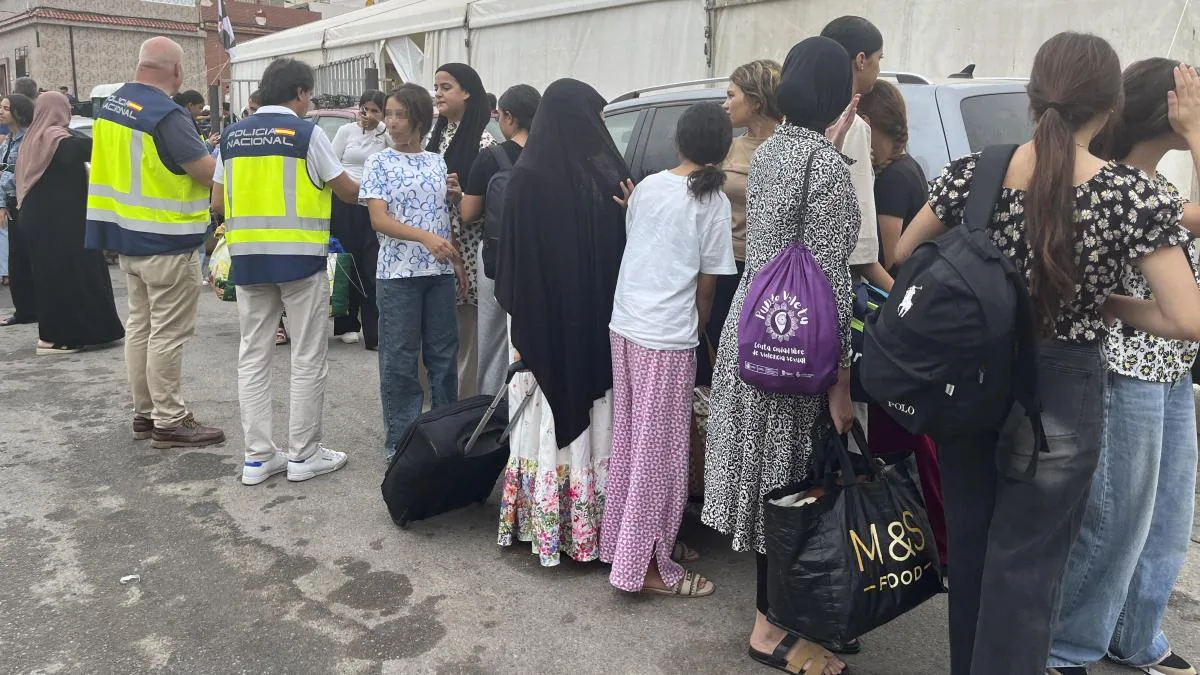
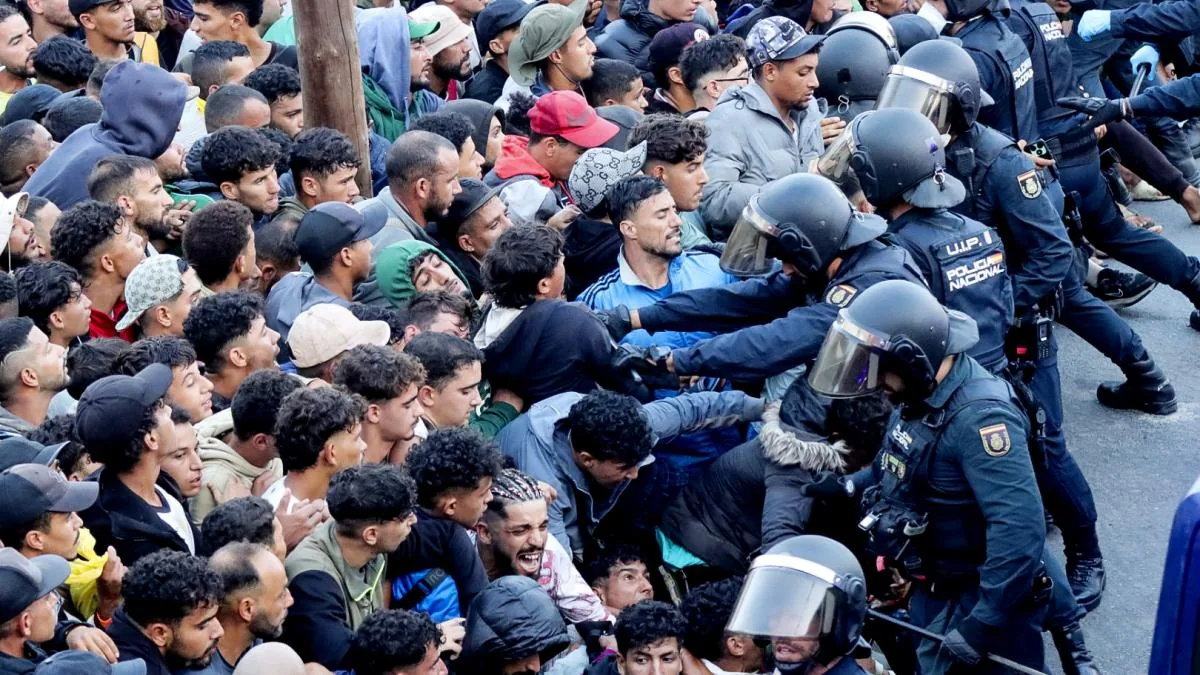
Almost thirty days ago, when the Ceuta crisis broke out, the president of the autonomous city, Juan Jesús Vivas, requested the appointment of a single authority capable of managing all aspects of the humanitarian drama that he already sensed was going to ravage his city. Vivas’s request fell on deaf ears, among other reasons because the Government expected that the more than 70,000 people who crossed the El Tarajal fence would return the way they came. Minister Marlaska or Minister Albares limited themselves to not angering the Moroccan neighbor in the belief that if he kept the door open and Ceuta gave nothing to those who had entered without permission, the crisis would end. But it was not so.
Read more António Costa, evacuated to a shelter in Kyiv after alarms sounded for a possible Russian attack
Almost a month later and on his first visit to Ceuta, the first vice president and Minister of Economy, Carlos Cuerpo, announced yesterday two decisions that the Government will adopt today. First, at the meeting of the National Security Council convened by President Pedro Sánchez early in the morning and to which the Ceuta president has been invited, the declaration of a situation of National Security interest in Ceuta and the creation of a single command to manage the migratory crisis in the autonomous city, headed by the Minister of Territorial Policy, Ángel Víctor Torres, will be decreed. Subsequently, the Council of Ministers will formalize these decisions.
Torres will be in charge of coordinating the crisis together with a committee of experts that will include, among others, President Vivas, the Government delegate, the CNI, and the ministries involved in resolving the crisis.

Pedro Sánchez convenes the National Security Council today with the presence of the Ceuta president
According to the National Security law, this single command declaration must be approved by royal decree and include the definition of the crisis, the affected geographical area, the duration, the appointment of the functional authority, and the definition of its powers. Therefore, today the scope of the management that the Government will assume will be known given the limited powers of Ceuta itself.
In addition, it is noteworthy that the aforementioned law and the National Security Strategy approved in 2021 give special relevance to the autonomous cities “because of their geographical location” and “because of the specificity of their Spanish and European border.”
Torres will have to face numerous problems. The most important is to find a place in Ceuta to house those who resist returning to Morocco. There are thousands, and most have no shelter or, in many cases, assured food. In addition to the discomfort of the inhabitants of Ceuta, in recent days various sources have detected cases of infectious diseases, which is why it is more urgent to have places to supervise this population and control their health status.
The Minister of Territorial Policy will assume command with a committee of experts including Vivas and the CNI
The other decision announced yesterday by Cuerpo was the offer of an extraordinary expansion of the Comprehensive Socioeconomic Development Plan of Ceuta, designed in 2022, with the aim of addressing the economic consequences that the crisis is causing in the commercial and tourist fabric.
In his appearance from Ceuta, Cuerpo explained that in the “third phase” of the response to the crisis, focused on resolving the “repatriation” of immigrants, “adequately accommodating minors” and solving asylum demands, the “importance that it does not take a toll on the city” is included. “We are aware that the citizens of Ceuta are having a hard time” and “they must feel the State,” he acknowledged.
Without giving figures or deadlines, the minister explained that it will be necessary to establish contacts with local social and economic agents to make an approximation of the needs, but assured that the Government has monitored the consequences through the evolution of economic activity and consumption, and recognized that merchants and the tourism sector have noticed the consequences.
Cuerpo announces, without giving figures, an expansion of the current economic development plan of the city
The 2022 economic development plan of Ceuta is endowed with 354 million euros, of which, according to Cuerpo, more than 180 million have been mobilized to date. This plan seeks to transform the local economy, improve digital and transport connectivity, and strengthen key areas such as education, health, commerce, and employment after previous crises. With its expansion, the Government wants to “respond to an exceptional situation.”
Read more A severe hailstorm leaves streets flooded in Tarragona