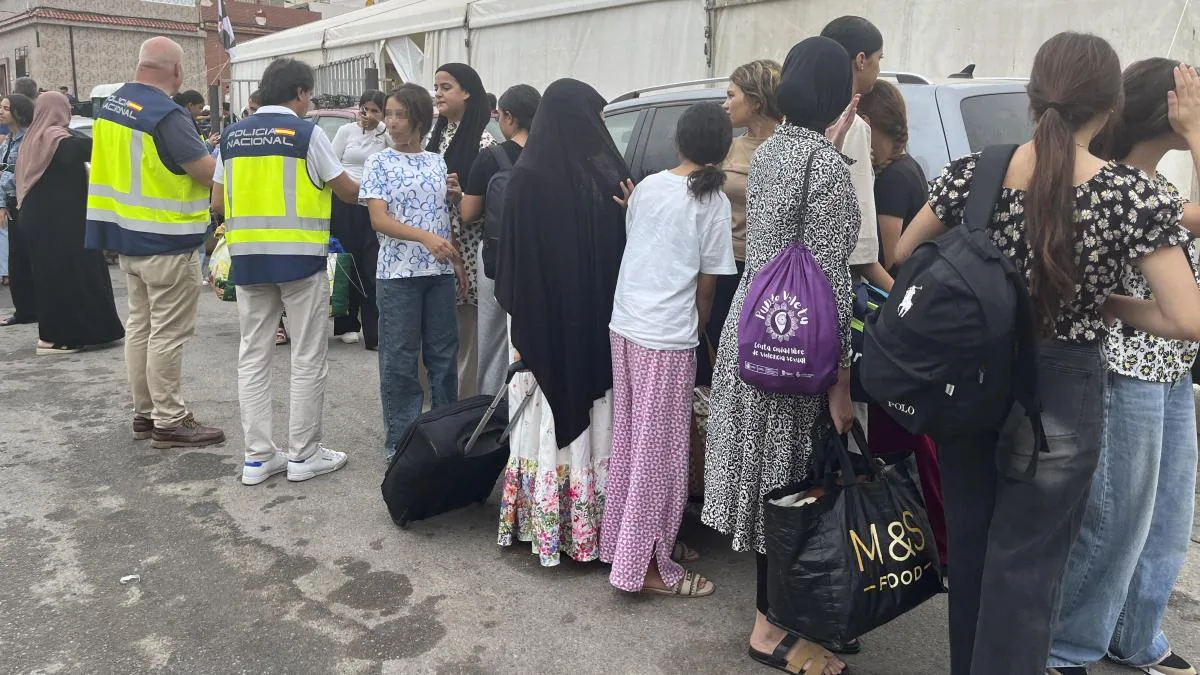
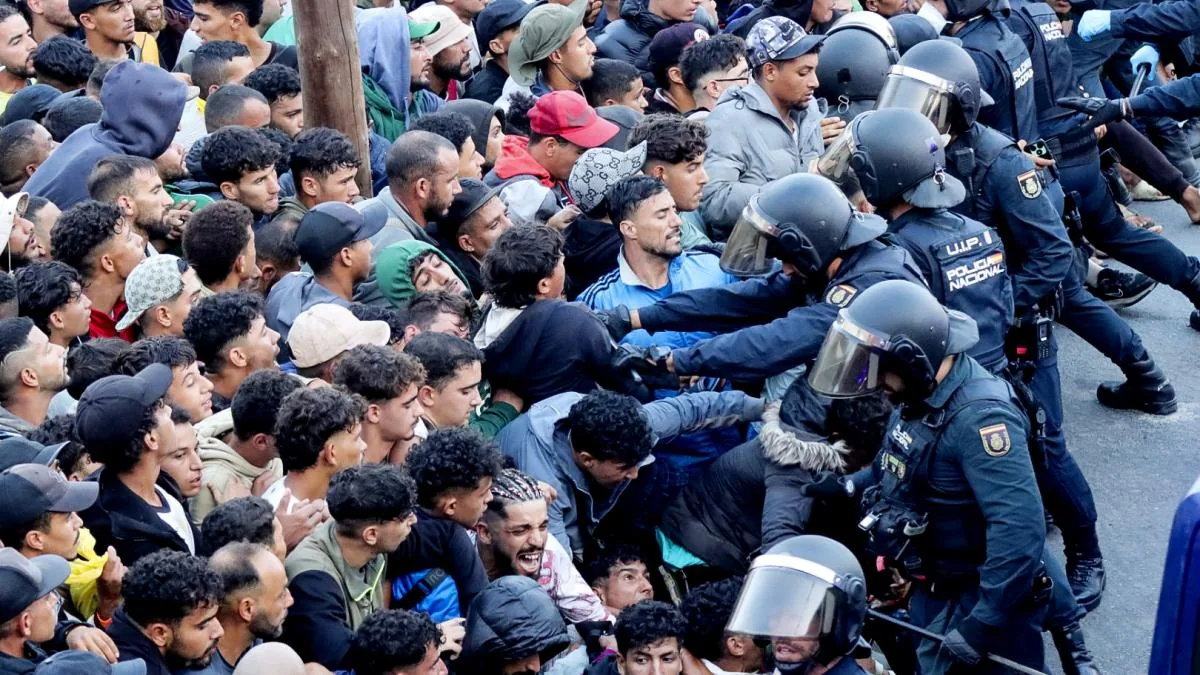
Once again, unaccompanied migrant minors are at the center of the political fray. The number of children and adolescents roaming the streets of Ceuta since they crossed the border in a rush is unknown. But two figures can help gauge the emergency: the autonomous city, responsible for their care, has accommodated 1,376 minors in various spaces, but the National Police have registered 2,168 youngsters. That is, almost 800 migrants under 18 have been identified but are not yet under the care services umbrella. And to these should be added those who have not even been registered by the Security Forces and Corps. While hundreds of minors wander alone through the streets in unhealthy conditions and urgently need three meals a day, the Government and the opposition have intensified the debate over their future – return or reception – as if it were a collective decision.
Read more Feijóo wants to expel those who entered Ceuta and rejects Rabat’s blackmail
Yesterday, twenty days after the massive entry, the transfer to centers for girls and adolescents who continue to be overcrowded in improvised camps by residents of peripheral neighborhoods like El Príncipe began to speed up. Six new centers, which would be the first phase of a shock plan to get the girls off the streets. The second phase, according to the Ministry of Youth and Childhood, would involve transferring these girls, about 500 though the number may vary during the process, to the Peninsula without the need to transfer guardianship to the autonomous communities. Their care and reception would be handed over to child protection organizations. However, the Government of Ceuta, through its president, Juan Vivas, denied being aware of the plan. “It has not even been proposed to us,” he said at the press conference alongside the opposition leader, Alberto Núñez Feijóo, who advocated that “all, all, all” immigrants return to their country.
Unicef warns that “each passing day is another day of violation of children’s rights in Ceuta”
The Popular Party, in line with Vivas, relies on statements from the European Commission spokesperson on Internal Affairs, Markus Lammert, who supported the “rapid” return of immigrants, including unaccompanied minors. He also welcomed the Spanish Government’s intention that “no one” remaining in Ceuta be transferred to the Peninsula. Until yesterday, when Minister Sira Rego, from Sumar’s quota in the Government, put forward her idea of relocating 500 girls to other autonomous communities. Génova bases itself on the new European regulation – tougher, in line with the anti-immigration wave on EU soil – which stipulates as a condition for these returns that the member country must ensure the minor is handed over to their family or a reception center in the return state. And Morocco, it says, is willing to do so. But, is the wish of two countries above the minor’s will? Article 35 of the Immigration Law establishes that returns of minors cannot be mass, immediate, or automatic. To begin with, the law requires requesting a report on the minor’s family circumstances from the diplomatic representation of the country of origin before opening the repatriation procedure. Once opened, the minor must be heard, after other reports from protection services and the Public Prosecutor’s Office. Then, the administration will decide – return or stay – “according to the principle of the best interest of the minor.”
According to police sources, it would not be unreasonable for the number of minors to finally reach 3,000. Just multiply that number by all the reports to be made to grasp the huge challenge the State faces.
Read more The transfer of immigrants from Trampolín beach to two temporary centers with 1,800 beds begins
The PP relies on the European Commission to defend that “all” minors must be expelled
The Supreme Court ruled in January 2024 that the express return of about fifty minors who arrived during the massive entry of 2021 was illegal due to its “absolute disregard” of the provisions of the Immigration Law. That operation, led by the Ministry of the Interior, ended with the former vice president of Ceuta and the Government Delegate disqualified for malfeasance. The Supreme Court established that returns should have complied with Spanish legislation and that their guarantees could not be based solely on the 2007 agreement between Spain and Morocco for the concerted return of minors.
The Ministry of Youth and Childhood will fight to prevent any illegal return, although its room for maneuver is limited, since the guardianship of those who entered is in the hands of the Ceuta government, which insists on family reunification, even though before the rush it focused on distribution among autonomous communities. Many of them led by members of its party who opposed the distribution.
The Supreme Court ruled that returns cannot be mass, immediate, or automatic
The labyrinth is long and, as Unicef warned yesterday, “each passing day is another day of violation of the rights of migrant children in Ceuta.”
Read more China is already competing with Europe for leadership in 40% of its key industries