



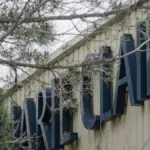

On the facade of IES Patraix, the call for an indefinite strike for May 11 still reads, which was extended until June 12 with a camp included in the center of Valencia. The poster, constructed letter by letter on laminated DIN-4 and tied with zip ties, remains on the facade of this public center, as if time had not passed. Also, the green t-shirts, with the slogan “For a public, quality education in Valencian” or its variants “The language is not to be touched” are worn these days by some teachers, who have started the school year on the warpath.
Read more Father Schneider’s Faith
Just three months after that cancellation, from which ANPE and CSIF had withdrawn days earlier after agreeing on a salary increase and personal days for teachers, the educational unionism raises the banner again this Saturday in the Valencian Community. Almost as if time had not passed, although now there is extensive experience on the part of both protesters, families, and the Consell, which continues to defend being “open to dialogue.”
Also read
Yesterday afternoon the protest began, with the VI Slow Ride to Valencia, leaving at 6 p.m. from the Mare de Déu square in the capital. This afternoon, at 6 p.m., it will be the turn of the demonstrations in the three provincial capitals, starting from the stairs of IES Jorge Juan in Alicante, the Aulas square in Castellón, and San Agustín in Valencia, respectively. A restart of the reivindicative spirit that conditioned the end of last school year and that, as they already announced at the beginning of the summer, they did not expect to lose this school year either.
To that already lit fire, this summer was added the reform of educational inspection – through the budget accompaniment law, in a new PP-Vox pact – which worries teachers and the opposition. The opening of classes, with some centers still under construction and others, the dana ones, not yet started, have added more fuel to the fire. Unions like STEPV, the majority, claim that the Department of Education “does not want to improve educational infrastructures” and accuses it of violating Supreme Court rulings by appealing its decision to rule in favor of the municipalities affected by the delegation of educational works. They say that, since July 2023, the Valencian government “has not delegated new powers to any municipality to build or rehabilitate centers and is executing what was already authorized during the Botànic government.”
Regarding this, President Juanfran Pérez Llorca said yesterday in Elx that those school works approved by Botànic within the Edificant plan during the interim period after the last regional elections were aimed at rewarding municipalities governed by their political color. “We consider that there was no technical or scientific rigor when establishing the construction of those schools,” he said.
It is a restart of the reivindicative spirit that conditioned the end of last school year
Some of this afternoon’s protesters may come directly from the competitive exams, as Education begins this weekend the selective process for entry into the teaching staff of Early Childhood and Primary Education with 15,697 applicants throughout the Valencian Community. The two written parts of the first test will be held this Saturday with 72 tribunals constituted: 23 in Alicante, 8 in Castellón, and 41 in Valencia. Education offers a total of 1,959 open-entry places to the teaching staff, of which 10% are reserved for people with disabilities.
By specialties, 750 places are called for Primary Education, 475 for Early Childhood Education, 229 for Therapeutic Pedagogy, 158 for Foreign Language English, 137 for Hearing and Language, 125 for Physical Education, and 85 for Music. The Consell says this “reaffirms its commitment to the stabilization and strengthening of teaching staff,” but some are not so sure, and that is why they will demonstrate again this Saturday.