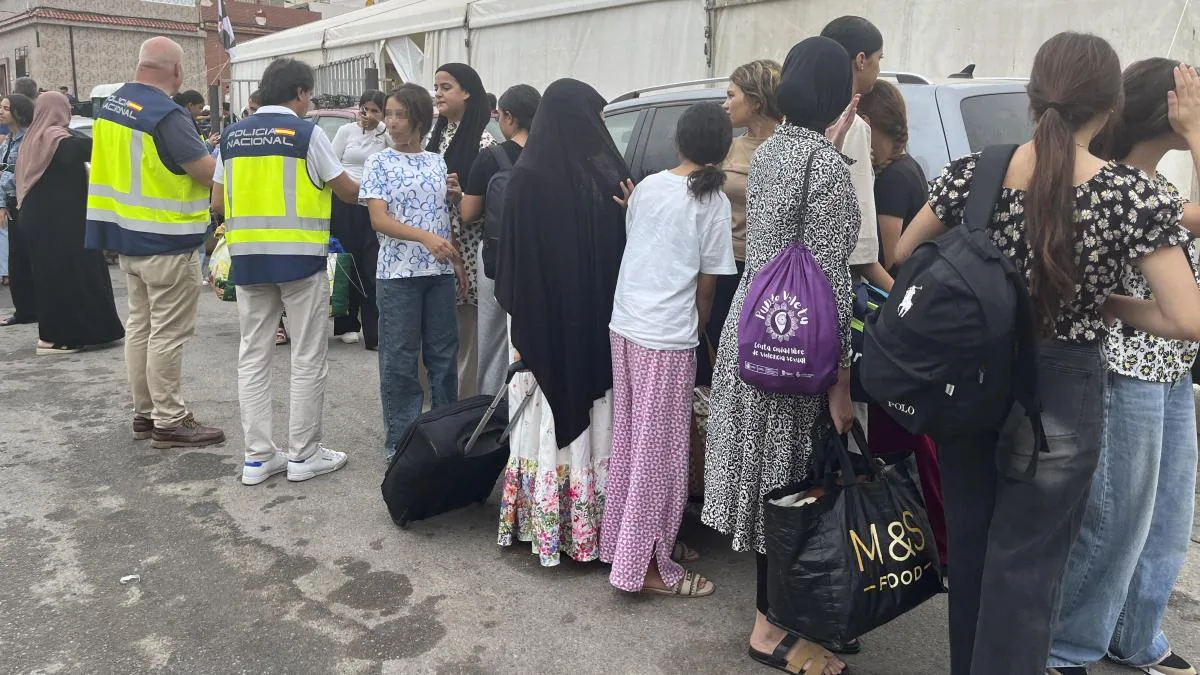
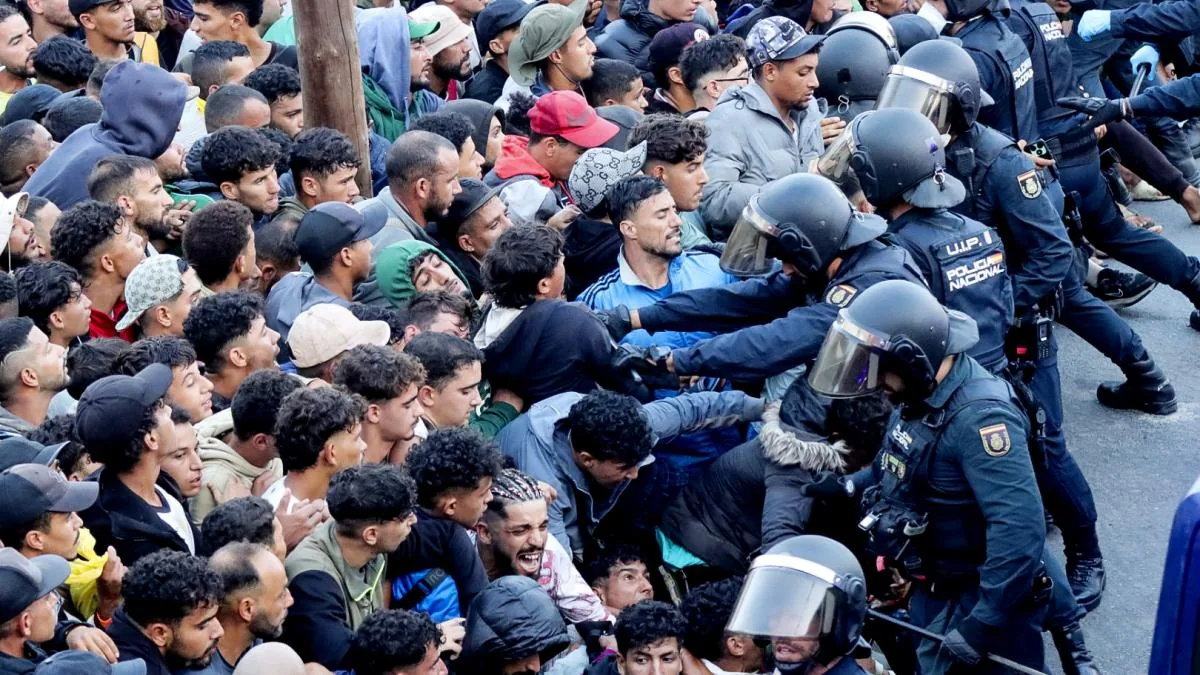
The vice presidents of Extremadura, Castilla y León, and Aragón, all from Vox, sent separate letters yesterday to the Minister of Youth and Childhood, Sira Rego, to inform her that they will not attend the sectoral commission on Childhood and Adolescence on August 13, which will address the situation of migrant minors in Ceuta, and that they reject their transfer to other communities.
Read more Europe sinks in the Strait
All this, despite the fact that on Friday the Attorney General of the State, Teresa Peramato, instructed the delegated prosecutors of the autonomous communities to intervene if a community refuses to host unaccompanied migrant minors from Ceuta who are referred to their protection system. An instruction from the Attorney General that immediately provoked the indignation of the PP, which governs with Vox in several autonomous communities and must balance complying with the law and the demands of Santiago Abascal’s party, which in 2024 left the governments they maintained with the Popular Party precisely for accepting the distribution of unaccompanied minors.
Ceuta does not know how many minors arrived in the mass entry and will conduct a new count
The vice presidents, Óscar Fernández (Extremadura), Carlos Pollán (Castilla y León), and Alejandro Nolasco (Aragón) demand that these minors not be transferred to other territories until the individualized files, “which are legally required,” have been completed, and, in any case, they announce to the minister that they will challenge any file that does not end with the return to Morocco. Vox argues in the letters that the rejection of these minors going to other communities is based on “the strict” compliance with national and international legal regulations and the principle of the best interest of the minor.
According to them, legality “imposes” family reunification and return to the country of origin and calls for an individualized assessment, excluding any automatic or collective action, as the Supreme Court has already indicated. Furthermore, they argue that it is precisely the distribution that makes it difficult for them to be located by their parents, delays the return files, and “harms” the child. They recall, in this regard, that Morocco has been classified “as a safe country by the Council and the European Parliament” and its government has expressed the willingness to recover minors from their country who are currently on Spanish soil.
Read more United States, a more strategic ally than ever for Morocco
Also read
So far, 1,342 minors are officially registered, although the president of Ceuta, Juan Jesús Vivas, admitted yesterday that he does not know how many more are among the 8,000 to 11,000 people who entered irregularly in recent days and who, according to his calculations, remain in the city. Regarding this, he indicated that a new count will have to be made.
Precisely, Vivas yesterday called for the return to Morocco of “all those who entered.” After meeting with Minister Rego, the president of Ceuta denied that the situation is normalized and asked the government to make it clear that “there will be no papers” nor “departures to the Peninsula” to avoid a call effect. The minister, for her part, requested Vivas to “speed up” the family reception of the minors following the interest shown by numerous families in hosting them. Rego emphasized that family reunification is the priority whenever possible and taking into account the best interest of the minors and recalled that this will depend on the location of the family: the country of origin, other Spanish autonomous communities, or other European countries.
Read more The remittances from Moroccan immigrants already contribute 7% to their country’s economy