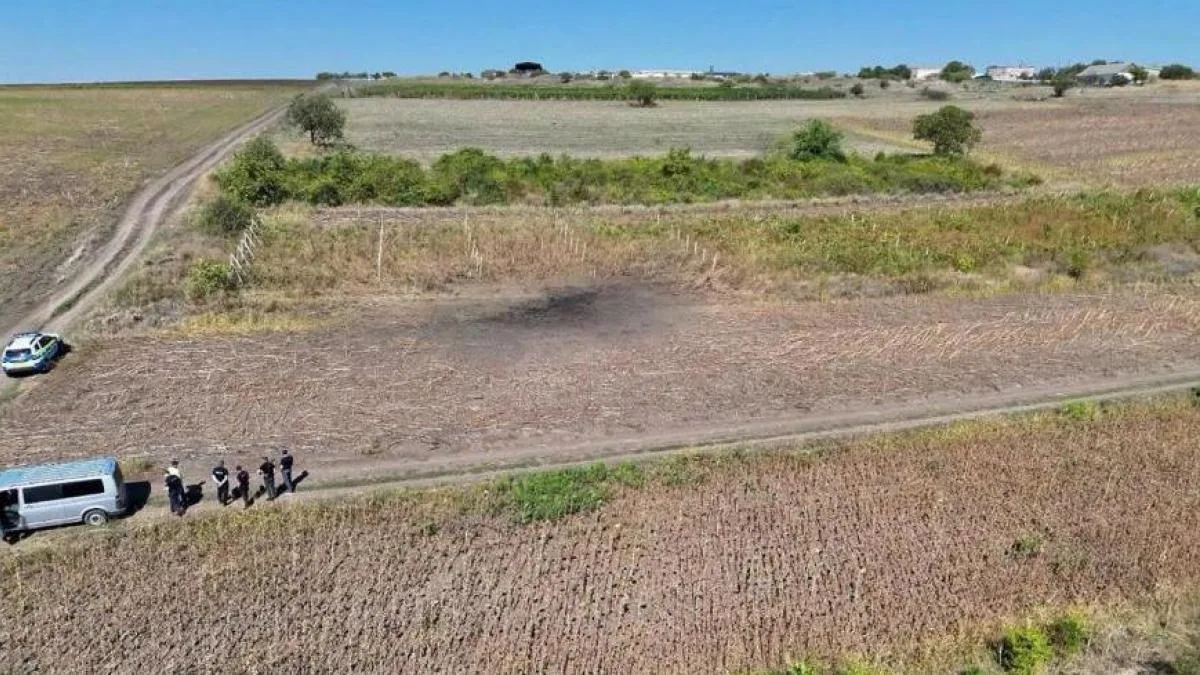
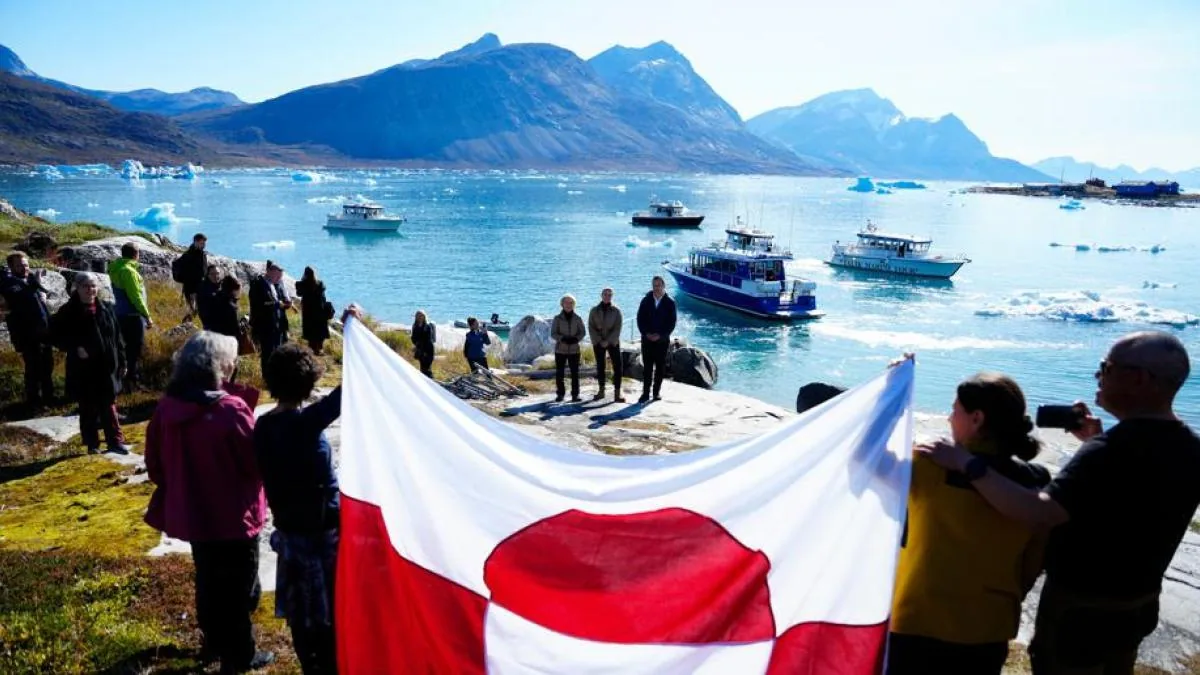
November 2021. The border between Poland and Belarus becomes a sieve. The regime of the Belarusian dictator Alexander Lukashenko – ally-vassal of Vladimir Putin’s Russia – launches tens of thousands of immigrants and refugees from Iraq and Syria against the European Union, with deception and organized trips, in a clear destabilization maneuver. At that time it is not yet known, but Moscow is already preparing the invasion of Ukraine for four months later.
Read more United States, a more strategic ally than ever for Morocco
About 40,000 people would end up entering Europe in 2021 through the forests of eastern Poland, before Warsaw had time to erect a fence along the border and send reinforcements to stop the avalanche. The event aroused unanimous solidarity from the EU and NATO, who denounced an act of hybrid warfare by Russia and its allies against Europe. No one thought to hold the Polish government of the time responsible, from the ultra-conservative party of Jarosław Kaczyński, Law and Justice (PiS)
Some neighboring countries intensified control of internal borders at that time, but no government officially suspended the application of the Schengen free movement treaty (although the truth is that since Chancellor Angela Merkel decided in 2015 to throw open Germany’s borders to a million Syrian refugees, about ten countries were already – and still are – carrying out random border checks)
Sánchez has been practically alone in the Ceuta crisis, like Aznar in 2002 with Perejil
Five years after the events in Poland, the assault on the Spanish-Moroccan border of Ceuta by 72,000 migrants in just 48 hours – most of whom have already been returned to the other side – has sparked very different reactions and revealed fractures that threaten the cohesion of the EU. No one, absolutely no one – neither the Spanish government nor any of the European governments, nor the European Commission – has dared to point the finger at Morocco, responsible by action or omission for what happened. They preferred to look the other way – too many interests at stake – and instead launch shameful internal political score-settling, before backtracking at the meeting of European interior ministers last Tuesday. NATO, for its part, has kept a thick silence.
Three countries, Italy, Denmark, and Finland, led the attack against the Spanish government, blaming it for the Ceuta crisis due to its migration policy. At the forefront of the demonstration were the Italian Prime Minister, Giorgia Meloni, leader of the post-fascist Brothers of Italy, and the Danish premier, Mette Frederiksen – a social-democratic leader favoring a hard line close to that of the far right – who proposed considering excluding Spain from the Schengen area. A total of 22 countries signed a belligerent letter to this effect and Italy began controlling Spaniards.
Only four European governments excluded themselves from the maneuver. Leaving aside Ireland – obliged to be neutral as it holds the Union’s six-month presidency – only France, Luxembourg, and Portugal distanced themselves. The French government denounced that the controversial letter “had as its main objective to instrumentalize the migratory wave in Ceuta against the Spanish government.”

“The response of national [European] leaders to Ceuta was uninformed and selfish, which weakened European unity and provided Europe’s enemies precisely the narrative they sought,” warned Alberto Alemanno, professor of European Law at HEC Paris and the College of Europe in Bruges.
Read more The remittances from Moroccan immigrants already contribute 7% to their country’s economy
The European right and far right, increasingly indistinguishable in their sleepless competition to capture the vote of fear of foreigners in their respective countries, have launched a fierce attack against the Spanish president, the unruly Pedro Sánchez, whom they accuse of having encouraged a supposed “pull effect” with the current massive regularization of immigrants.
The reality, however, contradicts this alarmist discourse. According to fresh data from the European agency Frontex, in the first half of this year irregular entries of immigrants via the central Mediterranean route – that is, through strict Italy – reached 14,340, a number higher than arrivals recorded in lax Spain (11,574) via the western Mediterranean route and the Canary Islands. The same happened in the whole of 2025: Italy received 66,328 irregular immigrants compared to 36,683 in Spain. Much to Meloni’s displeasure.
Also read
While Europeans offer the rest of the world the pitiful spectacle of their division, Morocco has once again demonstrated its enormous destabilizing capacity. After the previous migratory wave over Ceuta, in May 2021 – more limited, it was 10,000 people – it managed to get Madrid to join its theses on Western Sahara. Orchestrated or merely opportunistically exploited, we will see where the current crisis leads.
In any case, if Morocco shows itself so at ease with the EU – its main trading partner and the largest external investor in the country – it is because it has consolidated itself as a protected ally of the United States. The relationship between Rabat and Washington has tightened especially with Donald Trump (Morocco’s incorporation into the Abraham Accords with Israel, geostrategic revaluation in a context of cooling with Europe) and in the MAGA world there are already those who endorse Rabat’s territorial claims over Ceuta and Melilla.
But the alliance between the U.S. and the Alaouite kingdom goes back a long way. Morocco was the first African country to sign a bilateral trade agreement with Washington in 2004, with George W. Bush, who also granted it preferred ally status. The closeness between the two countries was evident during the Perejil crisis in July 2002, when Morocco challenged Spain by invading that disputed islet in the Strait and provoking Spanish military intervention. Then President José María Aznar was also left alone in that confrontation, with the EU and NATO looking the other way – if not criticizing Spain – and the U.S. pressuring him, through Secretary of State Colin Powell, to withdraw his troops.
Read more How the Supreme Court ruling and hoaxes led to the assault in Ceuta
Years pass. Morocco maintains its course. And the EU continues to flounder.