Movement of influence in the Middle East. Turkey, Saudi Arabia, and Pakistan will sign a defense pact today, as confirmed by agencies such as Reuters and various local media. The agreement, whose details are not yet known, consolidates the creation of a Sunni Islamic power axis at a time marked by geopolitical turmoil stemming from the Iran conflict and Israel’s expansionism.
The three countries forming this new alliance are prominent military powers. Turkey, a NATO member, has a large number of troops and a very active arms industry. Its army is one of the ten most powerful in the world, according to the ranking by the consultancy FirePower. Saudi Arabia is several steps behind in this regard, but thanks to its oil exports, it has huge financial resources that allow it to acquire the latest military technology. And Pakistan – which already signed a defense pact with Riyadh last September – stands out as the only Muslim state with nuclear weapons.
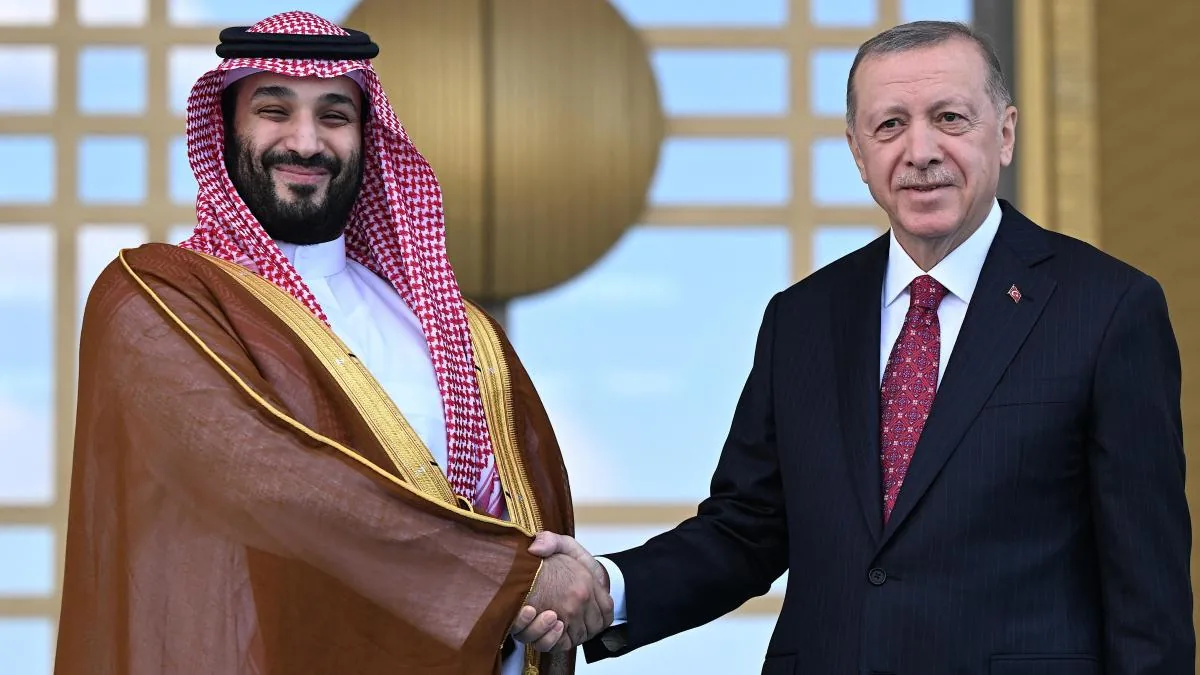
According to Reuters, Turkish President Tayyip Erdogan and Pakistani Prime Minister Shehbaz Sharif will meet this Friday with Saudi Crown Prince Mohammed bin Salman in the holy city of Mecca to sign the agreement.
The pact is the result of nearly a year of negotiations and comes at a time when the Iran war has exposed the vulnerability of the Gulf countries, which until now had relied on the protective umbrella of the United States. Since the conflict began alongside Israel, Washington has shown itself unable to protect its allies in the region from Tehran’s attacks. In addition to the blows inflicted by Iranian drones and missiles, the petromonarchies have suffered huge economic losses caused by the blockade of Hormuz, through which 20% of the world’s crude oil used to flow before the war.
The agreement also arrives as Israel is in a full race to redefine its position as the dominant hegemonic power in the Middle East. The Gaza war, which has not yet been resolved despite the peace agreement promoted by the U.S., has fueled Israeli expansionism, laying the groundwork for future clashes with other countries in the area, especially Turkey, which is already emerging as Tel Aviv’s new nemesis.
Read more Rodri’s fit in Barça: more quality, experience, and leadership in midfield
There is no doubt that this instability has accelerated the launch of this new alliance, which has been speculated about for some time. In fact, in recent months, Turkey, Saudi Arabia, and Pakistan have formed an informal diplomatic bloc that also included Egypt, aimed at supporting Islamabad’s mediation efforts in the Iranian conflict.
To reach the agreement to be signed today, Turkey and Saudi Arabia have had to put aside their differences, which are not few. In recent years, the relationship between the two countries has been marked by rivalry in various areas. Ankara’s support for the Arab Spring was a constant source of friction with Riyadh, which saw the rise of political Islam as a threat. Both states also clashed over the blockade imposed by Saudi Arabia and its allies on Qatar in 2017, as well as over the assassination of journalist Jamal Khashoggi in 2018 at the Saudi consulate in Istanbul.
Now the nature of the pact remains to be seen. According to Turkish television Haberturk, the agreement will likely allow joint military exercises and training, technology transfers, and intelligence sharing. Additionally, other sources indicate that it may include a mutual defense clause, like the one already existing in the agreement signed a few months ago by Saudi Arabia and Pakistan – which was not activated during the Iran war. If the existence of this clause is confirmed, one could begin to talk about the birth of an Islamic NATO.
Read more The PSOE will report Ayuso’s penthouse purchase to the Economic Crimes Prosecutor’s Office