The ruling of the EU Court of Justice on the amnesty for the leaders of the procés is the culmination of the growing confrontation between Pedro Sánchez’s Government and the judiciary. The Executive barely hides anymore and accuses some judges of acting in a twisted manner, driven by political motives. On the other side, magistrates holding positions in high courts and conservative judges’ associations consider themselves attacked in their independence. They even see themselves as the last defenders of the State against a Government they consider populist and capable of fostering the breakup of the State and the degradation of institutions just to stay in power.
Read more Stripe and a fund launch a $53 billion takeover bid for PayPal
The ECJ ruling represents the highest level to which the standoff has been taken. It will be interpreted politically as a judgment by the European court on the Spanish Supreme Court’s handling of the independence movement. It is difficult to pinpoint the start of the institutional crisis that means almost 60% of Spaniards consider judges to be “doing politics” and, therefore, not impartial, according to the recent Ipsos survey for La Vanguardia. What came first? Did the actions of those judges cause public distrust? Or was it the criticism from some political leaders that fostered that perception? Or perhaps both things reinforced each other.
It is complicated to find the origin of the clash, but some judicial and political actors place it in the Constitutional Court ruling on the Statute because it represented a collision between the high interpreter of the Magna Carta and the legislative power. It also ended badly resolved, as the Catalonia Statute voted in a referendum was later amended by that legal body, with the aggravating factor that some of the limitations imposed by the court are allowed, on the other hand, in the Andalusian Statute. Such nonsense could not bring anything good.
For some, Rajoy was a pusillanimous who left the State ridiculed and the Supreme Court had to restore order
When Sánchez came to Moncloa with Unidas Podemos, sparks already flew between the judiciary and the new Government. Pablo Iglesias declared judges as one of the main enemies to the changes his party wanted to push from the coalition government. Iglesias denounced “judicial sewers” acting against his party, reiterated that the judiciary was taken over by conservatives, insisted on the need to “democratize” some bodies, and tried—unsuccessfully—to convince Sánchez to use the new parliamentary majority to approve reforms in that area that would change the balance of power. Judges responded several times with statements from the CGPJ urging him to restrain his invectives so as not to damage their image of impartiality.
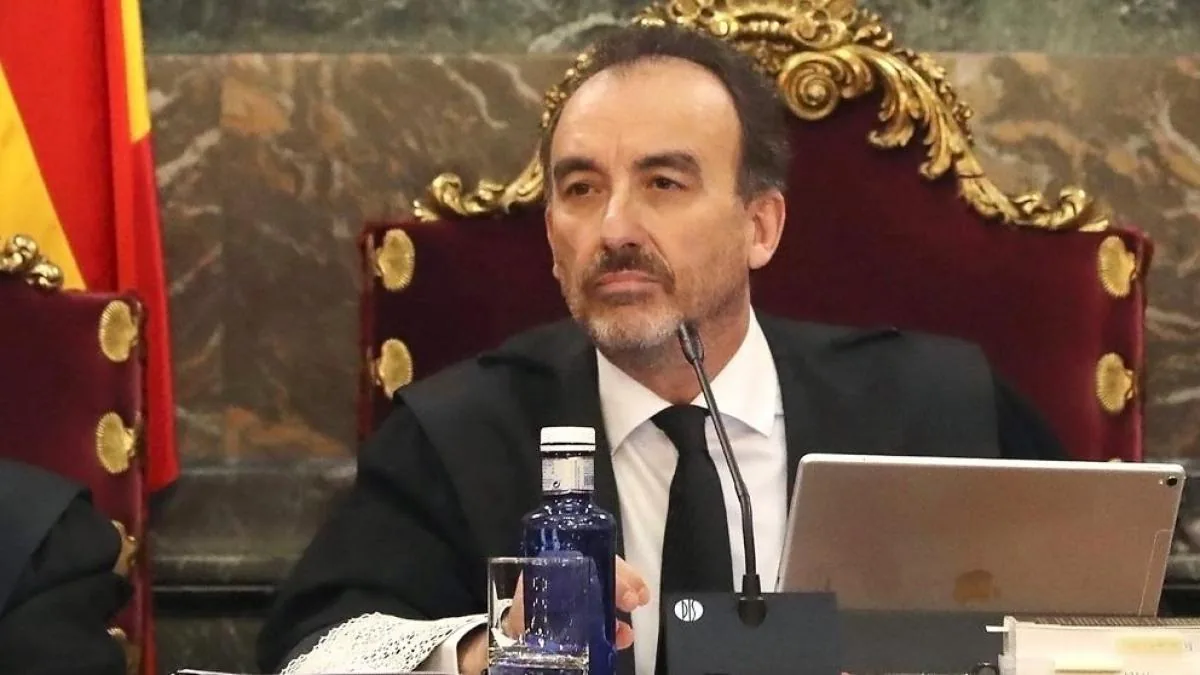
Then came the trial and the sentence for the leaders of the procés. For Sánchez, who needed ERC’s support, it was essential to reduce tension in Catalonia. The Supreme Court’s ruling was key to calming the waters. The long prison sentences were received by many in Catalonia as an exemplary and disproportionate punishment, even beyond the independence movement. However, for part of influential Madrid, the sedition charge was too mild. After all, the PP or Vox had not hesitated to call what happened a coup d’état. The most conservative media began to use the term “the unanimous ones” sarcastically to refer to the court members, given the eagerness of the Chamber president, Manuel Marchena, to sign a ruling endorsed by all its members, that is, to seek consensus. For some sectors of the political and media right, Mariano Rajoy was a pusillanimous who had brought Spain to the brink of breakup and ridiculed the State, and the Supreme Court had to restore constitutional order so that it would not be questioned again, at least for a long time. Some saw those demands met, and others believed the ruling fell short.
Read more Three people drown in the Roncal dam
In parallel, Sánchez needed ERC’s support to govern, and the republicans put the pardons on the table. The Supreme Court formally rejected them but did not question them. The magistrates of that court considered their work done, and if the Government wanted to pardon the independents, that was their problem. But the 2023 elections marked a turning point. The PP won, but Sánchez forged an alliance that included Junts to stay in Moncloa. The pact with Carles Puigdemont involved approving an amnesty law. Not only that. The agreement between PSOE and Junts included a reference to the existence of lawfare, a term that combines the words law and warfare to refer to the misuse of judicial processes for political purposes. The amnesty law was also received by the Supreme Court as a resounding slap to its ruling because it meant erasing the crime and sending a clear message to European justice: Spain moves on. It was read as a way to minimize what happened and, therefore, to present the ruling as disproportionate. It was seen by the high court as an amendment. The discontent spread to such an extent that judges in their robes were seen protesting in front of their courts, something unprecedented.
The concept of lawfare has long been established in Catalonia, but it irritated judges when included in the PSOE-Junts pact
It is necessary to review this evolution with perspective to understand what we are talking about today. The concept of lawfare had long been established in Catalonia, especially by the independence movement, although it increasingly took hold. The ground was fertile due to the Constitutional Court’s sad role in addressing the Statute. But lawfare had not yet jumped to Spanish politics, where the debate was more focused on a certain role of judges as saviors of the State. Podemos’ complaints were still a minority, and PSOE had not joined the public criticism of judges, although privately its leaders began to lament what they considered a total colonization of the judiciary by conservatives. This is the moment when Sánchez tries to combat that supposed bias with more involved progressive profiles, such as the appointment of Álvaro García Ortiz as Attorney General or trusted figures like Minister Félix Bolaños in Justice.
Despite its ambiguous wording, the mere suggestion of a possible existence of lawfare assumed by the socialists raises hackles in the judiciary. The agreement with Junts itself also does. Some judges believe Sánchez is capable of conceding to the independents a decentralization of justice that they see as a risk of territorial breakup of that power. Meanwhile, the renewal of the General Council of the Judiciary remains stalled, and the debate intensifies over whether judges should appoint judges. Or, put another way, whether judges’ associations should appoint judges. It is the mother of all battles. One of the pending issues the judiciary will demand from Alberto Núñez Feijóo if he governs. In fact, Rajoy had already planned it when he came to Moncloa but later preferred to shelve it. The power of the conservative Professional Association of the Judiciary (APM), now the majority, will be even greater.
Just as the independence leaders got entangled in their own impossible promises, pushed by the atmosphere they themselves were fostering until reaching collapse, the procés led the Supreme Court to increasingly extreme situations. The high court made decisions about the independence leaders amid pressure from a political and media Madrid demanding toughness to save the State from the risk of breakup. Little by little, it found itself closer to a dead end: the ruling of European justice. That journey ends today, but the battle for control of the high judiciary has only just begun.
Read more France authorizes assisted suicide and euthanasia with a divided Parliament