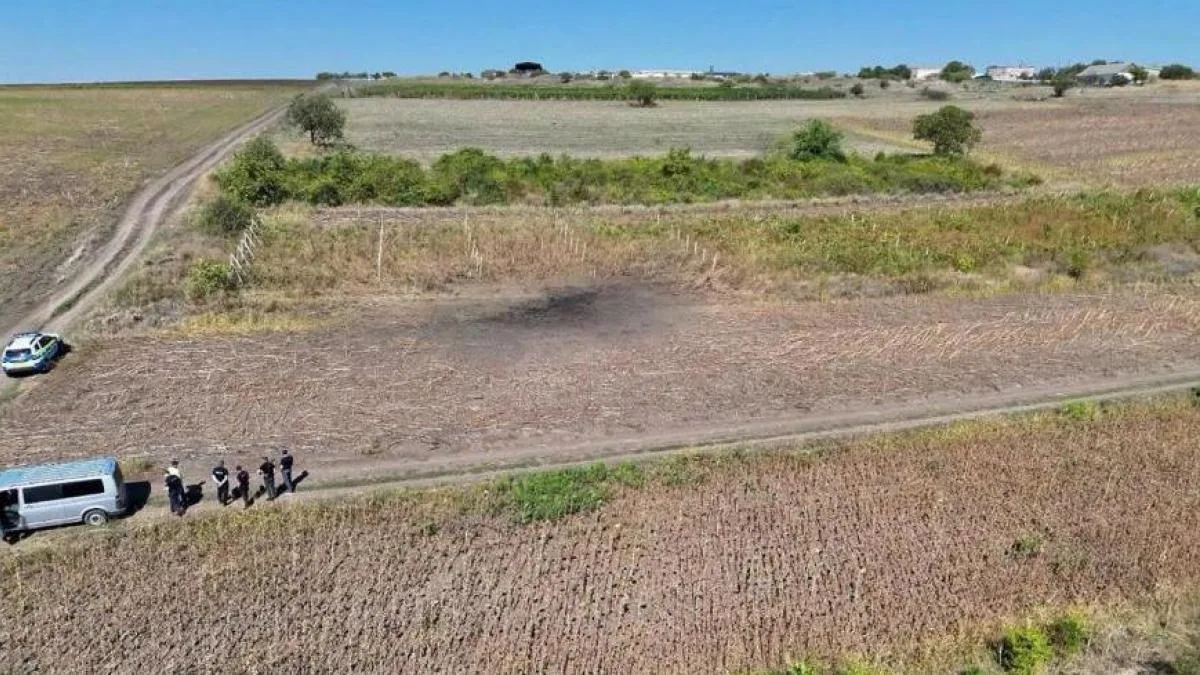
What happened at Leipzig-Halle airport on August 5 acted as an electric shock for the German security services and their NATO allies. The failed drone attack carrying the powerful plastic explosive Semtex against a Ukrainian cargo plane, the huge Antonov AN-124, has been interpreted as a very disturbing qualitative leap, the possible beginning of another dimension of Russia’s hybrid war against Europe, the shift from indirect harassment to direct confrontation.
Read more Can Putin be stopped?
The attempted attack at the Saxon airport—Putin was stationed not far from there, in Dresden, when he was a KGB agent during communist Germany—has not been officially attributed to Russia, but all eyes point to Moscow. Berlin is cautious. Accusing without conclusive evidence would be reckless. It would force it to take very harsh measures or appear too weak.

Russian Minister Lavrov threatens those who “feed Kyiv’s war machine”
In an interview with Russian state television on Thursday, the indefatigable Foreign Minister Sergey Lavrov seemed to shamelessly confirm suspicions about his country when he threatened those who provide military aid to Ukraine. “We will greatly toughen our methods to dismantle everything that feeds Kyiv’s war machine from the West; and we are already doing that,” he stated.
The hybrid war has taken multiple forms over the years: poisoning with fake news in European electoral campaigns, destabilization operations—such as antisemitic and anti-Muslim acts in France—drone overflights in strategic locations, cyberattacks, and directed migratory waves. The destruction of a Ukrainian plane on German soil would have been a major impact. The mere attempt has already been a psychological blow and has forced a comprehensive rethink of the anti-drone strategy.
Germany is a priority target for the Kremlin due to its aid to Ukraine, the largest among EU partners, and because the country is undergoing a colossal rearmament process, with a large-scale medium-term investment. It is no coincidence, in this context, that the president of the armaments giant Rheinmetall, Armin Papperger, lives under protection by bodyguards, with a security detail at the same level as Chancellor Friedrich Merz. Two years ago, a plot to assassinate Papperger was dismantled. According to the Hamburg weekly Die Zeit published a few days ago, another leader in the German defense industry is also threatened.
The Estonian city of Narva or the Suwalki corridor, which connects to Kaliningrad, are vulnerable points
Fear of a Russian escalation, beyond non-lethal hybrid warfare methods, is growing. The Wall Street Journal echoed a U.S. intelligence report warning of the possibility that Russia could take action as early as this fall and up to 2029. The public has long been prepared with messages of this kind in case the worst scenario arrives.
Read more Three dead, including a minor, and one seriously injured in a shooting in Isla Cristina
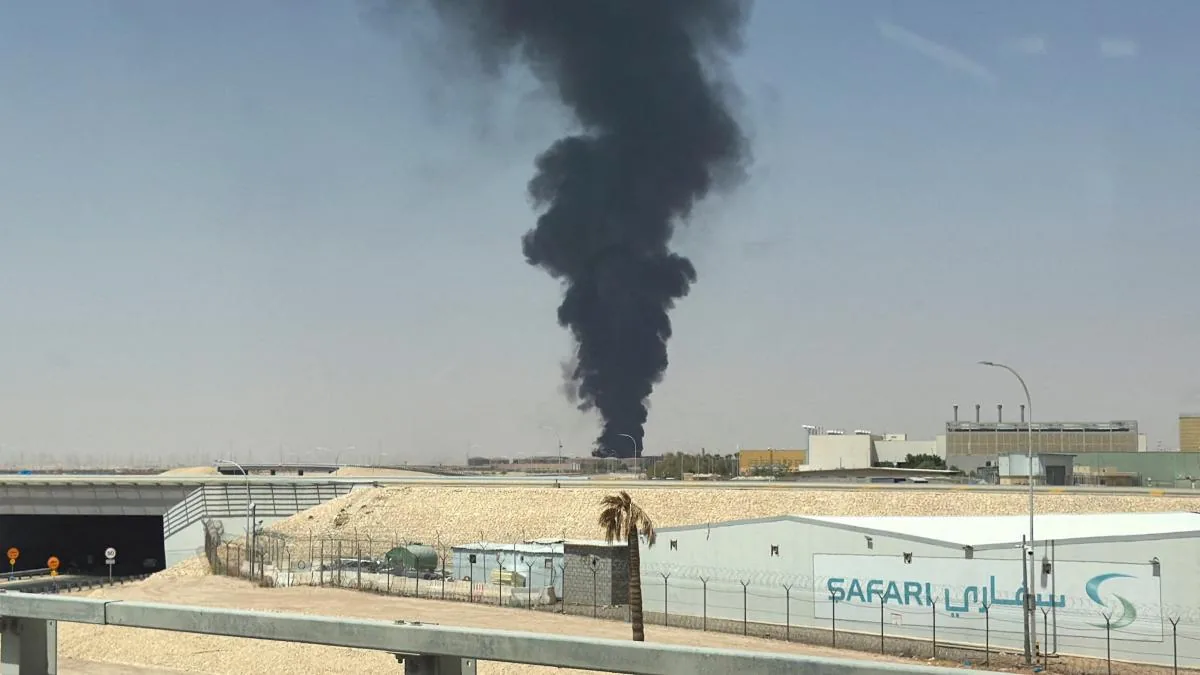
Last Thursday, alarms went off again when an explosion and fire occurred at a large ammunition and other military material factory in Colleferro, about 40 kilometers south of Rome. The facility belongs to the Franco-German group KNDS, which produces everything from Leclerc tanks to armored vehicles and Caesar cannons, very useful for Ukraine in the early years of the war. The Velletri prosecutor’s office saw no signs of criminal sabotage and favors the accidental cause, but that has not prevented some media, such as the French economic daily Les Echos or the LCI channel, from still speculating about possible Russian responsibility given the circumstances.
Besides Germany, the Baltic republics, Scandinavian countries, Finland, and Poland have been seriously preparing for some time for a Russian aggression escalation and the leap to a conventional conflict. Warsaw’s defense budget is already approaching 5% of GDP.
No one believes that Russia, stalled in Ukraine after more than four years, is in a position to open another front and launch a large-scale ground offensive against a NATO country. But in the West, the hypothesis of some limited, perhaps ambiguous and confusing incursion is being worked on to test Atlantic solidarity and the will to respond. The most vulnerable points are known, such as the Russian-speaking city of Narva (only 150 kilometers from Saint Petersburg), in eastern Estonia, some similar area in Latvia, or the Suwalki corridor, which connects Belarus, through the Lithuanian and Polish borders, with the Russian enclave of Kaliningrad (the former Königsberg, in East Prussia, which Germany lost after the Nazi defeat in 1945). Moldova, which was a Soviet republic and with part of its territory, Transnistria, occupied by the Russian army since 1990, is a candidate to be a victim of Russian expansionism, especially because it is not a NATO member.
If Russia decides to probe NATO, it could repeat the 2014 tactic, when it kept part of the Ukrainian Donbass and the Crimean peninsula using unidentified armed militias (actually Russian troops), to create doubts and divisions in NATO about the response. Opening another front would be risky, but at the same time it would divert Western resources currently destined for Ukraine.
The president of the German armaments giant Rheinmetall is threatened and lives under high protection
A variable to consider for Russia is the delicate political situation in Europe in the coming months, with elections in the two most important EU countries. France will choose Macron’s successor at the Élysée next spring, with Marine Le Pen as the favorite and a profile initially less hostile to Putin. And in Germany, there are two regional elections in September that could consolidate the advance of the far right and further weaken Merz’s grand coalition in Berlin.
Read more Ben Gvir publicly calls to kill “between 30 and 40 people every night” in Gaza