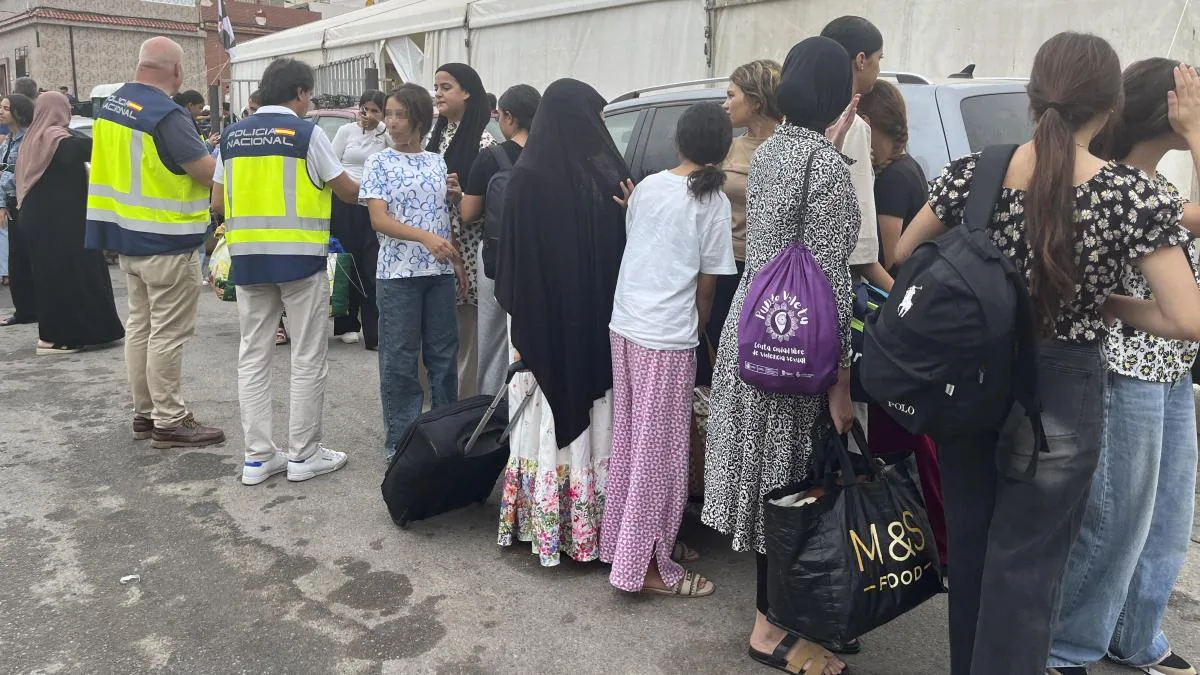
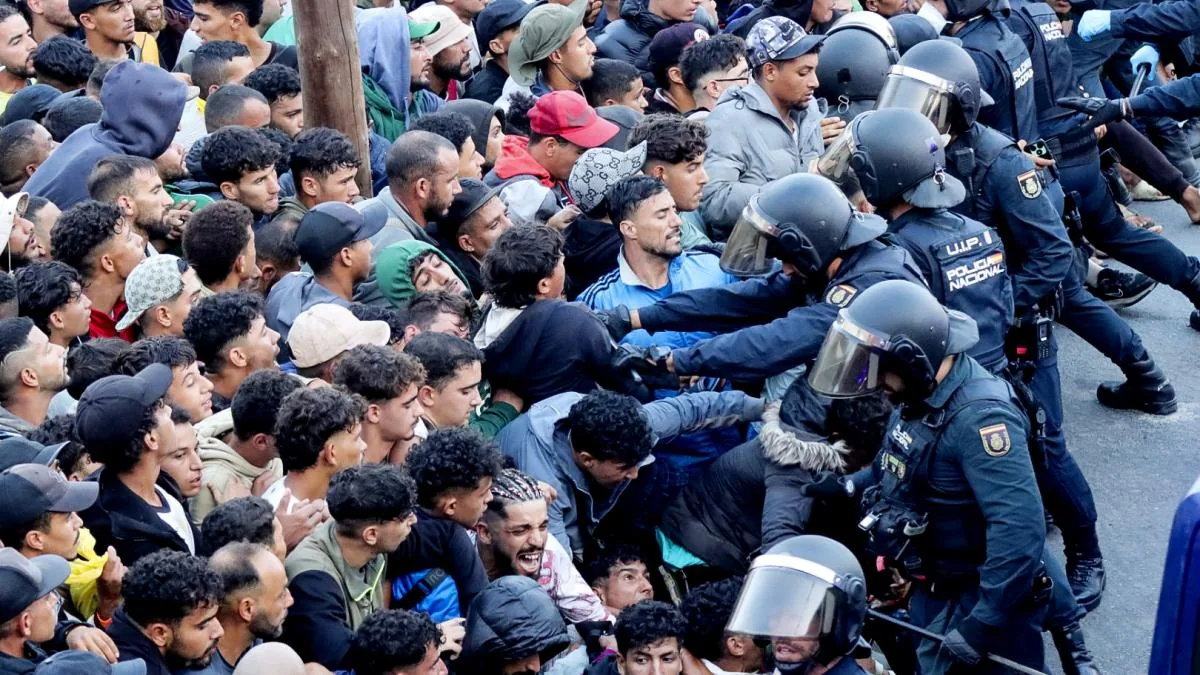
The Minister of Childhood and Youth, Sira Rego, has once again insisted this Monday on the need to proceed with the reception on the Peninsula of the migrant minors who are in Ceuta, a measure she has considered “essential” to “de-escalate” the crisis situation in the autonomous city and “guarantee care.” Rego specified that there are 1,478 migrant minors who are identified and in protection centers in the autonomous city, in addition to the 1,200 minors that the Government estimates remain to be registered.
Read more Gabriel Jesus is already in Barcelona to undergo the medical examination and sign with Barça
In a statement before the Childhood and Youth Commission of the Congress to report on the migratory crisis in Ceuta and the reception of minors, the minister indicated that, within this group, the Government estimates that 760 migrant girls are in Ceuta, of whom 233 are under 13 years old, with very diverse profiles, including girls fleeing sexual violence, abuse, forced marriages, homelessness, or a notable number belonging to the LGTBI+ community. The Government is working on the transfer of 500 of them to the Peninsula.
“What we have to ask ourselves is whether we consider it viable for those more than 2,000 children to be in Ceuta,” she proposed, or if “a reception on the Peninsula can be considered at least for the most vulnerable profiles,” she emphasized during her reply to the groups in her appearance before Congress.
The minister indicates that family reunification will be done when it is safe
Rego indicated that another possibility for transfers are bilateral cooperation agreements between communities because the guardianship of unaccompanied children is the responsibility of the autonomous regions “which can bilaterally agree on urgent reception, without waiting for other procedures,” and a third option is family reception, which many families have supported.
Regarding family reunification, she said it has always been done and will be done when it is safe, but she stressed that while “those procedures are resolved, these children cannot be left unprotected,” but must be protected and Ceuta “cannot bear this burden alone” because “it is neither fair nor materially possible.”
“That the geographical border is there does not mean that the responsibility lies only with the people of Ceuta, childhood is a responsibility and a matter for the country,” she stressed. Furthermore, she defended that the fact that a State “cannot take a child, put them on a bus and expel them without listening to them, without knowing where they are returned to, is not a bureaucratic weakness,” but a “democratic achievement.”
Rego emphasizes that boys and girls are victims of exploitation, abandonment, and abuse, not “invaders”
Regarding Morocco’s cooperation, the minister also explained that Spain had already sent around 600 files to the neighboring country to verify the situation of these minors and Rabat’s response has been “silence.”
In defense of migrant minors, Rego emphasized that the boys and girls who arrive alone in Ceuta are “victims” and that their protection must be kept apart from any partisan dispute. “The boys and girls are not invaders, they are rights holders. Those who have arrived alone in Ceuta are victims of exploitation, abandonment, and abuse,” she defended.
“Pointing a finger at a child is not protecting a border, it is hiding the geopolitical interests that are using them to launch threats and sow chaos,” she stated.