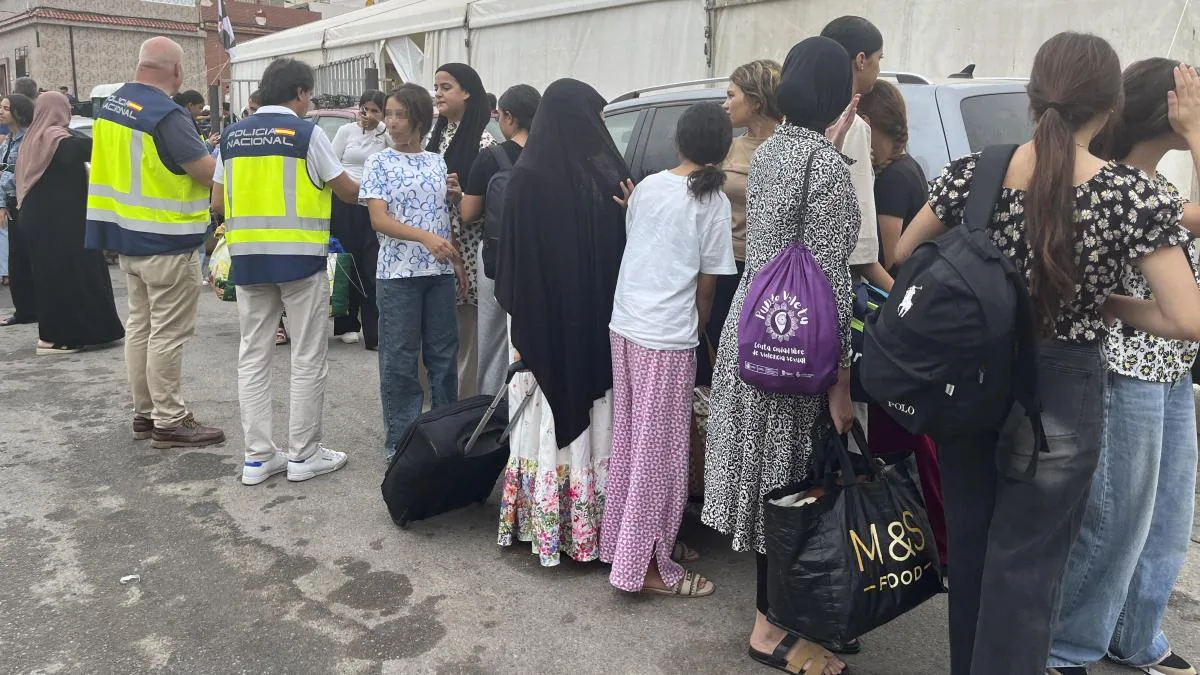
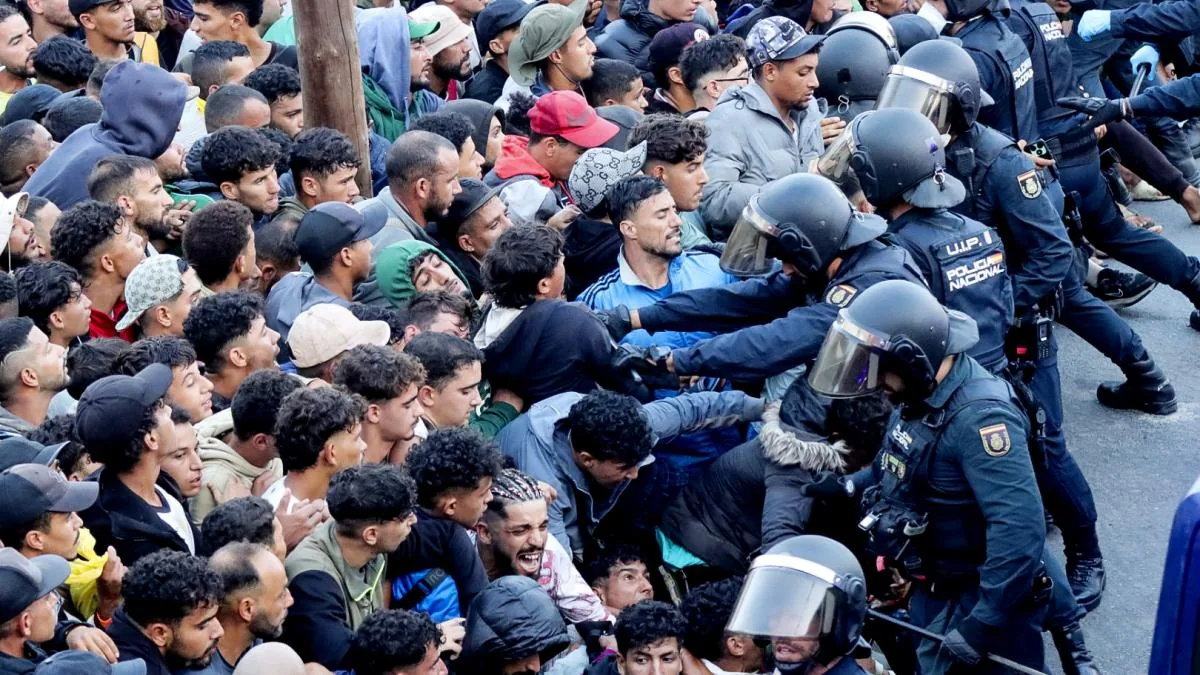
Return is the word that best explains the new direction of the Government in Ceuta: that of the adults who still remain in the city, that of the minors when circumstances allow – since their return requires greater guarantees and a specific procedure – and, above all, that of normality. Because Moncloa’s priority is no longer so much to manage the crisis opened on July 30 and 31 but to close it.
Read more The railway chaos of the eclipse highlights the lack of foresight that hinders Rodalies
And for that, it is urgent to empty the streets of the autonomous city. Their presence keeps visible the trace of a massive entry that overwhelmed a Spanish border for two days and brought its southern flank to the brink of collapse. The permissiveness with which Morocco stopped monitoring the border and its subsequent expansionist manifestations have caused a crisis initially migratory to become a political sovereignty problem.

Also read
Hence the change in tone adopted in recent days by several ministers. José Manuel Albares (Foreign Affairs), Margarita Robles (Defense) and Félix Bolaños (Justice and Presidency) have repeated messages that place the defense of Ceuta and the control of the territory at the center of the response: “Ceuta and Melilla are untouchable, they are very Spanish”; “the people of Ceuta should know that their armed forces will be with them, we will not abandon them”; “even the last person who entered will be returned.” A verbal firmness that yesterday found its most forceful translation in Fernando Grande-Marlaska.
The Interior Minister confirmed the sending of more agents to speed up the expulsion of around 5,000 people – 9,000 according to the estimates of the Ceuta Government – who entered on the 30th and have not left the city.
Marlaska, in his speech in Ceuta, explained that he has given “a very clear order” so that those irregular immigrants who are involved in criminal acts and are arrested are brought before the courts to proceed with their immediate expulsion, and added that minors will also “be returned effectively and as quickly as possible.”
Returning normality to Ceuta without breaking with Morocco is the political challenge
The Government has taken good note of the pressure felt in Ceuta. The scenes on Wednesday, when several neighbors stopped Minister Robles to convey their feeling of “fear” and “abandonment,” offered Moncloa an image difficult to ignore.
Read more The diplomacy of the deer
And the president of the autonomous city, Juan Jesús Vivas, has intensified that pressure with each ministerial visit demanding exceptional measures such as legislative changes to speed up expulsions or suspend the processing of asylum applications in Ceuta for sub-Saharan immigrants. He presented this to Minister Marlaska yesterday, who, however, avoided commenting on both proposals. The suspension of the right to asylum is a proposal difficult to fit within international law.
Also read
The striking thing is that the hardening of the discourse has not been accompanied by an equivalent explanation about what has changed and whether the acceleration of returns responds exclusively to the exceptionality of what happened at the end of July or anticipates a deeper change in migration policy.
And it is precisely there where the main obstacle to closing the crisis appears: the minors. The 1,527 who are already registered and the many others who remain to be identified and remain in Ceuta cannot be treated with the same logic as adults.
The Executive hardens the discourse but still does not explain how far the expulsion policy will go
Their return requires fulfilling guarantees that have already alerted organizations such as Amnesty International in light of reports about possible forced returns. Hence the mandatory relocation between communities, which usually pits the Government against the Popular Party, has taken a back seat as both parties agree to prioritize the return either to their families or – and this raises discussions – to official bodies of the Moroccan state. The agreement, however, ends there.
Explanations are still pending even within the Government itself. United Left demands them ahead of the ministers’ appearances at the end of August in Congress. Its federal coordinator, Antonio Maíllo, yesterday called for “transparency” and “rigor” about what happened and warned that Spanish sovereignty is “in danger” in the face of the new standoff with Morocco. Because the challenge is to demonstrate that the State has regained control of its border and that an episode like that of late July will not happen again.
Read more Pretrial detention for the two arrested in the Tauste crime