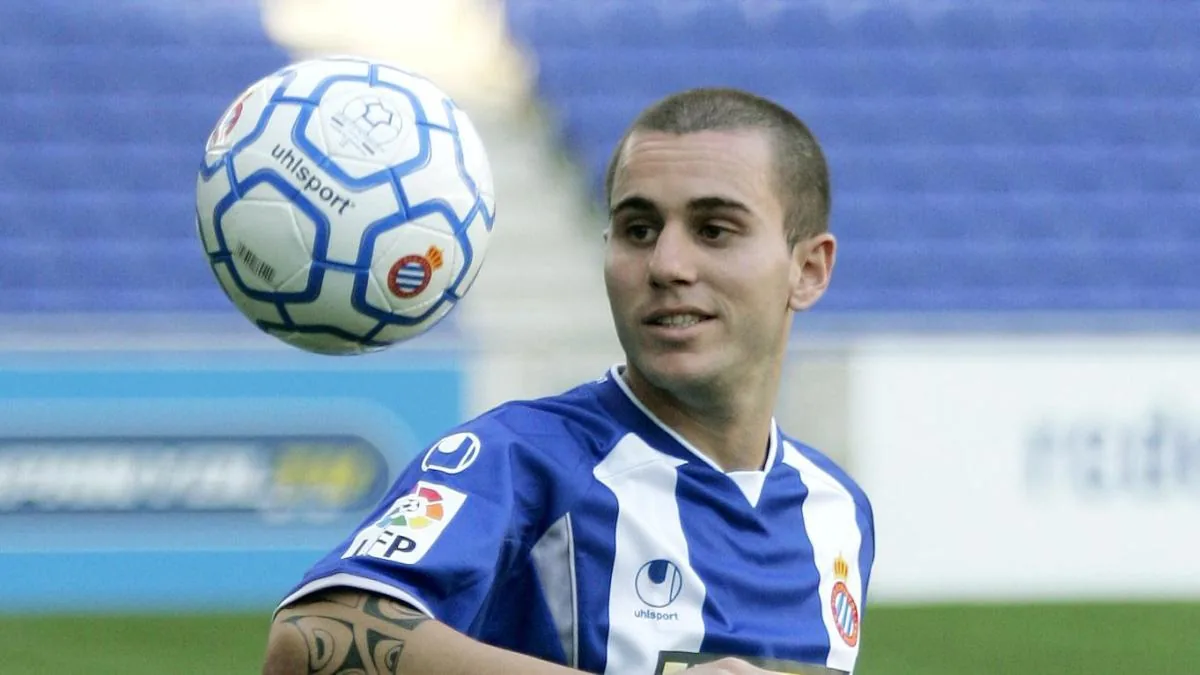
Fernando Marqués’s football career (Madrid, 1984) was never separated from his off-field problems. Alcohol, accidents, and disorders created for him at a very young age the image of a troublesome and undisciplined guy. He debuted at 17 with his Rayo Vallecano in 2002, and before turning 23 he had already played for five teams —Rayo, Racing de Santander, Atlético de Madrid, Atlético’s B team, and Castellón, as well as the under-20 national team— and in three different categories. A ten in talent, a zero in attitude, people said about him.
Read more The self-employed will also be able to work and receive a pension
But none of that was his fault. Marqués, now a 41-year-old adult retired from the playing fields, revealed this Monday on the Offsiders podcast the missing piece to understand his career. After a long sigh, he explained that he suffers from bipolar disorder.
“I don’t mind baring myself as a person, I don’t do it for me,” he says. “Two and a half years ago I was diagnosed with bipolar disorder, it was a before and after. It gave a name to everything that has happened to me in my life and in my football career,” he adds, after reviewing a career of ups and downs, doubts, and criticism from those who didn’t understand how so much talent could be managed so badly.
But Marqués himself didn’t understand it either. “I spent half of my career medicating myself, it was very difficult. People asked me why I retired so young —he left football at Guadalajara in 2016, before turning 32—. I have had many ghosts.”
Marqués praised former Barcelona player Ángel Pedraza, who was his coach during his time in Greece (Iraklis, from 2007 to 2009), as a person who knew how to treat him. “He took care of me in those moments,” he assures, referring to the years he played without a diagnosis. It was Pedraza, he adds, who took him to Espanyol, whose structure Marqués is also grateful for.
Read more Page calls for elections or a vote of confidence: “This is the moment of greatest risk for the PSOE”
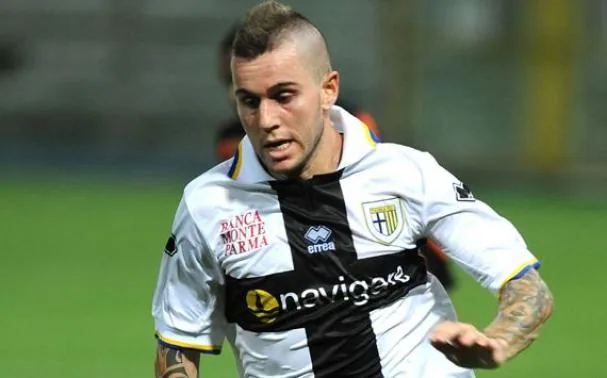
The footballer explained a moment from when he played at Parma, in the Italian Serie A, that helps to dimension the drama of the duality that forced him to be both footballer and human. “I wasn’t well, I was down,” he says, “and the doctor gave me two pills at halftime. They took me off in the second half, I played incredibly.” At that moment he had the support of his teammates, of the stands. But after a few hours the pills no longer had effect. “The revolutions dropped and…” The sentence remains unfinished.
Marqués, who becomes one of the few, if not the only, footballers who has reported suffering from bipolar disorder, acknowledges that mental health is a taboo. Even today. “There are many footballers… There are people who don’t come out [don’t explain it] because of what others might think. They do themselves a disservice. You can’t have a career of great magnitude and live it as life or death,” he reflects. In his case, he concludes, “not being aware of certain things, I haven’t been able to enjoy my career.”
“I spent half of my career medicating myself, it was very difficult. I have had many ghosts”
Fernando Marqués now knows who he is and what is wrong with him. “In these last years I have had very good therapists who have given me tools to be able to live a normal life,” he says, recalling the excessive highs and impossible lows that made him a mystery to himself. Because football does not talk about bipolarity. It speculates about it in the face of certain erratic behaviors —bipolarity was talked about with Paul Gascoigne, Stan Collymore, René Higuita…”— but more as a literary device than with the seriousness required by a medical diagnosis.
Fernando Marqués’s career —for himself, for those who listen to him— is now different. The question is no longer how he could do so little with all the talent he had. The question is how he could achieve so much despite living without understanding himself. Under those circumstances, the 60 matches Marqués played between La Liga and Serie A, 21 of them in white and blue, are the milestone of a hero who, finally —it’s never too late— has named his ghost: bipolar disorder.
Read more Ayuso’s infrastructures for the Pope’s visit: from the Royal House of the Post Office to Ifema