The Council of Ministers approved this Tuesday the draft Organic Law for the proper use and governance of artificial intelligence (AI), which adapts Spanish legislation to the European Artificial Intelligence Regulation (RIA), in force since August 2024, and which regulates the rules that AI tools must comply with in Spain and contemplates fines that can reach 35 million euros or 7% of the annual turnover of the sanctioned party.
Read more The former Espanyol player Fernando Marqués reveals that he suffers from bipolar disorder
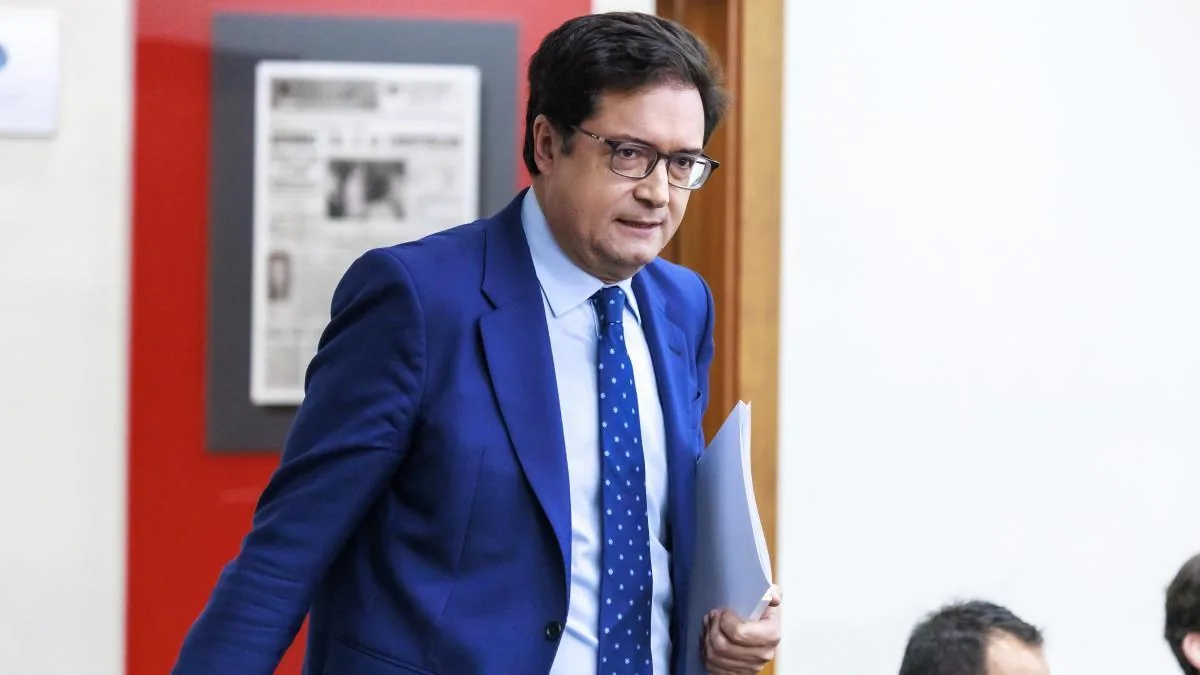
“A vision like the one the Pope conveyed yesterday in his encyclical, in which he defends a humanistic view of artificial intelligence, a vision that protects rights and especially human rights and is incompatible with the values we have developed as a society, is very much appreciated. It is a message with which we fully identify, as demonstrated by Spain being the leading country in AI regulation,” said Minister Óscar López during the press conference following the Council of Ministers.
Progress in the protection of minors
Among the main points of this new legislation are measures that Spain has promoted within the framework of the European Union, such as classifying AI according to risk with an applicable sanction regime. In this regard, it is prohibited, among other things, that AI cannot be used to make sexual deepfakes and to produce child pornography, “which represents a very important advance for the protection of minors,” López assured.
The text, which must have the support of Parliament as it affects personal rights, is a set of instruments that will ensure human supervision for all systems considered ‘high risk’ because they could affect the fundamental rights of individuals.
500 euros, the minimum fine
It prohibits the use of subliminal techniques to manipulate decisions without consent, exploiting vulnerabilities related to age or the socioeconomic situation of people (minors, elderly, or disabled), biometric classification by race or political or religious orientation, or the ‘scoring’ of individuals based on social behaviors or personal traits to, for example, deny grants or loans. “It is very important that citizens know that these practices are prohibited so that they report them when detected,” warn the Ministry of Digital Transformation.
The law also establishes that AI-generated content must be definitively identified and implements a sandbox, a testing environment, where new AI developments can be tested in Spain.
Read more The self-employed will also be able to work and receive a pension
Meanwhile, while Congress gives the necessary green light to this legislation, all premises that can be applied will be, according to sources from the Ministry of Digital Transformation. For example, the Spanish Artificial Intelligence Supervisory Agency (Aesia), which gains power and independence with this new regulation, will not be able to impose fines while the law is not approved, but it can warn of legal infringements when detected.
Boost to AI in public administration
When Congress gives the green light to the regulation, the applicable sanctioning regime will classify infringements as very serious, serious, and minor, guaranteeing proportionality. Sanctions can reach up to 35 million euros or 7% of turnover in the most serious cases and up to 500,000 euros or 0.5% of turnover in the minor ones.
The text provides flexibility for authorities in applying sanctions, adapting them to severity, intent, or recidivism. Additionally, mechanisms are incorporated that prioritize correction over penalization, such as sanction reductions for early payment or the adoption of corrective measures, as well as specific consideration of company size to protect SMEs and startups, in line with what is indicated in the RIA.
Another contribution of the regulation, which does not come from the adaptation of the RIA, is to promote the proper use of AI in the state public sector, a measure included at the request of numerous proposals included in the public consultation. For this, it introduces the creation of an inventory of AI systems used in administrative procedures, not only for high-risk systems, reinforcing transparency. It also establishes the figure of the AI delegate, who will be responsible for coordinating regulatory application and advising on projects and public procurement. Both the inventory and the delegate will be developed by Royal Decree. Additionally, training and awareness-raising of public employees in artificial intelligence will be promoted.
The Minister of Digital Transformation has also announced that the Government has approved a new television license for the group and Integrated Television Entertainment Services, led by José Miguel Contreras and Andrés Varela Entrecanales, the shareholders who faced Ourghoulian in Prisa.
Read more Page calls for elections or a vote of confidence: “This is the moment of greatest risk for the PSOE”