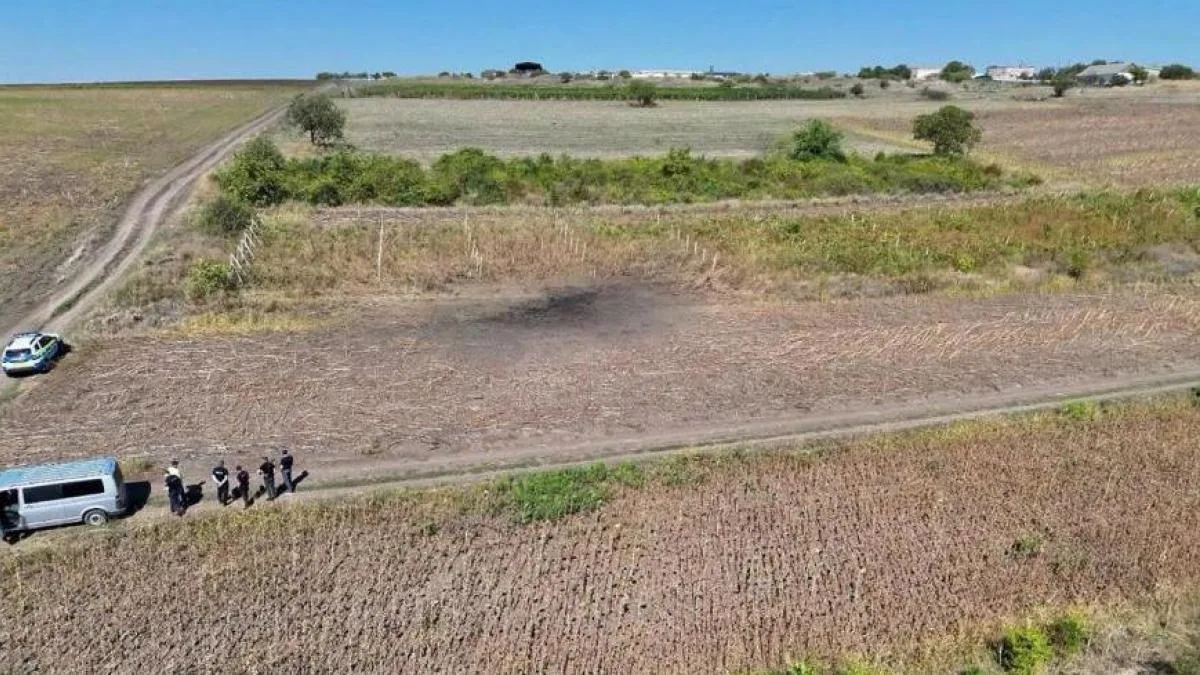
Last week’s alarms over recent incursions into airspace have further frightened the Baltic countries, on the front line against the Russian threat. The Kremlin is weakened on the Ukrainian battlefield, but recent episodes in Latvia and Lithuania, which had to declare a country-wide alert after new drone appearances, have put the spotlight on these three small nations on the EU’s eastern flank, which are preparing for more buzzes of modern war in their airspace and are calling for Brussels’ involvement to put a stop to it. The message is that the Baltic border is also the EU’s border and, therefore, must be treated as a community matter.
Read more Indra appoints Josep Maria Recasens as CEO replacing De los Mozos
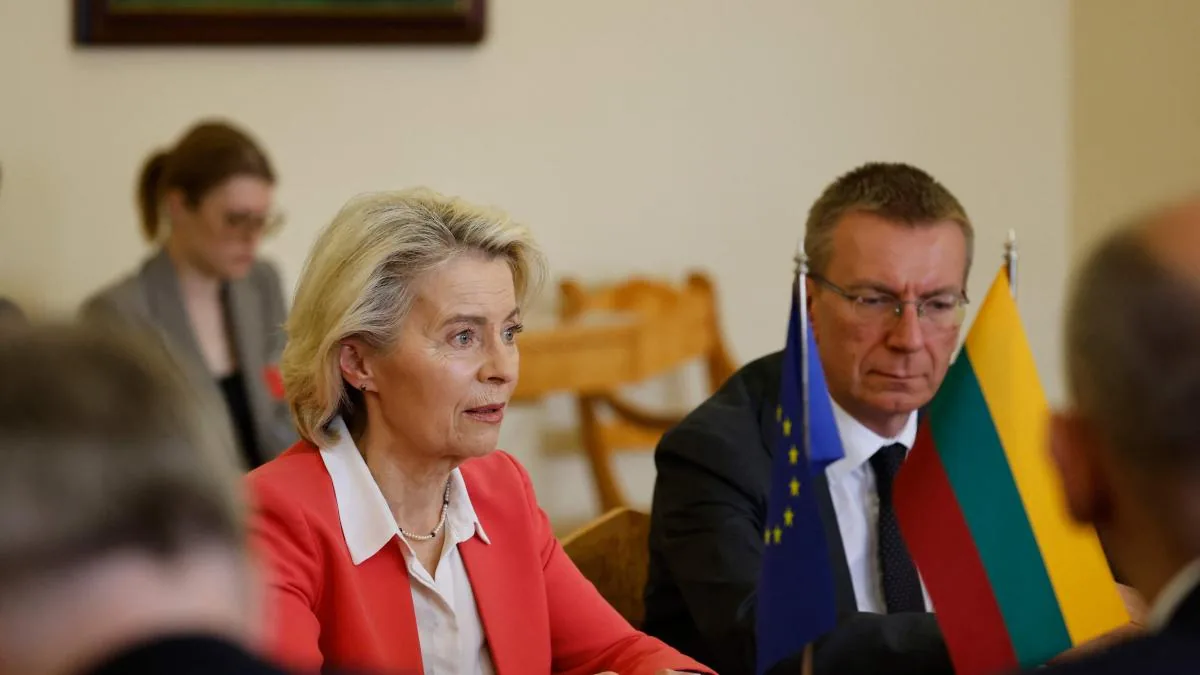
“These are not isolated incidents. It is a deliberate strategy by Russia, which is trying to destabilize our democratic societies, very similar to what is happening on the battlefields of Ukraine,” warned the President of the European Commission, Ursula von der Leyen, from Vilnius after meeting with the presidents of Lithuania, Gitanas Nauseda, Latvia, Edgars Rinkevics, and Estonia, Alar Karis.
Gitanas Nausedas
“The skies over the Baltic are not safe enough,” warns the Lithuanian president
The German conservative traveled urgently to the Lithuanian capital with Defense Commissioner Andrius Kubilius to show Brussels’ solidarity with the countries and coordinate a response to the drone incursions in the region’s airspace. In a statement, the head of the Community Executive wanted to send a message of unity and firmness in the face of what they consider a “new security reality” on the continent, but the Baltic countries believe that good intentions are not enough and are asking for more European aid to strengthen the security of the eastern flank. “The skies over the Baltic are not safe enough,” lamented Nausedas.
Von der Leyen is shocked by what happened last week, which in her opinion is what many thought belonged to “another era.” “Air raid alerts, families seeking refuge, schools closing, transport interrupted. This is the reality on Europe’s eastern border in 2026. It is happening here today. Tomorrow it will happen in the rest of Europe,” she reiterated, recalling that Brussels will activate 12 billion euros through the SAFE defense loan and will redirect 1.5 billion from cohesion funds to the Baltic States “for border preparedness.”
This “new reality” experienced by the Baltics means constant drone sightings, Russian electronic warfare, new technologies, and cross accusations. Nausedas said that “daily” events occur such as unmanned aircraft incursions, electronic interference, disinformation campaigns, false allegations, and even sabotage threats. Ukraine denounces that Moscow diverts the drones it sends to attack the Russian Leningrad area to these Baltic countries. Also last week, another NATO fighter used a missile to shoot down one of these devices in Estonian airspace.
All this increases fear in these three former Soviet republics, especially as the United States openly announces troop reductions in Europe. While drones sow panic in the Baltics, Russia intensifies its attacks on Ukraine. This Sunday, Kyiv suffered one of the worst bombings since the beginning of the conflict and at least four people died. Now Moscow has announced that bombs will continue to fall on the Ukrainian capital and has asked international delegations to withdraw their diplomatic staff from the Ukrainian capital, something that Europe interprets as a threat to isolate Ukraine through fear. For now, Brussels maintains its representation.
Read more Sánchez advocates at the FAO for «no to hunger» against wars
New phase of the war
The EU will maintain its representation in Kyiv despite threats of Russian bombings
“Russia has reached a dead end on the battlefield, so it terrorizes Ukraine with deliberate attacks in city centers. These are abhorrent acts of terror intended to kill as many civilians as possible,” denounced the EU’s High Representative for Foreign Affairs, Kaja Kallas, who points out that Moscow is using intermediate-range Oreshnik ballistic missiles, systems designed to carry nuclear warheads, as a “tactic of political fright and a reckless nuclear provocation.”
All these acts are discouraging Europe from really sitting down to negotiate with Russia, considering that Vladimir Putin is not truly interested in ending the war. Last week, during the NATO foreign ministers’ summit in the Swedish city of Helsingborg, U.S. Secretary of State Marco Rubio acknowledged that the U.S.-led peace negotiations have not yielded the promised results. “If someone else wants to take care of it, let them,” said Donald Trump’s chief diplomat.
Until now, Europe had been sidelined from peace negotiations, so an opportunity arises for it to impose its narrative that it needs to have a voice and vote in the potential end of the conflict. This Thursday and Friday, EU foreign ministers meet in Cyprus and could debate this initiative. Several names have been suggested as possible intermediaries, from former German Chancellor Angela Merkel, Finnish President Alexander Stubb to former European Central Bank President Mario Draghi, the name that recurrently appears as a potential European wildcard. “For now, these are all talk or wishes rather than reality,” comments a European diplomat.
In Vilnius, Von der Leyen avoided speculating on names and recalled that as long as Russia continues bombing Ukraine, it shows no willingness for peace. The Baltic leaders are also skeptical about this possibility: Rinkevics warned that Russia usually uses such proposals as a strategy to divide the allies. “First we should talk about what we want to say to Russia, and then decide whom to send,” Karis pointed out.
Read more Aznar recovers his «whoever can, let them do» after Zapatero’s indictment