Spain has requested support from the European Border and Coast Guard Agency (Frontex) and Europol from the European Commission for the triage –classification– of immigrants who remain irregularly in Ceuta.
Read more Spain asks the EU for Frontex support for the triage of migrants remaining in Ceuta
The Ministry of the Interior sent this request to the Director-General for Migration and Home Affairs of the commission, Beate Gminder.
The letter responds to the missive that the Director-General sent on August 21 to the Spanish Ambassador to the EU, Marcos Alonso, offering the help of various European agencies in light of the situation faced by the autonomous city.
The Government had always resisted using the European agency for border control and had preferred to use its own resources. However, the situation in Ceuta has made the Government forget its reservations.
Interior estimates 100 expelled to Morocco for committing crimes after the mass crossing
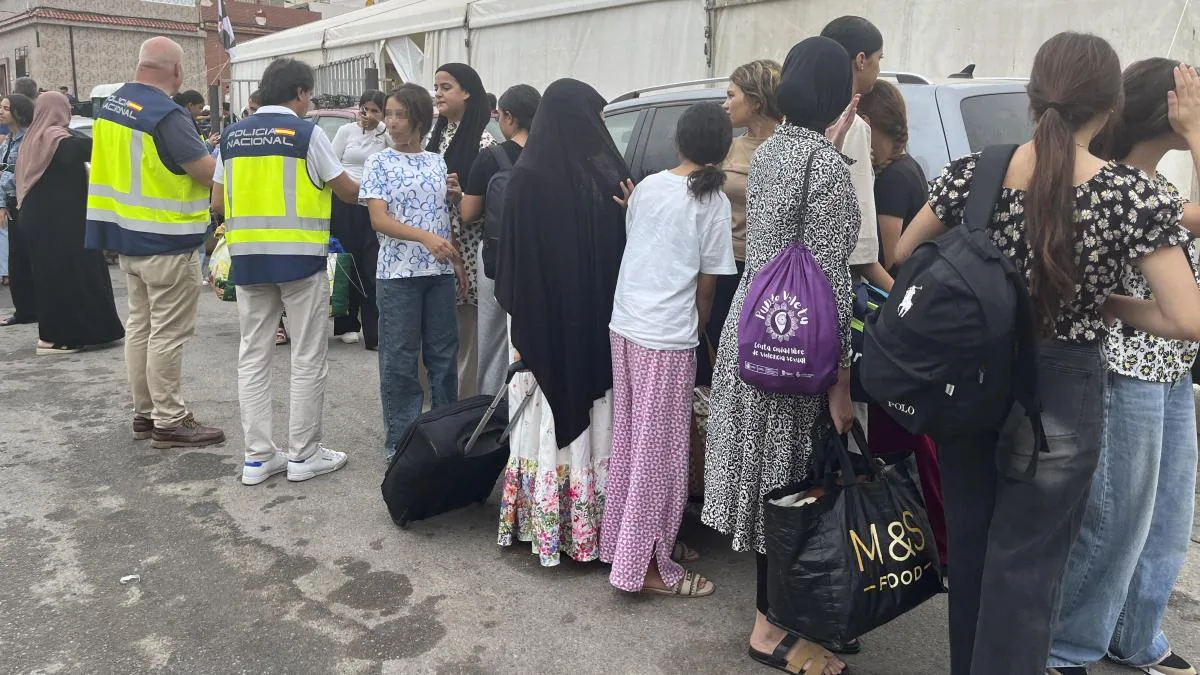
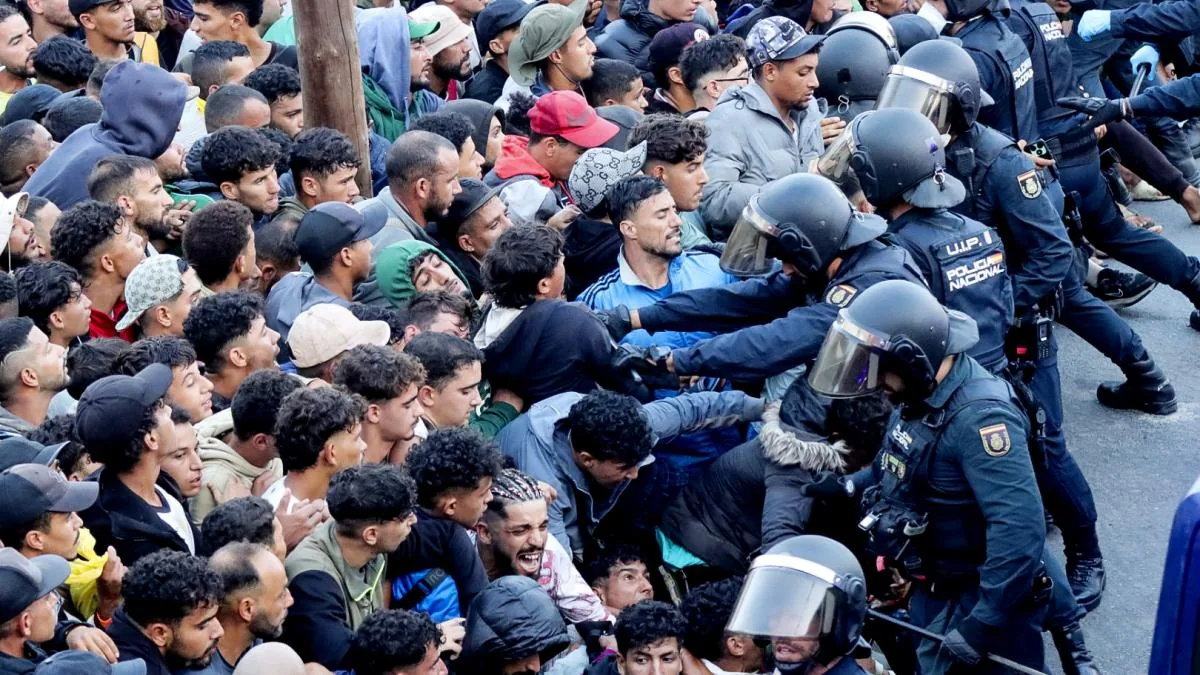
It is enough to see the image of the long lines of teenagers spending the night outdoors at the gates of a stadium to get the front row at their favorite artist’s concert. Although the spirits are not even close to the same. On the slope of Loma Colmenar, hundreds of Moroccans have been waiting for a week for their turn to enter one of the reception centers that the Government set up to provide a bed for immigrants who remain in Ceuta after the mass jump. Only 700, the first to arrive, secured a place in the military tents deployed in the Embolsamiento parking lot, very close to the El Tarajal border. Outside there are more. Many more. The people of Ceuta do not want them in the streets, but the authorities, almost a month after the avalanche, have not managed to find them shelter.

They have become the target on which groups of fed-up neighbors are throwing their darts full of discontent over the government’s management of the crisis. One, shaped like a pin, hit Naufar Mansour in the buttock. He shows the medical report of the assault. Also the bloodstain on the pants; the same ones he wore the day he crossed into Spain from Morocco. “I want to report that I was beaten, and my phone was stolen,” can be read on a handwritten sheet with the help of a translator. He says it was the night before, after about a hundred people destroyed part of the Benítez beach camp, burning some huts. A colleague of his, a Moroccan compatriot, joins the conversation to show the four staples used to close the wound after the blow with a stick he received. He claims, with no more evidence than his words, that his attackers were also neighbors tired of his presence.
Read more The Government increases the allocation for humanitarian aid in Ceuta to 44.5 million
The Government increases aid to 44.5 million
The Minister of Inclusion, Social Security and Migrations, Elma Saiz, announced yesterday an increase of up to 44.5 million euros to sustain and reinforce humanitarian care in Ceuta, following the irregular entry from Morocco of “around 72,000” migrants on July 30 and 31. Saiz criticized the opposition for reducing the debate to numbers and asked that it not be forgotten that behind them there are “stories of suffering” and “dozens of deaths” during border crossings. The minister appeared before the migration committee of Congress to detail her department’s management of the migration crisis and assured that “from the first moment” the European Union was asked to finance the costs incurred through extraordinary aid mechanisms linked to migration and asylum. She also defended the “extraordinary” response of the Executive in Ceuta, “from legality and humanity.” “There is no contradiction between protecting borders and helping those in need,” she said. For this reason, she praised Ceuta’s society as “an example of coexistence, solidarity, serenity” and asked that volunteers distributing food and water not be “intimidated.” / S. Hinojosa
The Minister of Migrations, Elma Saiz, opened the first 1,800 places enabled on August 20. Most, about 1,100, were intended for sub-Saharan Africans, who were displaced from Trampolín beach, a symbol of this humanitarian crisis where new reed huts were growing by the hour yesterday. The other 700 were in the Embolsamiento, where Maghrebis crowd despite no confirmation that more beds will be enabled there. But since then the number remains the same. From the Congress of Deputies, Saiz explained that temporary reception resources require “significant material and human infrastructure to function.” But according to ministerial sources, the problem is not logistics but the choice of places to set up the centers.
The Government announced yesterday an agreement with Ceuta on a renewed list of spaces for relocating migrants after the rejection caused by the proposal to adapt sports centers. However, the new locations are being kept secret due to the probable popular rejection their announcement will cause. In a city 14 kilometers from end to end, any point will cause discontent.
On the fourth day of protests, police blocked access to Benítez beach
On the fourth consecutive afternoon of protests, several hundred demonstrators returned to Benítez beach, where an identical police cordon to the previous day prevented them from approaching the immigrant settlement. “Get out of here,” and “go after them” were the most heard slogans late in the afternoon, when spirits seemed calmer, although frustration continues to grow. Dozens of neighbors had gathered earlier in front of the Government Delegation, holding carnations, to show “peacefully” that they do not want episodes of violence even though their message remains the same: expulsion, expulsion, and expulsion.
The spiral of hostility in recent days – episodes of immigrant hunting, ambushes on soldiers, or destruction of camps – led Ceuta’s political class yesterday to call for “unity regardless of beliefs, cultures, or origins” so that coexistence is not endangered. The Ministry of the Interior estimates 100 people expelled for crimes in Ceuta. Eleven of them are Moroccans who set a trap for the soldiers. “The violent do not represent us, they seek to divide us, distract attention from the main issue, and harm the image of everyone and Ceuta,” read President Juan Jesús Vivas as part of an institutional declaration signed by political groups represented in the Assembly. The leader of the Popular Party warned that sanctioning measures will be taken against those who commit vandalism.
Read more Felipe and Letizia mourn the passing of Harald “an example of dignity and simplicity”