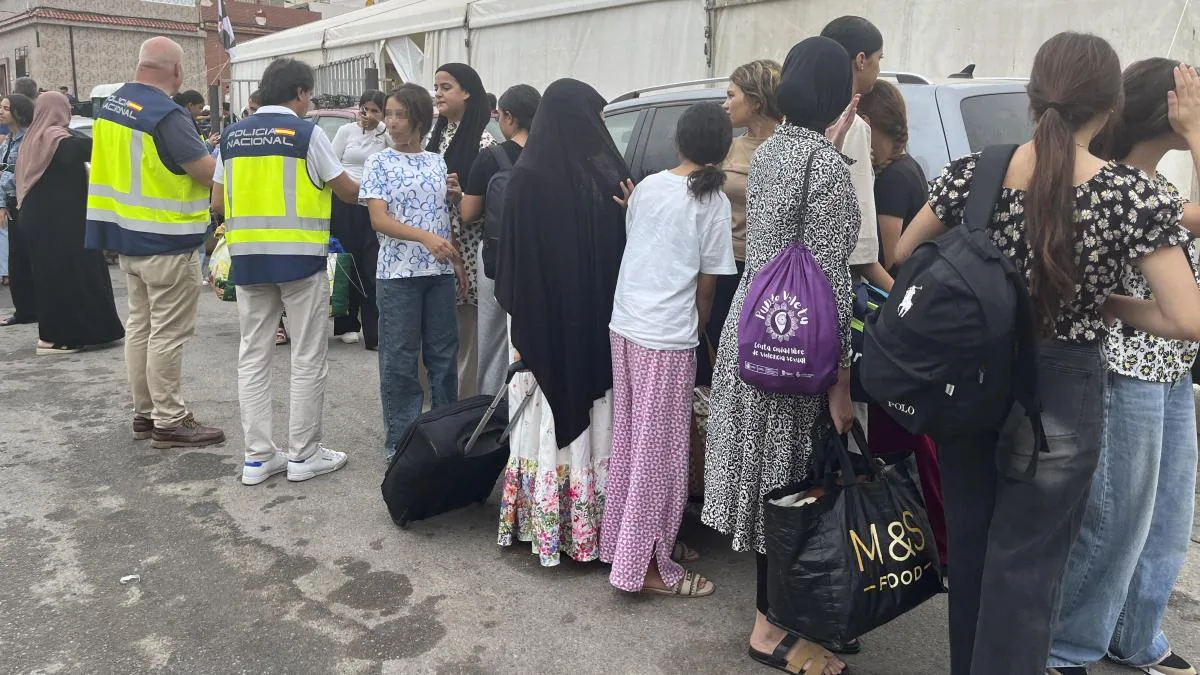
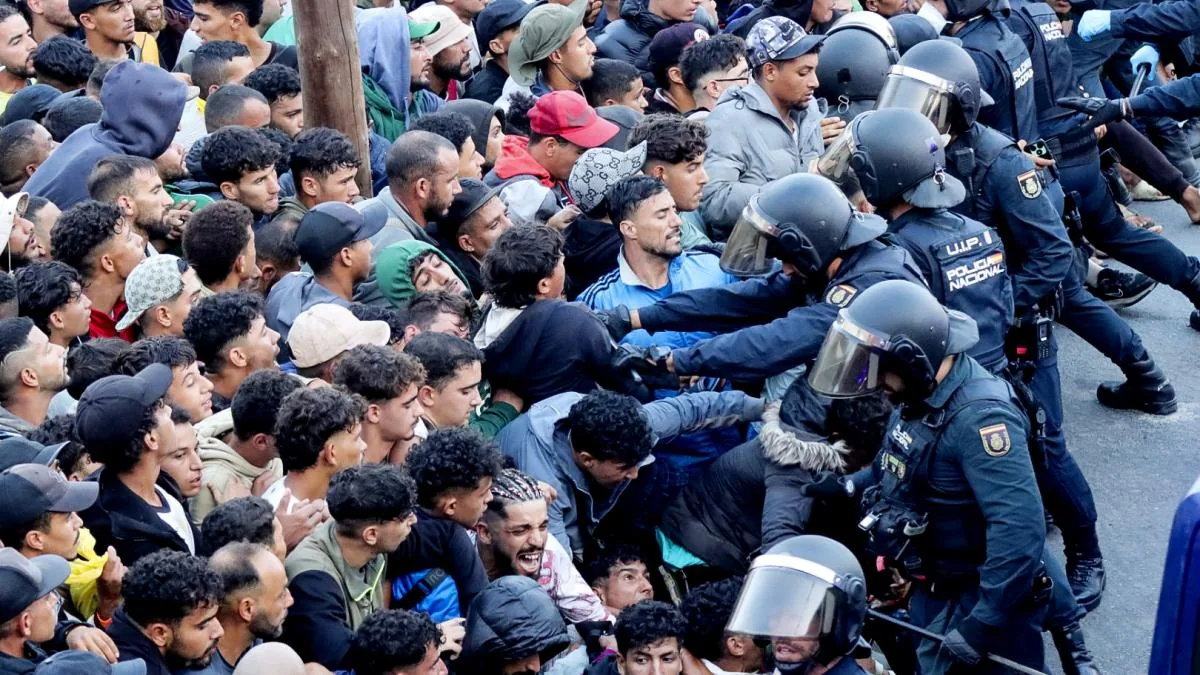
Pedro Sánchez went to the Congress of Deputies yesterday with the urgent need to regain the initiative and gain some political breathing room. After almost a month of secrecy and unsuccessful damage control over the migratory and humanitarian crisis unleashed in Ceuta on July 30 and 31, the Prime Minister insisted on distancing Rabat from the authorship of the assault. “It cannot be concluded” that the massive entry was designed by Morocco, he maintained, although he admitted that it will be investigated whether there was “inaction or incapacity” on the part of the neighboring country’s authorities.
Read more Werner Herzog mimics Kate and Rooney Mara in the dreamlike ‘Bucking Fastard’
He also acknowledged that, although “there were no extraordinary alerts or warnings,” the institutions had detected an increase in arrivals. And he attempted a dramatic move by announcing the declassification of intelligence reports prepared between July 1 and August 2 – an announcement that the Socialist bench and ministers received with applause except for the Defense Minister who remained serious and did not join the gesture –. But the attempt to close the crisis with transparency and diplomatic prudence did not achieve the desired effect. The president faced a Chamber that, with nuances, questioned his version of the facts.
The exoneration that Moncloa makes of Morocco annoys all parties; no one believes it
The opposition accused him of “inaction” and “complicity”; his investiture allies reproached him for “not being up to the task,” and his government partners again demanded a response to transfer minors, especially girls, migrants to the Peninsula.
The president’s effort to establish a narrative of self-restraint and diplomatic prudence ran aground even before the plenary session began. Barely twenty-four hours after a National Police report emerged pointing to the active collaboration of Moroccan agents guiding migrants towards the breakwaters, Moncloa’s thesis was received by the opposition as a display of “naivety” and by his investiture allies as an exercise in “political calculation.”
Sánchez specifies that King Felipe VI will travel to Ceuta and Melilla “in the coming weeks”
Aware of how muddy the playing field was, Sánchez wrapped himself in history. He began his appearance by evoking the lions flanking the main entrance of the Palace of the Carrera de San Jerónimo – fused with cannons captured in the African war – and cited the Treaty of Wad-Ras that certified Spanish sovereignty over Ceuta and Melilla is shielded “in perpetuity.” “Ceuta is not Spain’s border. Ceuta is Spain at the border,” he proclaimed.
And immediately after, he defended his caution with Morocco as a matter of responsibility and general interest. Sánchez recalled that this prudence had not prevented the Government from protesting to Rabat and revealed that the Foreign Ministry summoned the chargé d’affaires of the embassy on August 21, as the ambassador was absent, due to statements by two members of their Government claiming sovereignty over Ceuta and Melilla. “If there were evidence, we would act accordingly. This Government is not afraid to confront other foreign powers. But we are going to work loaded with proven facts. Others led us to a war with false evidence.”
Foreign Ministry called the Moroccan ambassador for consultations over claims by several ministers
The strategy outlined by Moncloa was clear. First the facts, then the responsibilities. But that appeal to prudence was precisely what found the least resonance yesterday in the chamber.
Alberto Núñez Feijóo opened fire turning the appearance into a political trial of the crisis management and the explanations offered by the Government over the past weeks. The PP leader accused Sánchez of having received information, not having acted in time, and now trying to reconstruct his version as new documents appear. And he exploited the contradiction between the Interior and Defense ministries about prior warnings of the assault and the police report known on Wednesday to present a disjointed and incapable Executive of anticipating a crisis that, for the Popular Party, was not unforeseeable. “What did you know?” was the question that ran through Feijóo’s intervention.
Vox raised the tone even more. Santiago Abascal accused Sánchez of being a “traitor” for his handling of the crisis and announced his intention to take him to court for this alleged crime. “He is hiding the reality and covering up the invader,” said the Vox leader, who demanded that Congress activate the mechanism provided for in Article 102 of the Constitution.
But the most uncomfortable response for the president did not come from the right, but from his investiture partners. The appearance again highlighted the fragility of the majority that supports Sánchez. ERC, PNV, Bildu, and Podemos not only questioned Morocco’s actions but also the Spanish response and, in particular, the humanitarian management, especially of the minors, who remain stranded in the autonomous city.
Sánchez was caught between two fronts: the right accused him of not having sufficiently protected the border and his partners demanded that the response not be limited to migratory containment.
And, as a backdrop, the dispute with Zarzuela over Felipe VI’s trip to Ceuta and Melilla remained open. Sánchez assured that the monarch will travel “in the coming weeks,” a statement of which the Royal House had already been informed, despite the Government having insisted in recent days that it did not intend to “set the King’s agenda.”
But Sumar was still missing. The government partners arrived at the plenary with the obligation to support the president, but also with the need to distance themselves in a crisis that directly affects one of their main political banners. The defense of minors’ rights and the demand to accelerate their transfer to the Peninsula became one of the points of friction.
Parliamentary tactics and time control, combined with the fact that the pressure from Feijóo and Abascal diminished in their replies, allowed the president to avoid the appearance turning into a political motion of no confidence over his management. But he did not achieve the goal of closing the discussion about Morocco.
Read more What you fear the most