The Russian Ministry of Foreign Affairs on Tuesday asked Spain for evidence of its alleged involvement in a disinformation campaign that would have caused the migration crisis in the autonomous city of Ceuta, as hinted yesterday by the Spanish Prime Minister, Pedro Sánchez.
Read more Private label boosts supers and improves Lidl, Dia, and Aldi’s market share
“When there are accusations, there must be concrete facts that then require verification. And only after this can one talk about an accusation that, in some way, can be taken seriously,” said Maria Zakharova, Foreign Ministry spokeswoman, at a press conference, according to the Interfax agency. Zakharova added that, “without facts, without materials supported by figures, dates, and names, there is simply nothing to talk about.”
“Any other country could have found itself in this situation, since there is no information confirming it. So, as we always say, first there must be at least, not necessarily proof, but some information that supports the fears or concerns of the Spanish side. Then we will comment on all this specifically,” she emphasized.
Otherwise, she added, all this “would be linked to the agenda of activities titled ‘Dialogues on Fake News 4.0’.”
She also recalled that there are other channels to file complaints to Moscow about cyberattack cases, besides the Russian Embassy in Madrid or the UN itself. “Madrid did none of this (…) and immediately ran to the microphones to make statements without supporting materials,” she said, according to RIA Novosti.
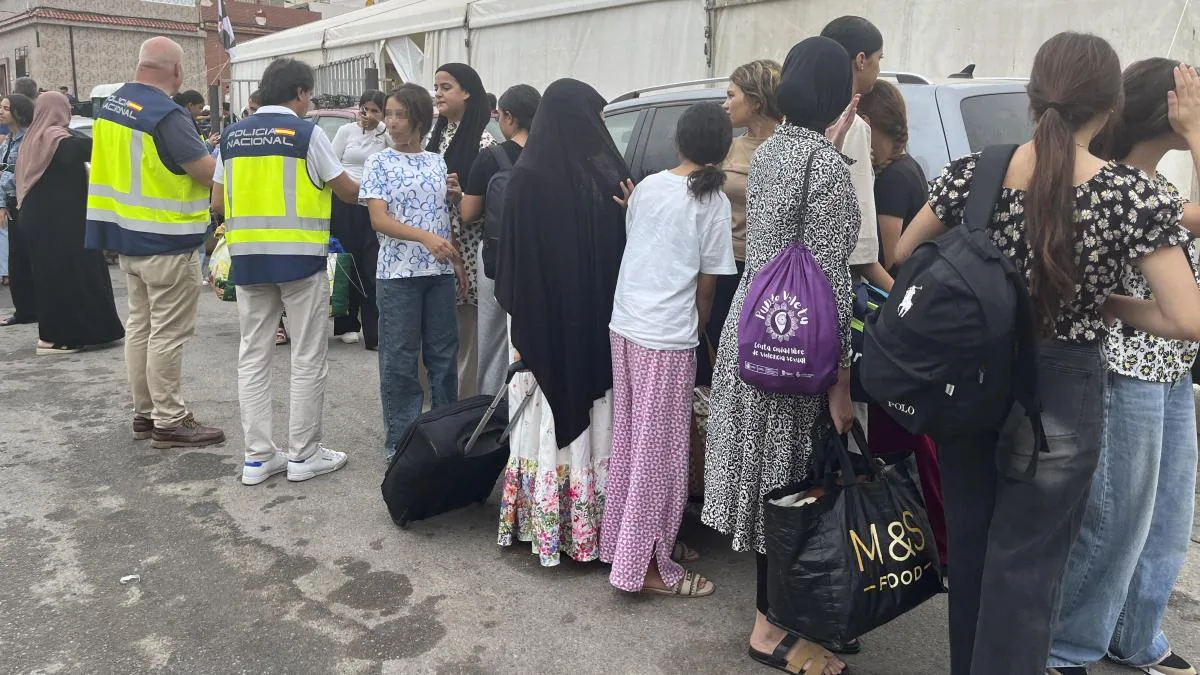
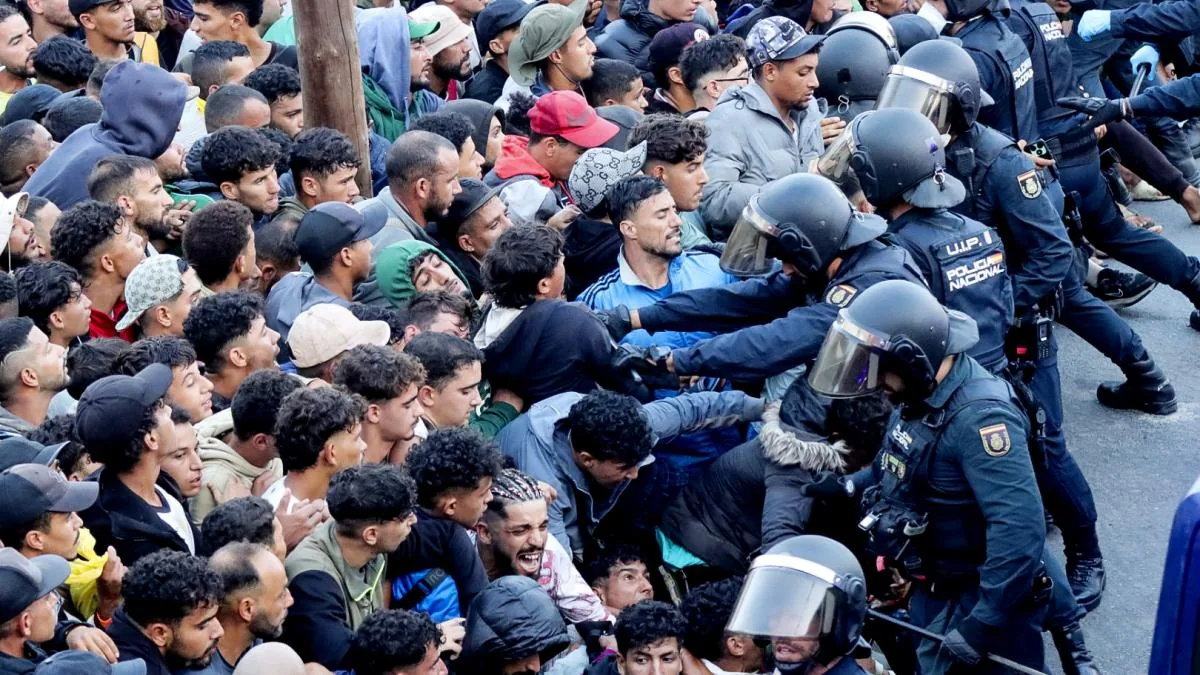
The statements of the Russian diplomacy spokeswoman come after the Spanish Prime Minister, Pedro Sánchez, suggested yesterday in an interview on La Ser that Russia and Israel could be behind the entry of more than 70,000 people into the autonomous city at the end of July. Spain’s “brave” foreign policy may have motivated moves by countries like Russia or Israel to destabilize through fake news and disinformation in the field of migration movements, he indicated.
Read more An immersive exhibition in the Amatller house will permanently recognize Dalí
“It is evident that if Russia gets involved in disinformation on this issue or Israel also disinforms by criticizing the Government of Spain, it will not be because they care about migration in Spain or Europe, but because of the political positions we are maintaining, which I believe are brave, regarding the genocide in Gaza or regarding Putin’s invasion of Ukraine,” said the head of the Executive, who avoided at all times pointing to Morocco as responsible for the crisis.
At the end of July, the Russian Ministry of Foreign Affairs described the massive and irregular entry of migrants into Ceuta as a “collapse of the European Union’s migration policy.” “In any case, it is a humanitarian catastrophe that affects us all, but at the same time, we cannot deny that it represents a collapse of the migration policy that the European Union has followed for many years,” commented Deputy Foreign Minister Alexander Grushko, cited by the TASS agency.
The diplomat assured that Russian authorities “trust that the Spanish government will find a way to solve the problem,” while adding that “Spain could have invested its money not in Ukraine, but in addressing its own security.”
Israel’s Foreign Minister, Gideon Saar, already accused Sánchez yesterday of spreading “blatant lies.” “He lied again, surprisingly accusing Israel of spreading misleading information about the events in Ceuta. This is a blatant lie,” Saar said in a message on social media. “Continuing to spread defamatory lies will not distract from Sánchez’s shameful inability to manage his country’s affairs,” the Israeli Foreign Minister elaborated.
Read more The Venice Film Festival is dedicated to political cinema