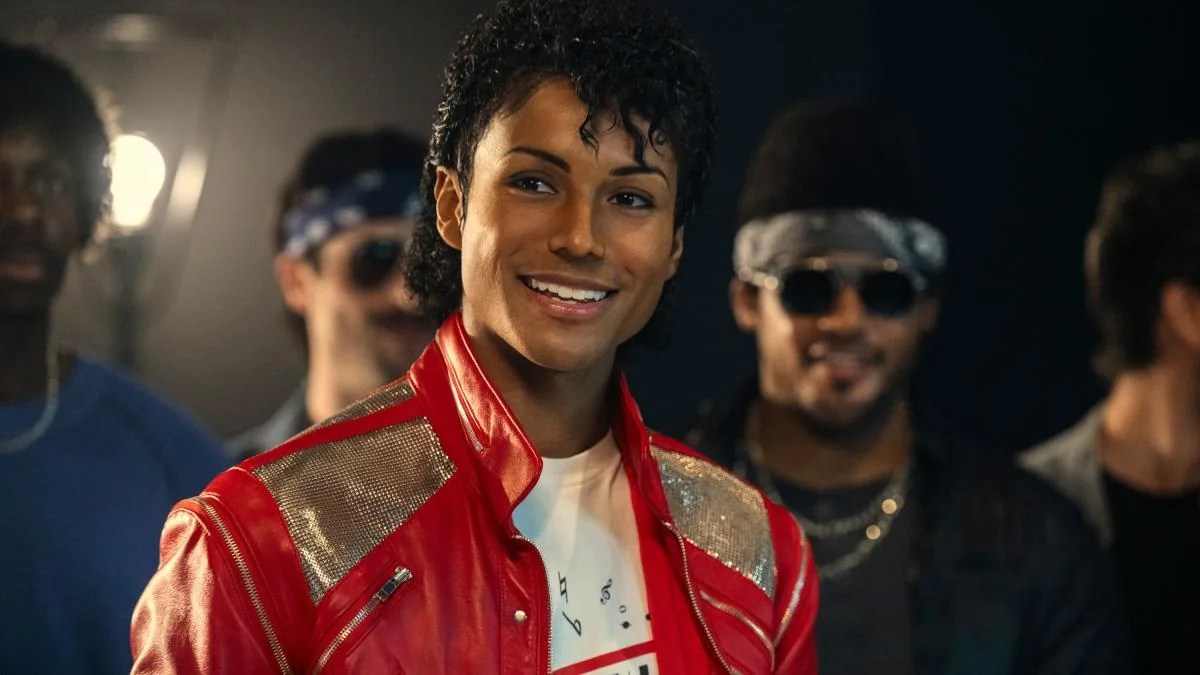
Michael Jackson was too tempting a candy for the film industry to escape the trend of musical biopics. But Michael , the newly released story of the King of Pop, has come to light with more chiaroscuro than a Caravaggio to navigate the multiple mines contained in the artist’s story in a film that began to take shape after the success achieved in 2019 by Bohemian Rhapsody and that had from the start the support of Jackson’s heirs.
Read more Where is the soul of Apple?
Confidentiality agreements, threats of lawsuits, and commercial pressures around an artist who is also a running business have left a visible trace in the film directed by Antoine Fuqua and starring Jaafar Jackson, nephew of the youngest of the Jackson 5. To the point that 30% of the footage ended up shelved to respect the agreement reached years earlier with Jordan Chandler, the boy who accused Jackson of sexual assault in 1993.
The highest-grossing biopic in United States history – surpassing Oppenheimer in this contest – centers its story on the conflict between Michael and his father, Joseph, turned into a textbook villain. The mother, Katherine, acts as a protective virgin, ignoring that in reality she defended the belt beatings with which the father forged his children’s musical career, while the siblings (six of the nine who grew up in the family nucleus appear) are no more than an anecdote in the story, which does not forget the protagonist’s hobby of collecting animals, from a llama to a giraffe.
The omission of controversial parts turns the protagonist into a seraphic and smooth character
The white glove, the moonwalk dance, the chimpanzee Bubbles, the whitening of his skin, the nose surgeries, or the confrontations with the father are not missing on screen, and above all the songs that made Michael great are present, the true backbone of the film that reimagines with modern camera shots the what and how of the successful ABC, Billie Jean, Thriller or Bad.
This music gives strength to a story sweetened like a Disney children’s film that omits figures such as Janet Jackson, opposed to the making of the biopic (the singer’s daughter, Paris, also does not approve), and ignores the link with Pepsi in the accident that caused the singer second-degree burns during the shooting of a music video, as it also glosses over the addiction to painkillers he suffered from that incident. Too much white and little black to make this story of the author of Black or white believable.
Read more Vox’s worries about the burka
Another significant omission affects Jackson’s romantic relationships with Diana Ross – mother, friend, and lover – and Brooke Shields, which turns the protagonist into a seraphic angel concerned only with singing and visiting sick children while his lawyer, John Branca – producer of the film, warning to navigators – acts as the archangel Saint Gabriel protecting the traumatized young man from the father and distributing checks to the most needy. Acts of kindness accumulate while Jackson crosses paths with Quincy Jones and embarks on his most successful stage with Off the wall , the album that boosted his solo career.
The collaboration with Jones, which continued in Thriller and Bad, marks the climax of the story, interrupted in 1988 without mentioning the most radioactive part of Jackson’s history: the pedophilia accusations made in 1993 by Jordan Chandler, and sustained over time by other minors and their families without it ever being clear where the line between truth and greed lies. The latest to join have been the Cascio family, considered for years the artist’s “second family” and who in 2026 have sued Jackson for sexual abuse.
The 1994 agreement to close the pedophilia complaint forced the film to be redone
Left behind were the documentary Leaving Neverland , which in 2019 denounced abuse of two children, as well as accusations later denied by Latoya Jackson herself. The trail of accusations that marked the star’s last years was supposed to star in the final part of the film, with a story that according to the New York Times exonerated the artist turning him into a victim of blackmail. But at the last moment the heirs discovered that the agreement reached with the Chandler family in 1994 – for which they received 20 million dollars at the time – prohibited any reference to the case.
Correcting this error meant delaying the film’s release by a year after removing much of the footage with an additional cost that The New York Times estimates between 40 and 50 million dollars. This amount, however, seems small after the film’s success, which ends with the warning that “his story continues” and the mystery of how much of his life will be omitted to the greater glory of the music that, after all, is what made a figure as American and fanciful as Mickey Mouse himself great.
Read more Let’s not forget Ukraine