“There is currently a central Government in Spain with which we do not agree. We do not agree with its policy, with its statements, with its initiatives, and we see a specific approach against Israel,” said the chargé d’affaires of the Embassy of Israel in Spain, Dana Erlich, this morning during the Fórum Europa press breakfast. Erlich stated that for Israel to return “to normality with the current Government, a change in policy is needed.” Because, according to this diplomat, “Spain is important to Israel.”
Read more The Mossos finalize a report on Jonathan Andic’s lightning trip to Ecuador
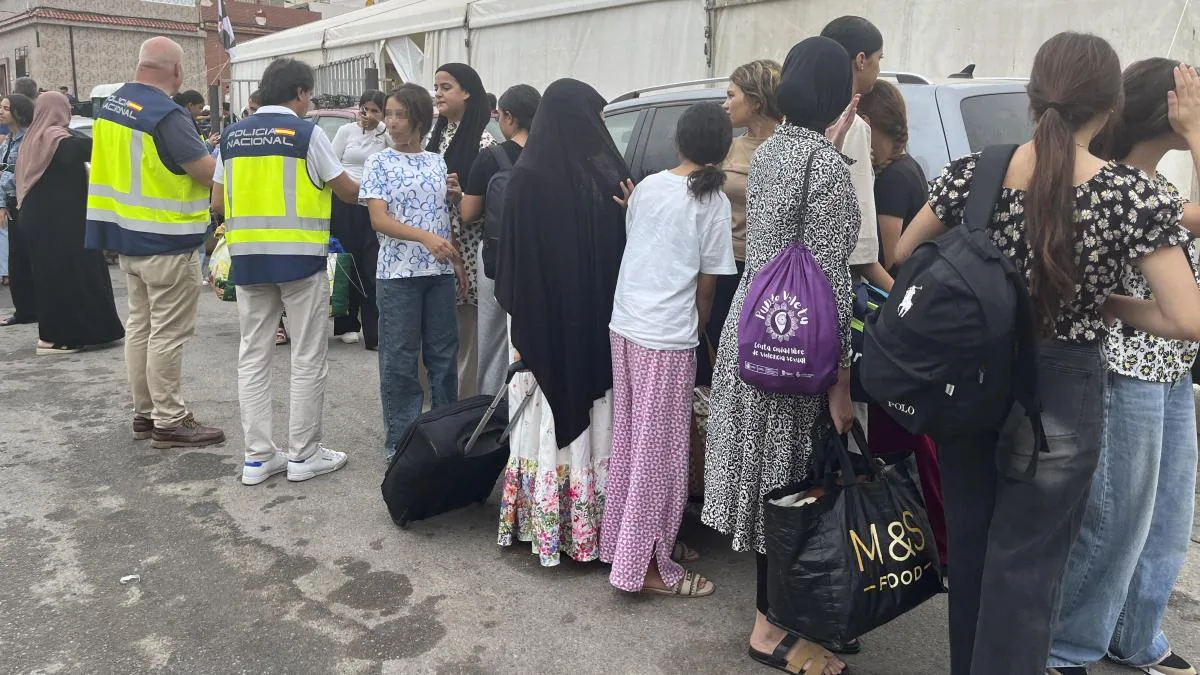
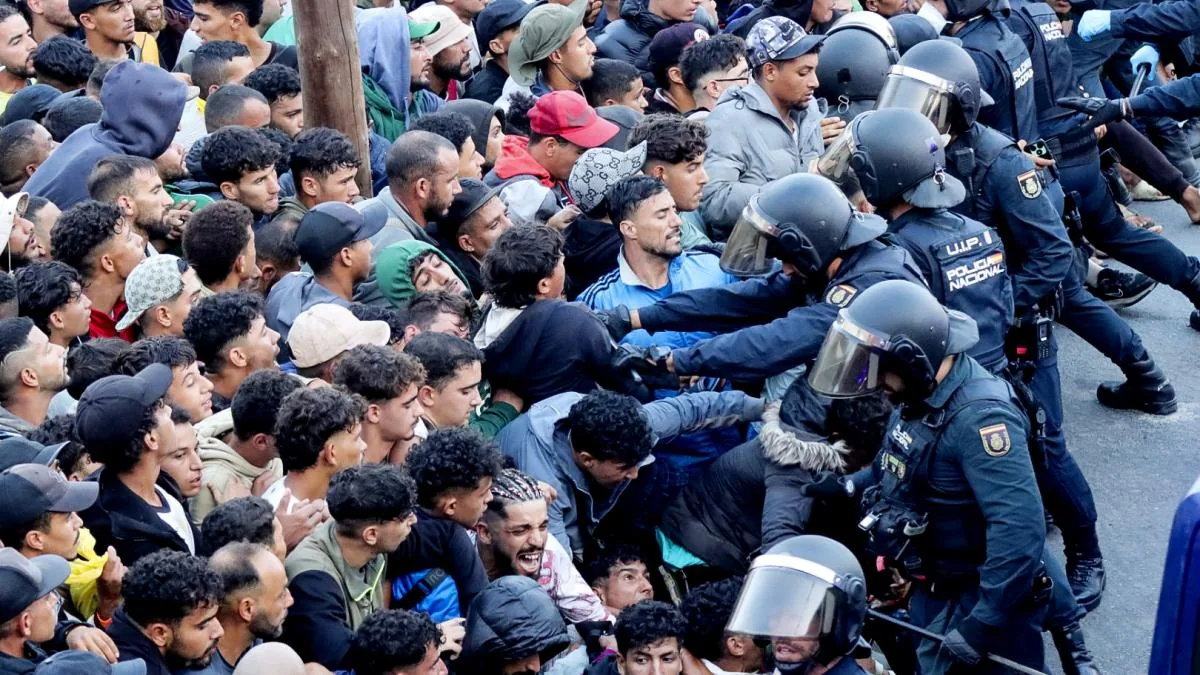
In this context of tense relations between Spain and Israel, Erlich admitted that on the morning of August 31, when the massive entry of migrants from Morocco to Ceuta occurred and generated a migration crisis from which Spain has still not recovered, she regretted seeing that the opportunity had been found “to blame Israel again” for this case. “I was surprised,” she confessed. “Although we know all the conspiracy theories and all the hoaxes against Israel, I was still surprised that, without information, without reports, but with disinformation, a lie that had nothing to do with us is repeated,” she declared.
“We have no doubt and never had any doubt about who has control in Ceuta,” Erlich pointed out, recalling that one of her first visits upon arriving in Spain was Ceuta. Being there and seeing President Juan Jesús Vivas and “the magnificent work they are doing of living together, of coexistence,” it seemed to her “an example from which we have to learn.” Therefore, without directly mentioning Pedro Sánchez’s Government, she assured that she was surprised that “instead of talking about the security of Ceuta, while we were in the middle of that crisis, in a national emergency in Spain,” Israel was pointed out “again and again.”
Erlich insisted on this point and wondered “how is it that Spain is suffering one of the most important crises of these years and Israel is being talked about.” In her opinion, the focus should be on other matters and she even suggested that the accusations against her country may be serving to divert attention: “It can be said that Israel is being used as a smokescreen, that attention is being diverted from other issues.”
The diplomat also highlighted the rejection that, according to her, those accusations aroused both in the media and among various Spanish political forces. “Not only do we completely reject this lie,” she stated, before assuring that her interlocutors in the European Union also do not know the supposed report on which the accusations would have been based. “We have a phrase in Hebrew: I cannot show something that does not exist,” she noted. “If someone accuses us of something, again you have to ask why. For us it is obvious that the problem lies elsewhere.”
From there, she framed the ties with Rabat within the Abraham Accords and in a relationship that, according to her explanation, goes far beyond the current political situation. “With Morocco we have a relationship that goes beyond current relations, but rather the history of our Jewish communities,” she pointed out, recalling that there is a significant population of Moroccan origin in Israel.
But that relationship, she wanted to make clear, is not built at the expense of other partners. “Being an ally or having that connection does not mean we forget other allies,” she stated. And there she again placed Spain, differentiating once more between the country and Pedro Sánchez’s Government: “Perhaps we are now at a critical moment with the current central Government in Spain, but that does not mean that Spain as a country is not a partner.”
Erlich linked the decisions made by the Spanish Government regarding Israel to national security: “We can do more because, unfortunately, we have seen that the decisions of this Government sometimes leave aside the security of Spaniards.” Specifically, she warned of the consequences of limiting bilateral cooperation in Defense matters: “Not working with Israel on defense also has implications for Spanish citizens.”
The chargé d’affaires thus insisted on separating the deterioration of political relations with the current Government from the ties between the two countries. For Israel, she reiterated, the relationship with Morocco does not exclude the one it maintains with Spain and both can develop in parallel: “For us it is very clear that we have to work together.”
Along the same lines, Erlich assured that Spain “can once again be that bridge” that, in her opinion, it was during the governments of José María Aznar, a stage she associated with “visits, dialogues, high-level meetings and an open and honest conversation.” “Spain is important to us. We see it in the context of Europe, we see it in the regional context,” she stated.
Read more Dalí’s gigantic eggs will occupy Passeig de Gràcia
However, the diplomat refused to enter Spanish electoral politics. “I am not Spanish, so I don’t vote. The elections here will be your decision,” she responded before moving the debate to the geopolitical field. At that point, she called on Spain for “a clear voice against terrorism” and against the Iranian regime, which she defined as a threat not only to Israel but to the entire region and to the West.
Erlich was especially critical of the message that, in her opinion, the Government’s foreign policy projects. “One of the most important phrases in diplomacy is not only the message you want to say, but how that message is understood,” she pointed out. And she added that if terrorist organizations or the Iranian regime have interpreted certain Spanish positions favorably, “I think there are several questions” to ask and that, she emphasized, go beyond the bilateral relationship with Israel.

The breakfast took place in one of the rooms of the Mandarin Oriental Ritz Hotel, where the chargé d’affaires of Israel was introduced by former Prime Minister José María Aznar, who also brought his speech to the Ceuta crisis. “A few days ago we saw in the Ceuta drama the consequences of having alienated the friendship of relevant allies, those allies you need to count on in crises,” said the former head of the Government, in an allusion to Israel and also to the United States.
Aznar defended the need to rebuild relations between Madrid and Tel Aviv and claimed Israel as a “strategic ally” for Spain. “Israel is the easternmost line of defense of the West, and Spain is the West,” he stated, before demanding that Spain recover “as soon as possible a normalized relationship with Israel, the one it should never have stopped having with a strategic ally.” For the former prime minister, political differences between governments should not alter those ties: “In democracies governments are temporary, but national interests are permanent.”
The former prime minister was also very critical of the position maintained by the Government since the Hamas attacks of October 7, 2023, which he defined as a “terrorist action with genocidal intent.” Aznar defended that “criticizing the Government of Israel is perfectly legitimate” and that it is also legitimate “to question its way of conducting military operations,” but he placed the limit at another point: “Labeling Israel as a genocidal state is pure and hard antisemitism.”
Along the same lines, he attacked the expression “Free Palestine from the river to the sea,” used, among others, by the second vice president of the Government, Yolanda Díaz. “Repeating slogans like ‘Free Palestine from the river to the sea’ is antisemitism. And if the meaning of such a cry is ignored, it is the dumbest antisemitism, which is unconscious antisemitism,” he argued.
Aznar also questioned the recognition of the Palestinian State approved by the Spanish Government in May 2024. In his opinion, while Israel was fighting Hamas in Gaza, “some opted for a declarative policy and believed that talking about a Palestinian State could be seen as a great contribution to peace.” However, he argued that “declarations do not change the situation on the ground” and that any expectation of peace depends on Hamas and the rest of the organizations linked to Iran being excluded from the future Palestinian political landscape.
“If a true Palestinian State is to be viable someday, Israel’s definitive victory over Hamas and the rest of Iran’s proxies is the only realistic bet for that to happen,” he concluded.
Read more Castellet’s book about Cela that never saw the light