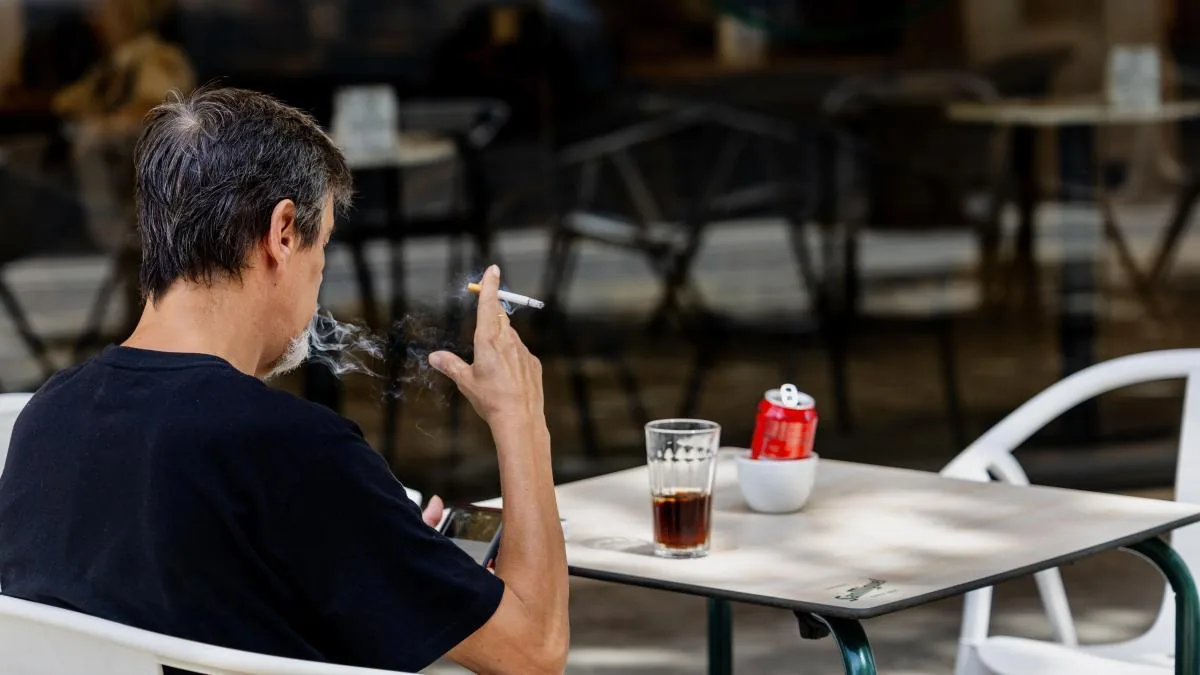
The approval yesterday of the tobacco bill by the Council of Ministers is causing a stir. Especially among the restaurant and nightlife sectors. In this regard, Fecasarm, the Catalan employers’ association for restaurants and nightlife, and Spain Nightlife, the national employers’ association for nightlife, have issued a statement to show their rejection of the project.
Read more Dies Daniel Siad, the man who recruited models in Barcelona for Jeffrey Epstein
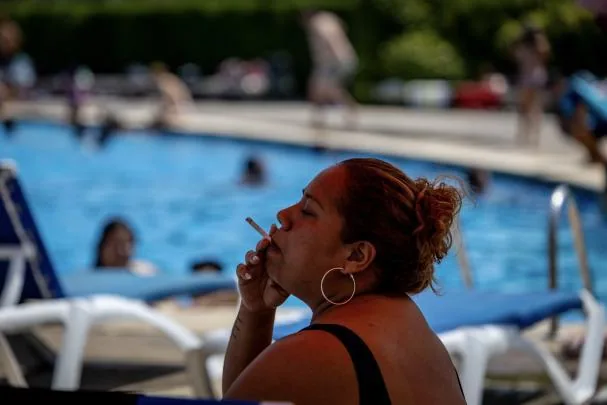
They understand that the measure will not achieve its main objective, which is to reduce tobacco consumption. In their opinion, this will shift to non-legalized or uncontrolled spaces and private homes, which will end up causing more noise, more dirt, and a greater impact on health. And they fear the worst: job losses.
“The entire restaurant and nightlife sector, which relies 25% on what is invoiced in terraces and open spaces, will be harmed,” laments Joaquim Boadas, general secretary of Fecasarm and Spain Nightlife, to La Vanguardia. Hence, – he continues – “a very significant part of the jobs of the two million workers employed in hospitality and nightlife” is at risk.
For this reason, the employers’ associations consider – and the statement reflects this – that if the reform law is finally approved, it should not include among the prohibitions the possibility of smoking on terraces or in outdoor spaces of restaurants, bars, or nightlife venues, or, “at the very least, they should be allowed to voluntarily decide whether they are spaces where smoking is permitted or not.”
The entire restaurant and nightlife sector will be harmed”
Joaquim Boadas
General Secretary of Fecasarm and Spain Nightlife
Likewise, they denounce that the reform includes within the scope of prohibitions certain devices that operate without nicotine or tobacco, such as herbal smoking products, shishas, and other products that imitate the act of smoking or are related to its social consumption, “which is truly surprising since they would neither be included in the nomenclature of the law being reformed nor could it be said that they seek to protect the health of people, whether those who use them or those who are in the same space, closed or open air.”
They also foresee a “serious contradiction” in the bill and a previous resolution issued by the Ministry of Health itself in 2011, just after the total ban on smoking in indoor restaurant and nightlife spaces came into force under the reform introduced by Law 42/2010.
Read more The King grants the Golden Fleece to Marcelo Rebelo de Sousa, former president of Portugal
They recall that in 2011, Fecasarm consulted the Ministry of Health regarding whether it was possible to use water pipes (shishas) that did not contain tobacco products or nicotine in indoor hospitality and nightlife spaces, and the Ministry responded that, according to the data provided in the submitted documents, these products do not contain tobacco or nicotine, “therefore, Spanish regulations on the prevention and control of smoking or tobacco products do not apply to them.”
It is for this reason – Boadas argues – that “by virtue of the theory of one’s own acts,” the Government cannot now justify the inclusion in this bill of the prohibition of using this type of products without tobacco or nicotine in indoor, outdoor, or open-air restaurant and nightlife spaces, since, as it recognized at the time, “it cannot prohibit something that should not be protected by Spanish anti-tobacco legislation as it would not be applicable to it.”
Three-year moratorium
Thus, they demand that this prohibition be withdrawn from the bill during its parliamentary processing and that “water pipes (shishas) that do not contain tobacco or nicotine can continue to be used in both indoor and outdoor restaurant and nightlife spaces, which should also be extended to plant extract or cellulose sticks that also do not contain tobacco or nicotine.”
In the event that the law is finally approved after its parliamentary processing, they ask for a three-year moratorium to be included in the final text so that terraces can adapt to the measure, “a period during which establishments could decide whether to allow smoking or not, since, with the inclusion of this transitional period, both the venues would have this time frame to adapt to the law and their clientele as well.”
Read more Cristina Narbona, president of the PSOE: “Our tolerance towards corruption is zero”