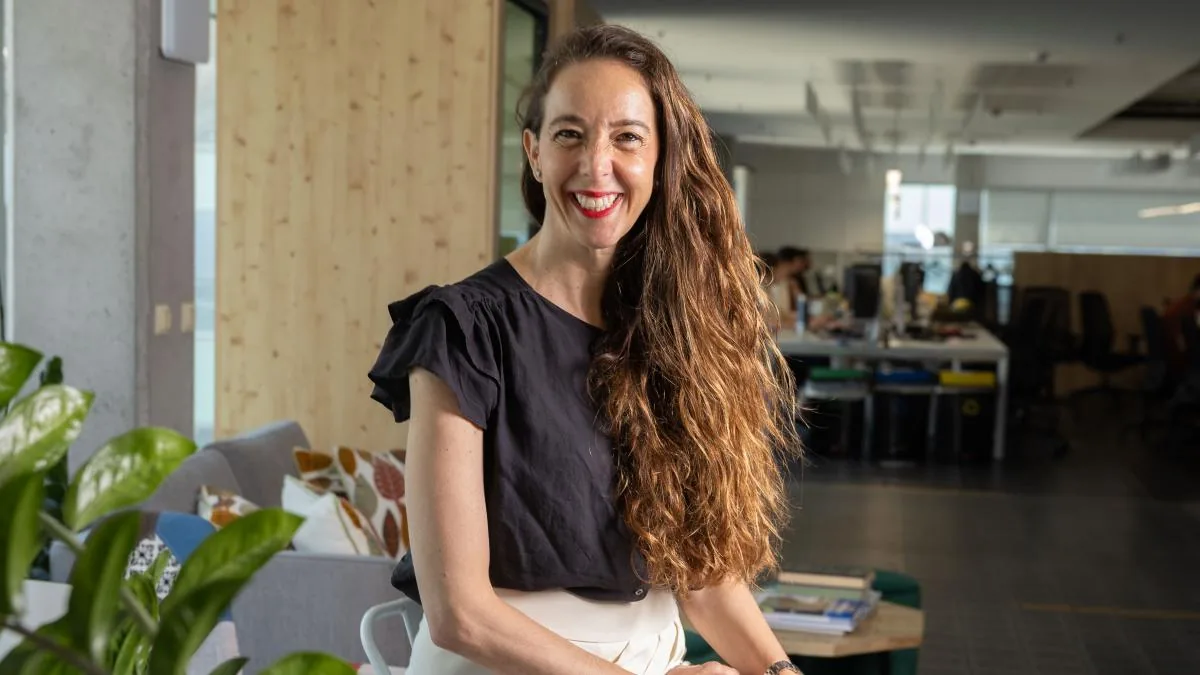
“We are very calm,” assures Carlota Pi, co-founder and CEO of Holaluz. With her captivating smile, the businesswoman staunchly defends the company’s innocence in the face of the Government’s disqualification file. Although the content is confidential, industry sources say it was opened due to possible non-payments by Holaluz to energy distributors (Iberdrola, Endesa, Naturgy), who demand energy retailers pay “tolls” for using their networks.
Read more The anti-blackout measures suffocate small electricity retailers
“Our story is David versus Goliath. This is not the first time it has happened to us nor will it be the last. It is clear there is intent behind it,” laments Pi from the company’s headquarters in the Barceloneta neighborhood, surrounded by wonderful views of the Port of Barcelona and Montjuïc mountain. With an energetic and nervous tone, the executive assures that Holaluz has already overcome another disqualification file in 2019 and a sanctioning one in 2024 and that this time will be no different: “We hope the whole truth will soon be known and that this file will also be dismissed.” The Ministry for the Ecological Transition has three months to resolve it, although the company trusts the verdict will come sooner for the good of consumers and the company itself.
Pi assures that so far she has not noticed a customer loss due to this situation
Pi assures that operations continue normally and that, so far, the opening of the file has not caused a customer loss: “We have no evidence. They want to be part of our community, supporting a model of cheap and renewable energy,” she assures. Holaluz has come from turbulent years, in which it has seen the number of supply contracts drop to 225,000, compared to 386,000 five years ago, a decline of -40%. Additionally, the company has also been forced to restructure its debt, which amounts to more than 50 million euros. Last year, it approved a plan through the judicial route and now “continues working to repay the debt to financial entities by 2028,” she assures.
Holaluz already experienced a first restructuring in 2023, on that occasion employment-related, which involved a collective dismissal to lay off more than 30% of the team. Today the staff consists of 167 people who occupy only one of the three floors of the Barceloneta offices.
On the stock market, the company has not fared better: the share price (now suspended due to the file) is at lows, falling from 14 to 0.7 euros in five years (see chart). Last year, the company managed to reduce its losses by 29%, to 22 million, but its revenues fell by 41%, to 159 million.
Read more The unresolved debate on tobacco taxes: 11 euros in Ireland and 2 in Bulgaria
How has Holaluz reached this situation? The company has been for more than a decade the emblem of green energy and self-consumption, an alternative to the country’s big electricity companies. Under the slogan of The revolution of the rooftops , it has become the spearhead of an emerging sector. “Why don’t they let us live? Because our business model is seen as a threat to the big companies. And that even though we only have 1% of the market share in Spain,” Pi maintains.
The macroeconomic situation has not been favorable. Neither for this company nor for the rest of the sector, which overestimated its expectations with the Next Generation aid for the installation of solar panels and the rise in demand for self-consumption following the increase in the price of conventional energy due to the war in Ukraine. All that is now part of the past and the sector is now looking for a new fit in the market.
“It’s all part of the Matrix”
Carlota Pi, CEO of Holaluz, insists on the persecution the company faces from the big players in the sector because of its disruptive business model: “It’s all part of the Matrix,” she says referring to the well-known science fiction movie. Holaluz stands out in the market by offering consumers renewable energy under a subscription or fixed monthly rate model. It also finances the installation of solar panels for those who choose that option. “Since our founding in 2010, we have been a very technological company, we have invested 80 million euros in digitizing operations with our own platform,” she points out. Despite the reduction in structure and debt refinancing, the company feels equipped to face future challenges. Last year, it brought in the Icosium Investment fund, backed by a Franco-Algerian investor. It contributed 22 million and took a third of the ownership. “We feel very comfortable with this industrial partner, who looks long-term and has knowledge of the energy sector,” Pi assures.
Read more DGAIA Case: firefighters don’t step on each other’s hose