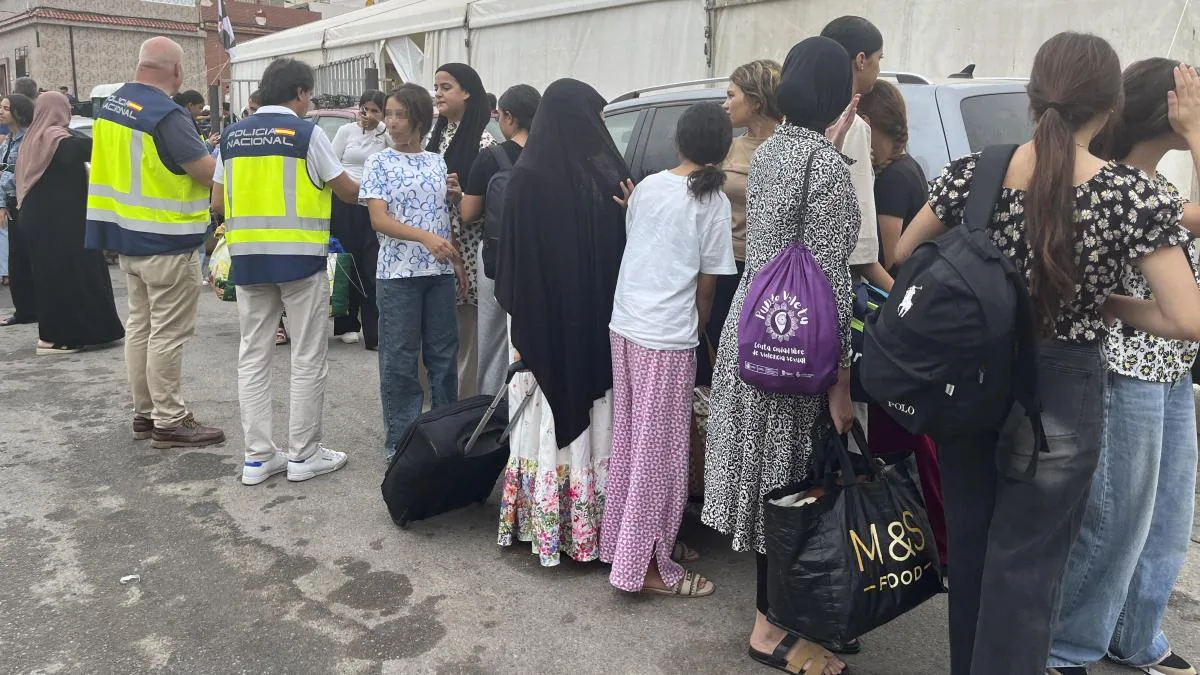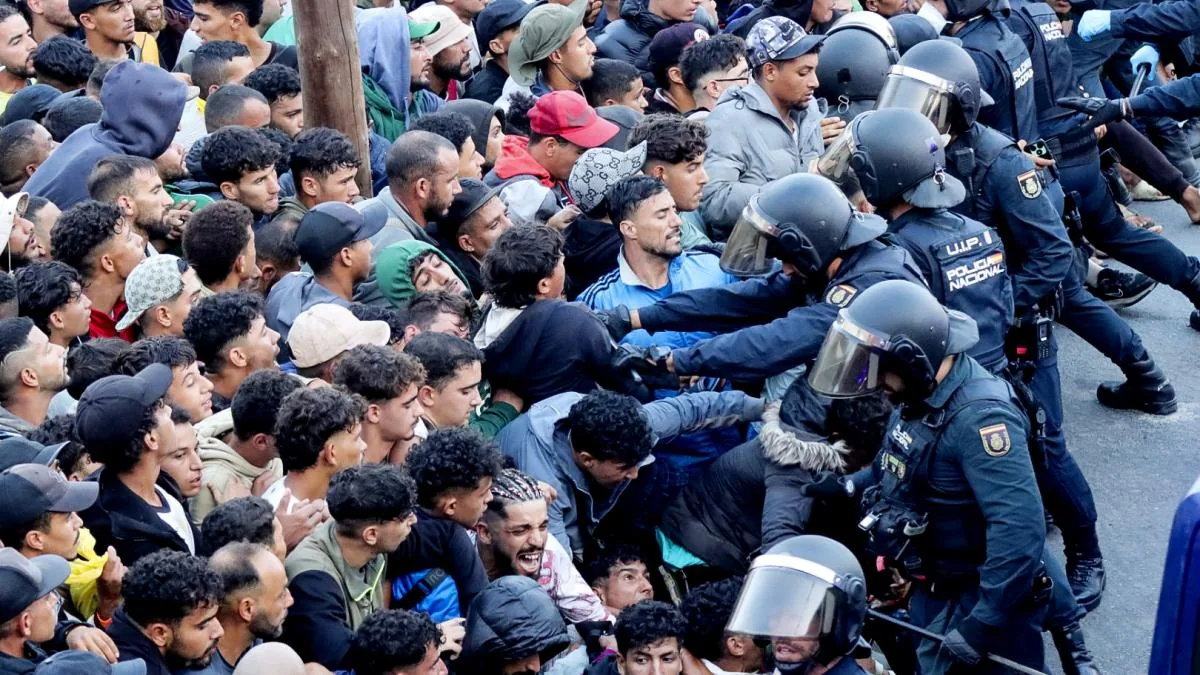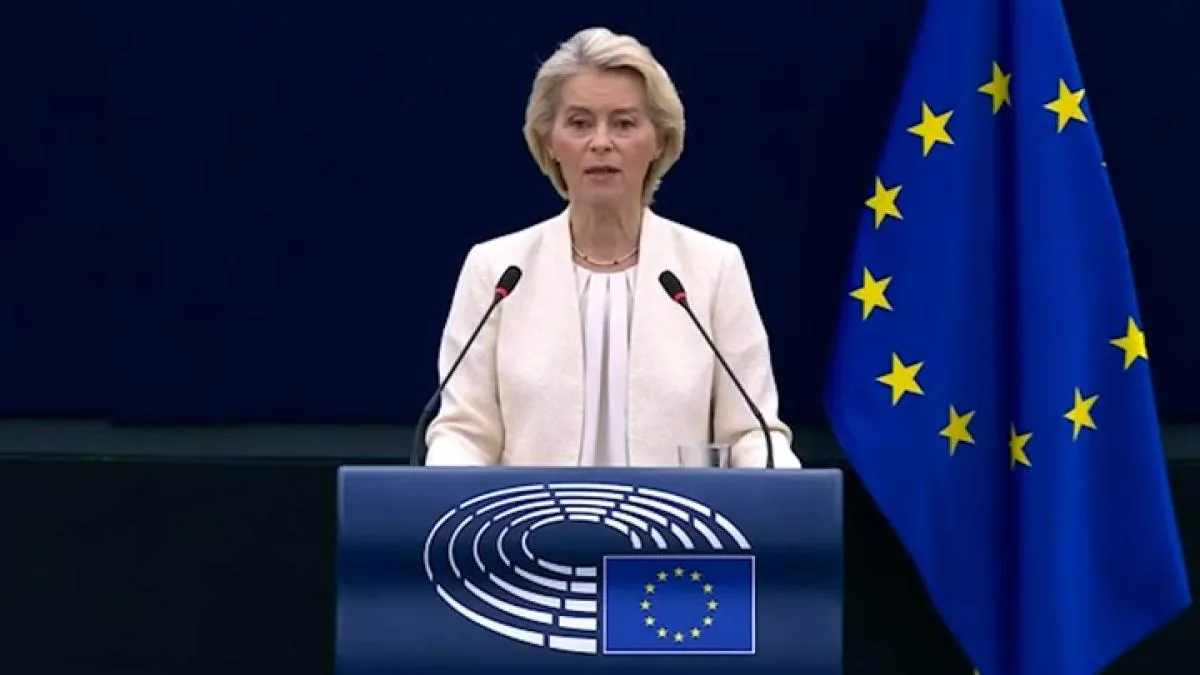
Brussels wants to launch a mechanism that allows speeding up migration management in crises like the one in Ceuta. The President of the European Commission, Ursula von der Leyen, announced yesterday an “emergency response framework” during her State of the Union speech at the European Parliament headquarters in Strasbourg.
“The events of this summer show that our tools must evolve, especially to deal with emergency situations,” said the German, opening the door to extraordinary measures that go beyond the Migration and Asylum Pact. According to her speech, this mechanism will only be activated under strictly defined criteria and “will allow limited flexibility in time and clearly bounded with respect to the usual procedures” of migration rules.
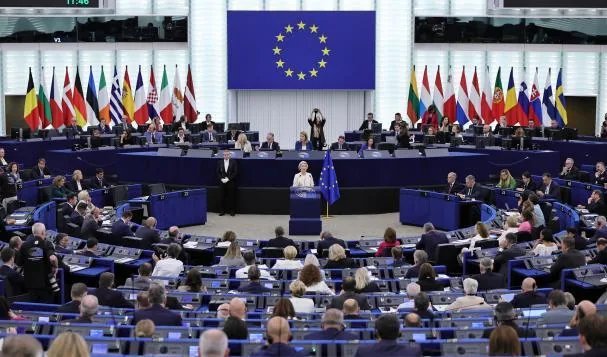
Von der Leyen did not give more details about what options this new response mechanism would endorse, although she mentioned the possibility of speeding up returns. “Europe needs to have the means to protect its borders at all times, especially in scenarios where massive movements of people are provoked and used as a weapon,” reiterated the head of the Community Executive. Von der Leyen framed what happened in Ceuta as part of the hybrid attacks the EU is suffering, although without mentioning Morocco or other countries. The German believes that drone incursions, cyberattacks, or the instrumentalization of immigration have in common the “exploitation of the vulnerable.”
Von der Leyen spoke directly to Ceuta. “The border of Ceuta is a European border. Because Ceuta is Spain. Ceuta is Europe. And Europe will be by your side,” she said before assuring that the “only solution is a European solution, and it is the Migration and Asylum Pact.” The Community leader recalled that “after years of work, we finally have a common European framework” that “assigns responsibilities to everyone and demands solidarity from all.” “Now it is necessary to fully implement it,” she demanded.
Von der Leyen pointed out that the 27 are “on the right track” and, as an example, cited the 55% reduction in irregular arrivals in the last two years and an additional 35% decrease this year. “This is a real advance,” she emphasized.
The president assures that “the border of Ceuta is a European border. Because Ceuta is Spain”
“Europe’s message is clear: we will always respect our values and fundamental rights, but we will never give up protecting our borders. It is us, the Europeans, who decide who enters our Union and under what circumstances, not traffickers or smuggling networks,” Von der Leyen concluded.
Read more València and the DANA area return to normality after a night of nightmare
The President of the Commission also highlighted efforts to strengthen Frontex (the European border control agency), especially to speed up returns, and announced that European early warning systems will be improved, in collaboration with third countries. Thus, she assured, the “capacity for detection and anticipation in the digital environment” will be guaranteed.
There was no mention of return centers. Although about twenty countries have formally asked Brussels to finance them with community budget, the German avoided commenting.
Finally, she pointed out, the root causes of irregular migration will continue to be addressed. In this regard, she advocated “collaborating with our neighbors to boost investment and offer young people real prospects, so they are not forced to risk their lives: jobs, skills, training, and apprenticeship programs.” In this line, she announced a new “Mediterranean initiative” for youth employment and skills.
“This is how we can reduce illegal immigration: by defending the rights of people seeking protection; facilitating safe and legal immigration through new reception offices in partner countries, and defending the freedoms of our Schengen area,” she said. “This need for collective solutions at the European level is more important than ever. Because it is also our European democracy that is threatened,” she added.
In her speech, she frames the assault on the autonomous city “in the hybrid attacks the EU suffers”
The president’s messages about Ceuta and immigration came one day after the European Parliament debated the crisis in the autonomous city. In Tuesday’s plenary, Migration Commissioner Magnus Brunner acknowledged the need to “redouble efforts” and find an “urgent solution.”
Read more It’s just a few drops!