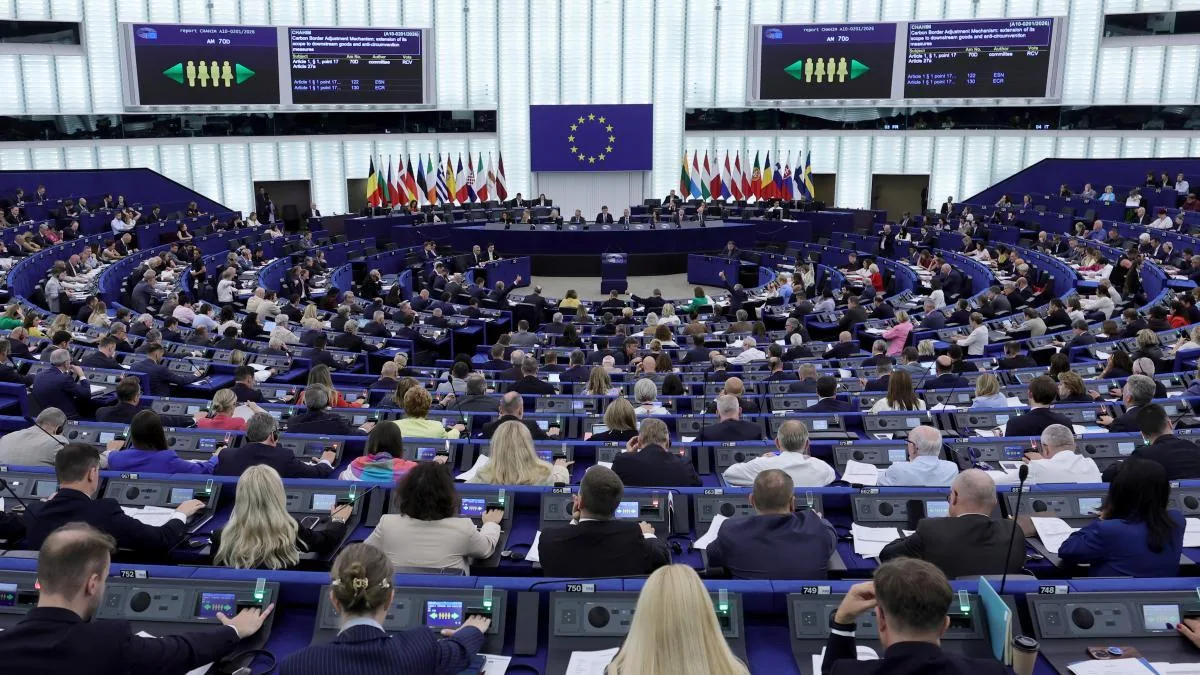









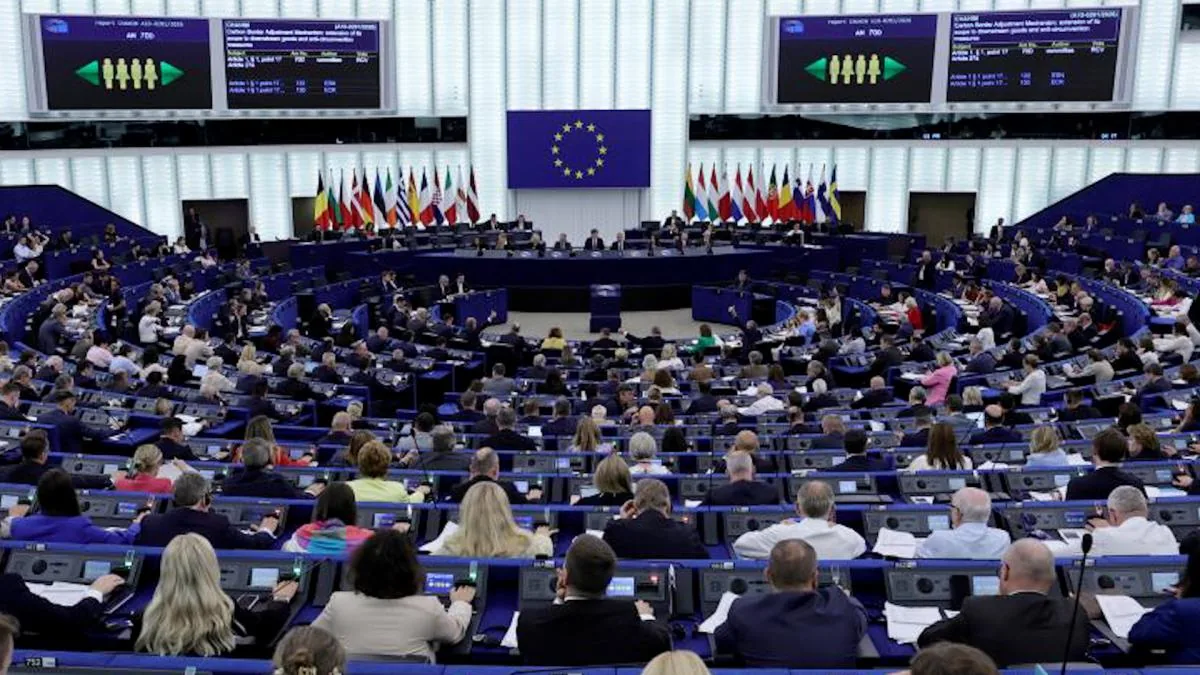
The crisis in Ceuta reached the European Parliament headquarters in Strasbourg yesterday, Tuesday, in a debate that focused on the EU’s migration policy and hybrid attacks from third countries. The Commissioner for Migration and Home Affairs, Magnus Brunner, boasted about the results of strengthening the EU’s borders but acknowledged that “we must redouble our efforts.”
Read more Real gun shootings increase by 45% in Catalonia in the first half of the year
“This was a stress test for our Union, our system, and our resilience,” said Brunner, referring to the massive influx of migrants at the end of July. The migration policy official announced that he will travel to Madrid today to meet with the Ministers of Territorial Policy, Interior, Social Security, and Migration. “It is urgent to find a solution. For this, our priority is clear: all those who have entered illegally and do not have the right to stay in the country must return quickly to Morocco,” he acknowledged.
Brunner considers the crisis “a stress test for the Union, the system
and its resilience”
Morocco was key in the debate because the Eurochamber is divided between those who blame Rabat for what happened and those who appreciate its cooperation since the crisis began. The spokesperson for the Populars in Brussels, Dolors Montserrat, was among the most critical: “Morocco is also responsible by action or omission. As a European partner, it must respond with respect and reciprocity.” The Popular insisted that the Spanish Prime Minister, Pedro Sánchez, “went on vacation” after what happened and, for this reason, considered him “complicit and guilty.”
The resolution proposed by the PP “asks the Moroccan authorities to assume their responsibilities as a key partner of the European Union and to fulfill their commitments regarding border management, return, and migration cooperation.” In contrast, the text presented by the Socialists advocates recalling “the importance of maintaining solid, constructive, and mutually beneficial collaborative relations with third countries” and appreciates the cooperation with Morocco.
The Commissioner, traveling to Madrid today, calls for the return of those who entered illegally
The President of the European Socialists, Iratxe García Pérez, called for more solidarity not only from the EU institutions but also from the other Member States. “European solidarity cannot depend on who governs or which country suffers the crisis,” she emphasized. García Pérez recalled other hybrid attacks where migration is used by third countries to threaten the European Union. “Europe was also with Poland and Lithuania against the instrumentalization of migration by Lukashenko’s regime,” she stated, after questioning “what lessons” Giorgia Meloni can give after what happened on the island of Lampedusa.
Vox went a step further. Jorge Buxadé urged during the debate to “suspend the association agreement with Morocco and all international agreements with Morocco, except, obviously, those on the return and expulsion of Moroccans.” As well as to “suspend all pending payments to Morocco, the issuance of entry visas for Moroccan nationals, the granting of residence permits…”
Read more A worker dies and another is injured while cleaning a septic tank at the Mercat Central de Tarragona
Popular Montserrat points to the Alaouite kingdom as responsible “by action or omission”
More critical of European policy was the Sumar MEP Estrella Galán, who accused the EU of cooperating with countries that do not respect human rights. “This crisis shows that when Europe externalizes its borders, it rents out its sovereignty and makes us more vulnerable. And when the key is handed over to countries that do not respect human rights and are not democratic, human beings end up being used as ammunition and blackmail,” she said. Galán called for faster transfers to prevent Ceuta from becoming “an open refugee camp.”
On Thursday, the European Parliament will vote on a resolution that will reflect its political opinion. The goal after yesterday’s debate is to reach a consensus, despite the divisions.
Sources from the Populars say they would be satisfied with a text that “the Socialists can sign.” For her part, García Pérez ruled out a “consensus” if the resolution includes mentions of immigrant regularization. The European Commission has ruled out that link between the regularization approved by the Government and the crisis in Ceuta. However, the Populars’ text recalls the letter from European leaders in which the measure was cited.
Socialist García Pérez calls for more solidarity from institutions and other Member States
PNV MEP Oihane Agirregoitia revealed that Morocco had sent an email to several parliamentarians trying to influence the debate. In the document, accessed by La Vanguardia, Rabat commits to readmitting “all affected persons, including Moroccan citizens, unaccompanied minors, and nationals of third countries.”
In the same email, Morocco reiterates its cooperation with the EU and Spain and emphasizes that “the Spanish Government has publicly declared that the information it had did not allow attributing responsibility for these events to Morocco.”
Read more The Columbus monument is pending a renovation that exceeds six million euros