Regina Rodríguez Sirvent and Eduardo Mendoza, the best-selling authors of this Sant Jordi

Regina Rodríguez Sirvent and Eduardo Mendoza, the best-selling authors of this Sant Jordi

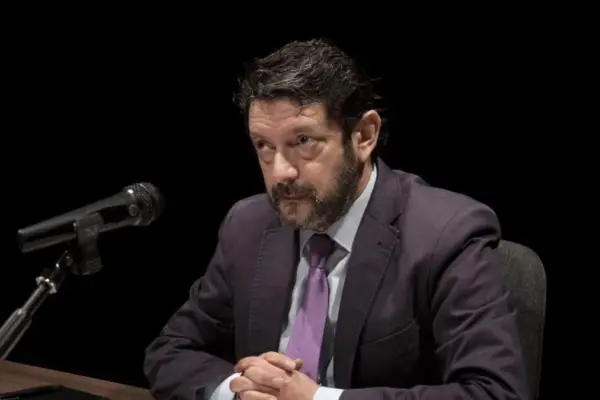
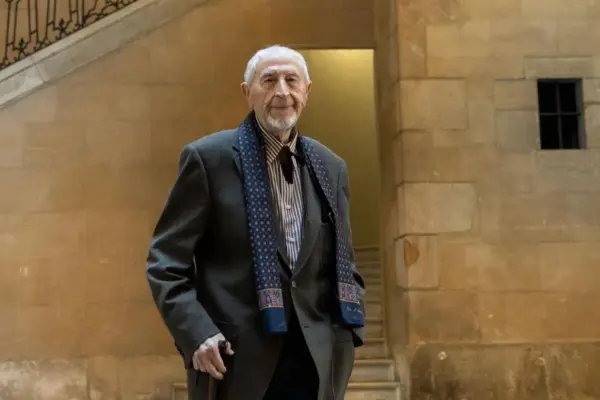
They started as favorites on the starting grid and the predictions came true. Eduardo Mendoza and Regina Rodríguez Sirvent were yesterday’s best-selling fiction authors, in Spanish and Catalan, for Sant Jordi. That Crispetes de matinada (La Campana / Suma) would receive this recognition was known by publishers and booksellers, who saw the piles of books by the Puigcerdà author disappearing by the moment. In Mendoza’s case and La intriga del funeral inconveniente (Seix Barral), some had their doubts after the writer made some statements that caused some controversy, in which he recommended calling this day Book Day instead of Sant Jordi, because “Sant Jordi was an animal abuser and probably couldn’t read”. Statements that he quickly said were a joke and that he was sorry if they had been taken badly. So much so, that on the lapel of his jacket he wore a dragon with a rose, as a nod.

Read More
Tattoos, tears and books for the Secret Service: the most talked-about anecdotes of Sant Jordi

Tattoos, tears and books for the Secret Service: the most talked-about anecdotes of Sant Jordi

On Sant Jordi, anecdotes emerge naturally. “I don’t know what to tell, nothing special has happened,” many authors say when approached by cameras, microphones, and recorders. But you don’t have to dig too deep to realize that things do happen, yes. And many. For example, Albert Sánchez Piñol signed books for the first time on April 23rd, as incredible as it may seem. And despite being a bestseller, it wasn’t until the publication of his latest novel, Després del naufragi (Univers), that he dared to face this marathon day. And while this is an exciting day, it must be said that it’s not always easy to cope with the crowds.

Read More
Mendoza, a Sant Jordi with bodyguards

Mendoza, a Sant Jordi with bodyguards

Eduardo Mendoza has been signing books at Sant Jordi for over half a century (he published his first novel, The Truth About the Savolta Case, in 1975), but never until today had he had to do so accompanied by a bodyguard. An ironic comment about the May 23rd celebration (one must say Book Day, he came to say, because the figure of the saint “has nothing to do with books or writers, Sant Jordi was an animal abuser and probably couldn’t read”) ignited the flame of indignation in pro-independence sectors, with the Joventut Nacionalista de Catalunya (Junts’ youth wing) announcing a campaign for the Generalitat to withdraw his Creu de Sant Jordi, and from the anonymity of social media, there was even a call to burn the author’s books, taking advantage of the Sant Joan bonfires.

Read More
Sliced life

Sliced life

“We are no longer fed crumbs/we want the whole bread” are some verses from the song Tot explota pel cap o per la pota from the album A Alcoi (1974), by Ovidi Montllor, which has become an anti-capitalist anthem. They mean that simple people, the humiliated and offended of

Read More
Rodoreda lysergic

Rodoreda lysergic

Every now and then, La mort i la primavera resurfaces with force, like a hibernating animal. Rodoreda wrote it between 1961 and 1963, and let it sleep. Apparently, she resumed it between 1981 and 1983. Although there is no solid evidence of the latter, I personally deduce from her

Read More
Contumacy or contumely? The writers' party

Contumacy or contumely? The writers’ party

What is literature made of? Of emotions, structures, actions, ideas…, yes, of course, but above all, as you know, of words. One after another, they line up and mix first in the author’s mind and, then, in the reader’s. And if there is a literary party, its soul is those who have chosen some words and not others, and yesterday at the Alma hotel there were a lot.

Read More
The King seals the “fruitful dialogue” between Mexico and Spain in his praise of Gonzalo Celorio's work

The King seals the “fruitful dialogue” between Mexico and Spain in his praise of Gonzalo Celorio’s work

We thank Gonzalo Celorio for representing, in his work and in his life, that fruitful dialogue between tradition and creation, between memory and future, between Mexico and Spain. For ultimately enriching our language and our literary heritage.” With these words, the King certified this Thursday the enduring union of both countries, “more than brothers,” in the Cervantes Prize award ceremony to the Mexican writer that took place in the main hall of the University of Alcalá de Henares.

Read More