








With or without Santa Claus, more and more Christmas gifts will reach European homes through Arctic landscapes. But they will not arrive by reindeer, but on container ships chartered from China. Like the one that will set sail next Wednesday from Ningbo to reach the English port of Felixstowe twenty days later. Thus inaugurating the first weekly line of the Polar Silk Road.
Read more The president of Ceuta asks the Government for a detention center to confine and expel migrants
Sea Legend is registered in Singapore – its parent company in the Virgin Islands – but it is a Chinese company, partly owned by Alibaba and managed from Shanghai. The shipping company has scheduled seven ships, for eight trips, until early October, extending the Arctic summer, when the polar ice cap shrinks to a third of its maximum winter surface. A bet on the future, since the melting is increasing (around 12.5% per decade) and since 1980 it has made navigable an area equivalent to the Caribbean Sea.
Chinese shipping companies and their clients highlight their interest in reducing costs and delivery time, almost by half, compared to the Suez Canal route. Something vital for digital commerce and even more so at the doorstep of the Christmas campaign. But geopolitical uncertainties in Hormuz and the Red Sea – who knows if one day in Malacca – also tighten.
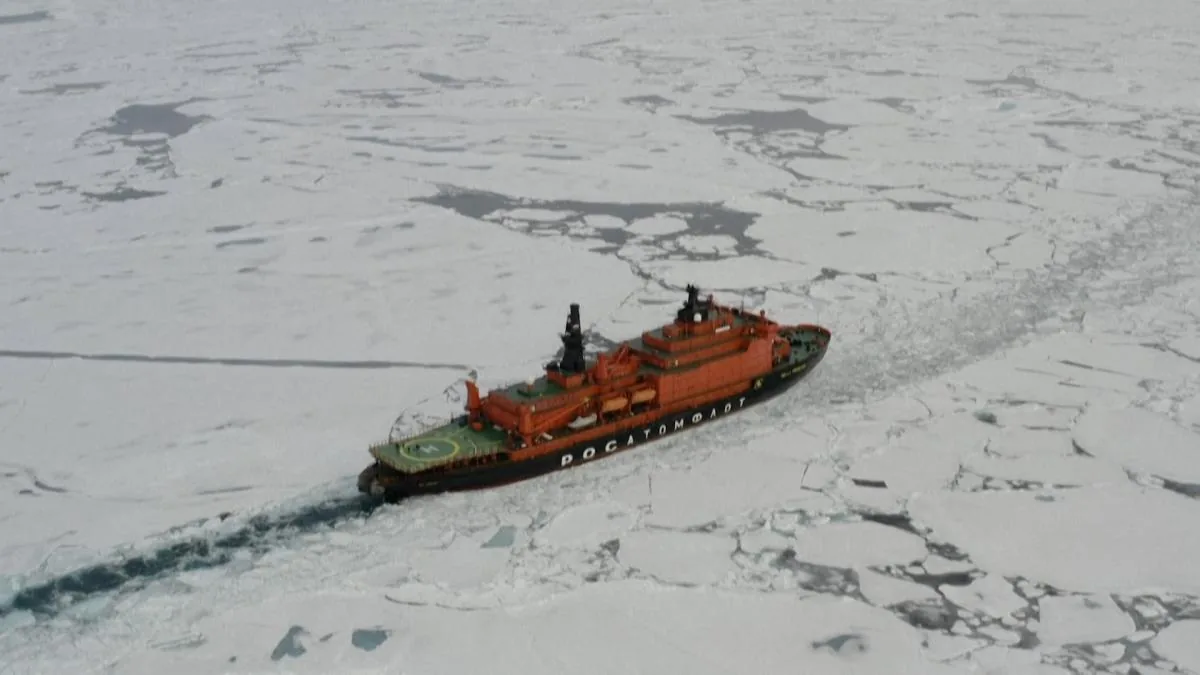
Even so, to date, the so-called Northern Sea Route does not solve the problem for Chinese exports, as it can barely absorb 1% of its goods, due to temporal and logistical limitations and the smaller capacity of the ships. But with its bet, Beijing gives carte blanche to a trade route that overlaps with a fully Russian logistical, energy, and military infrastructure, managed by Rosatom. This atomic company confirmed last Friday the permit granted to Sea Legend.
Russia intends for the Northern Route season to be extended every year, until it becomes practically uninterrupted (today, at most, it is navigable for three or four months). Not only because of the melting, but also due to the expansion of the icebreaker fleet and the improvement of facilities along the route, with a collateral reduction in insurance costs. The risk of ecological disaster is truly very high, due to the difficulties of cleanup. Therefore, ships on the Arctic route cannot use the usual fuel, which is more viscous, polluting, and cheap.
As can be seen, not everything is advantageous and even with these, geopolitics previously cooled Western shipping companies, such as Maersk, which after a successful trial – before the pandemic and the invasion of Ukraine – decided not to continue. The Danish shipping company, in any case, did not sign in Washington in 2019 the commitment not to use the Arctic route, which was signed by the European CMA CGM, Hapag-Lloyd, and MSC and the Taiwanese Evergreen. Ostensibly, due to environmental concerns.
However, the most recent war shocks have reminded all of Asia of its condition as a hostage to several straits, encouraging it to keep other doors open. While China opens the ice, South Korea is preparing to establish “an Arctic corridor with Europe by 2030,” from which Japan could also benefit, whose companies have never stopped buying and investing in Russian gas fields, from Sakhalin to Yamal. As a backdrop, the European commitment to stop buying Russian liquefied gas in 2027.
The Seoul government, specifically, has organized as a state project a pilot journey between Busan and Rotterdam via the same route, awarded to the only (smaller) shipping company that applied for the tender. The main ones were held back by fear of Western sanctions. The awardee, PanStar, acquired a few days ago the ship with which it will set sail at the end of the month.
Read more El Prado celebrates the eclipse with a special light
Meanwhile, the U.S. president, Donald Trump, with one hand denies global warming and with the other pulls his hair out because Arctic melting is changing the world map and North America has not done its homework. The fact is that only Russia has a fleet of eight large nuclear icebreakers – no one else has them – and expects to put one more into service each year until 2030.
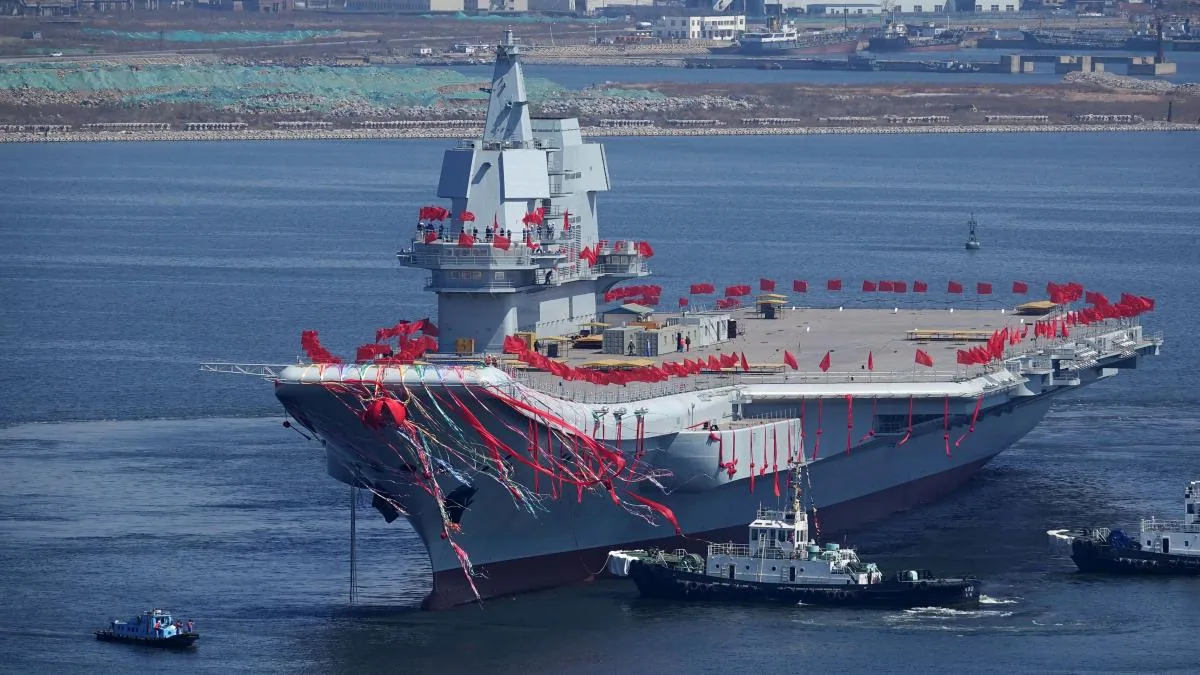
Meanwhile, China has been presenting itself as an “almost Arctic” country for a decade and acting accordingly. Right now it is building its first nuclear-powered icebreaker.

It should be said that Sea Legend already explored the route last summer, in a single journey, in which it transported 30 containers of bicycles and electric scooters to the Netherlands. According to observations, the route is preferable for batteries and heat-sensitive material. Sea Legend also defends the savings it represents compared to the rail route and the carbon footprint compared to the Suez route: half.
The ships departing from Ningbo will receive cargo previously from Dalian, Shanghai, Qingdao, Shanghai, Taicang, Fuzhou, and Nansha. Some of them will extend their journey to Rotterdam, Hamburg, or Gdynia.
Sea Legend was preceded, two years earlier, by another more established Chinese shipping company, NewNew, which has since announced regular trips with its own container ships, although without a fixed schedule. NewNew was involved in a notorious incident on its first crossing, with the cargo ship Polar Bear, flagged in Hong Kong. On the return trip, from Saint Petersburg to Shanghai, its anchor cut the gas pipeline and fiber optic cable between Finland and Estonia, causing accusations of sabotage. Repairs cost tens of millions of euros and the trial of the captain – who declares himself innocent – is ongoing: in Hong Kong.
Canadian Northwest Passage
North America’s overdue homework
China already sent a similar message when, as a test, it sent an icebreaker to explore the viability of the Northwest Passage, which Ottawa considers Canadian waters and the U.S. international waters. China asked Canada for permission, thus legitimizing its point of view.
However, the Canadian route, dotted with islands, has stretches of hundreds of kilometers uninhabited, with very high ecological risk. The third Arctic route, which would pass through the North Pole without practically leaving international waters, will have to wait several decades – the more, the better for the planet – due to the thickness of the polar ice cap.
The Northern Sea Route, and not to mention the other two Arctic routes, are still a bet on the future. But that future is getting closer, as shown by Trump’s rush to take over Greenland. As a drawback, the U.S. only has one large icebreaker, half a century old. Hence it has ordered four conventional icebreakers from Finnish shipyards. Canada is also stepping up. But the systematic work, so far, has been done by Russia, eager to see how attempts to isolate it fail.
Read more A new cable theft in Bellvitge causes delays on lines R2, R2 Nord, R2 Sud, and R15