In the first half of the year, the 112 emergency number in the city of Barcelona received 3,500 calls alerting about incidents related to drugs. A thousand more than in the first six months of last year. These citizen complaints are just the tip of the iceberg of a problem that the Catalan capital suffers from: drugs. Barcelona is a setting where drugs are cultivated, manufactured in laboratories, accessible to anyone, and their consumption is protected in cannabis clubs. A vicious circle that generates coexistence, social, security, and public health problems, which is why the response cannot be only police-based; it must be cross-cutting. Intensifying the crackdown on dealing and consumption in public spaces will become a priority for the Urban Guard. Yesterday, its leaders presented a new and ambitious anti-drug strategy: the Druida plan.
Read more The EU eases tension, but Italy proposes that Brussels lead the relationship with Morocco
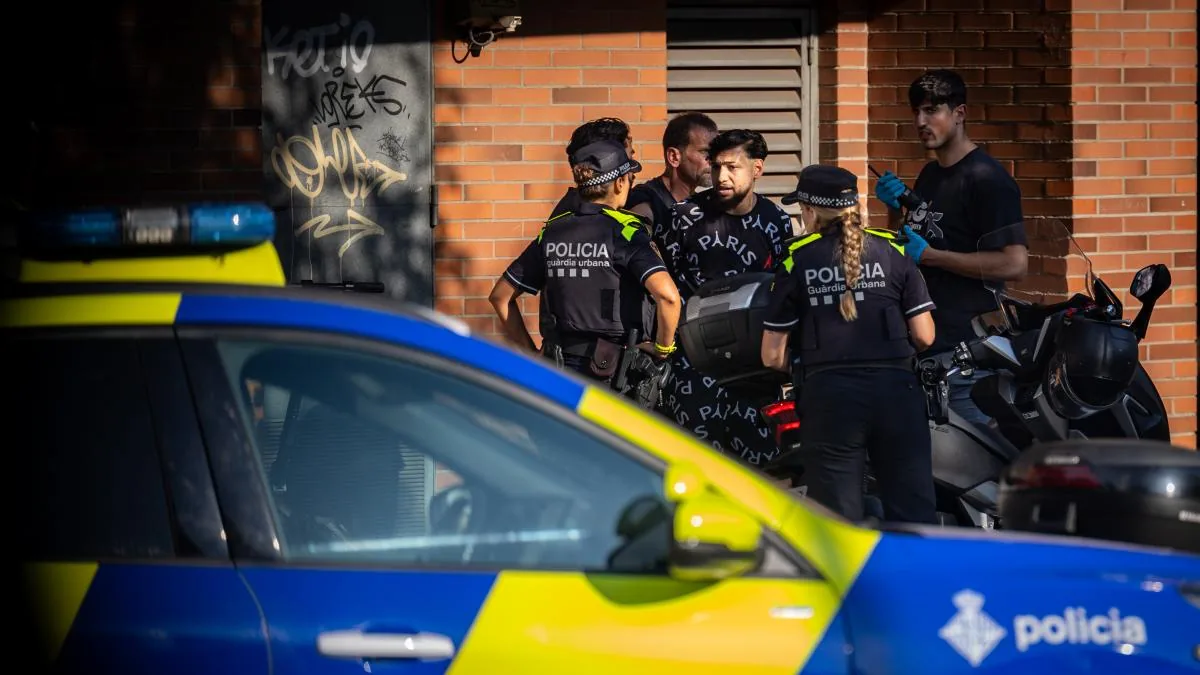
The third deputy mayor and head of Security, Albert Batlle, accompanied by the chief superintendent of the Urban Guard Pedro Velázquez, detailed the new municipal strategy to pressure drug trafficking. Many of the actions are already being implemented, but now they are grouped under the umbrella of a plan that challenges the police organization. “The patrols know that drugs are a priority and that any incident related to narcotics must be given more attention and that all the information generated by the action must be escalated,” indicates the chief superintendent.
The 112 received 3,500 complaints from Barcelonans related to narcotics in the first half of the year
The strategy includes five lines of action: sales points, administrative action against premises, road safety, health assistance, and awareness about the consequences of consumption. The offensive includes increasing pressure on cannabis clubs. “We will continue to oversee an activity that should have no place in our city,” warned Batlle. The number of these premises where marijuana is bought and consumed has remained at around 200 operating in recent years.
Prioritizing the administrative route
Drugs affect the main European cities which, in their learning exchange forums, have long agreed on the same strategy in the uneven fight against organized crime: prioritizing the administrative route. It is much slower, but when the resolution arrives, it impacts and has consequences. It is about, in the words of experts, intensifying administrative controls in establishments where, for example, it is suspected that they are permissive with the sale or consumption of drugs. Criminally, it may not be possible to cause harm, but the local administration has the capacity to use its authority and intensify inspections. Where one says a bar, it also means a business suspected of money laundering.
Every time the Mossos d’Esquadra commanders warn about the consequences of Catalonia having consolidated itself as a European reference for organized crime specialized in drug trafficking, they include in that idyllic scenario the proliferation of cannabis clubs and their trivialization. The initial claims assuring that clubs were born to protect the rights of marijuana consumers still have the consent of society. But recent police operations have shown to what extent organized crime has been able to exploit that legal infrastructure to parasitize.
“There is an excess of normative guarantees,” denounced Batlle, who insisted on his commitment to eradicate these spaces. “The vast majority of clubs have open files,” he added, admitting that there are difficulties in closing them because there are judicial rulings that support their operation. “It is a battle that will be tough, we need legislation that prevents issuing licenses like this,” he demanded. The Urban Guard uses a dual strategy. An administrative one, slower, “although it has facilitated some indefinite closures,” assured Velázquez, and the criminal one, which the police will intensify. “We will go after all,” warned the commander.
Complementing this new offensive against cannabis clubs, the Druida plan wants above all to focus on that street-level dealing in broad daylight, protected by high levels of tolerance, but which in the short term ends up generating conflict that affects coexistence.
It is about, in Velázquez’s words, gathering all the information that the Barcelona police have to anticipate and be able to prevent some conflicts. “We will continue responding to complaints, as a reactive police. But we have the capacity, means, and new technology to anticipate and prevent.”
Read more SpaceX increases its revenue by 92% in the first review as a publicly traded company
How? By analyzing the data provided by some indicators about where problems are happening or will happen. In which building there are complaints about drug sales, on which street patrols identify consumers with the posture of cannabis or a freshly bought cocaine baggie and where they say they acquired them, in which square the neighborhood association reports that children cannot play because there are drug addicts consuming, or dealers recruiting new clients. The heads of educational centers, the interlocutors of health centers are also indicators of risk situations that are now analyzed with new prevention tools.
“If there are problems in a square, that sales or consumption point must be eradicated. But then we cannot disappear, so that a new seller takes over the space. Behind us must come the district technicians, social services, youth or sports, so that the scenario is again for the neighbors,” he insists.
So far this year, the Urban Guard has deactivated 74 drug sales points and freed 22 occupied homes. In the entire previous year, the figures rose to 165 deactivated sales points and 57 vacated homes. Investigations carried out hand in hand with the Mossos through teams supported by the administrations, including the chief anti-drug prosecutor of Barcelona, Gerardo Cavero, an enthusiastic defender.
That drugs affect road safety is demonstrated by the thousand positive tests obtained last year in city controls. Although alcohol and drug consumption while driving has decreased, the Urban Guard will intensify inspections by intentionally seeking offenders.
“Never before had that first layer of the drug problem been taken so seriously, which, without having the dimensions of organized crime, impacts the daily life of Barcelonans,” insisted the chief superintendent.
But Barcelona is not an exception; drugs have the same impact in all major European cities with ports and great connectivity. Never before have laboratories created so many narcotic substances, nor has it been so risky to consume them.