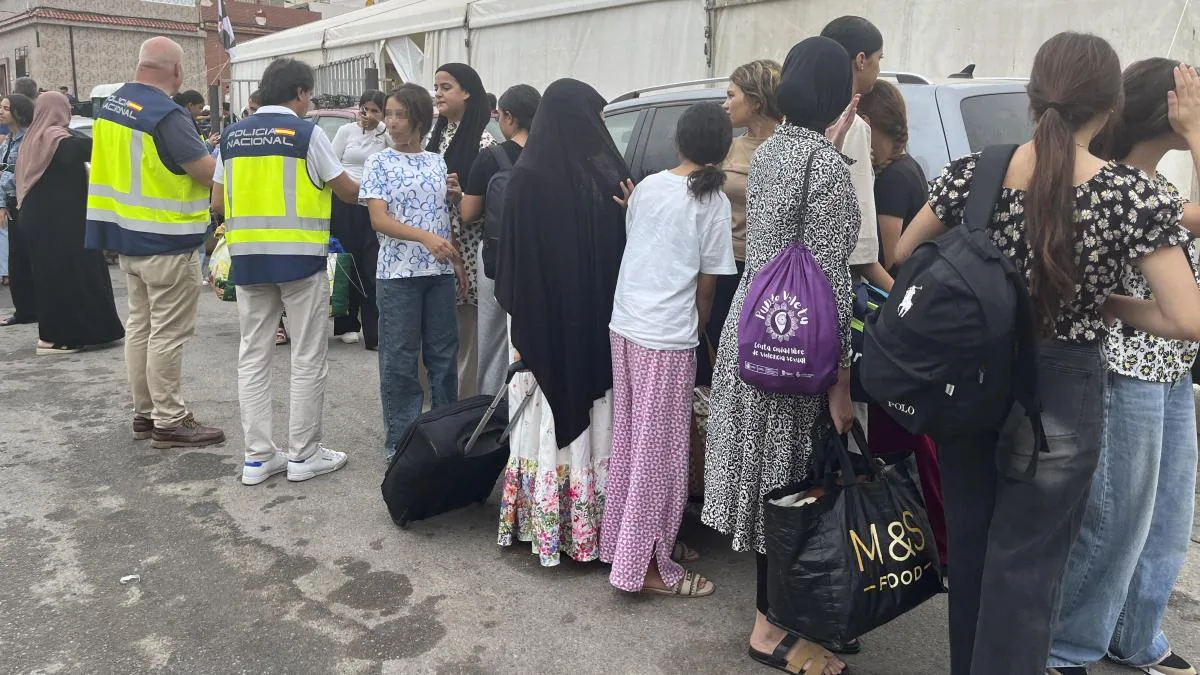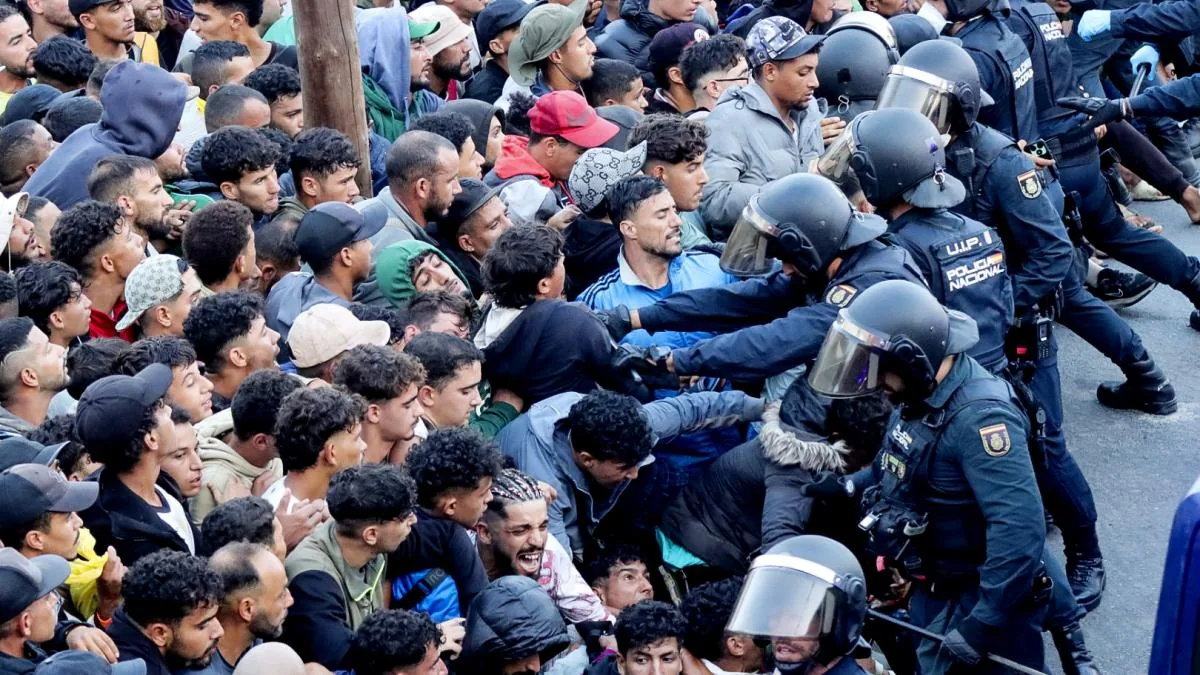
The Government has avoided in recent days blaming Morocco for the migratory avalanche experienced in Ceuta last week. This Monday it went a step further by having kind words about the “collaboration” of the neighboring country in the return of “the vast majority” of the people who crossed the border through the El Tarajal breakwater to Moroccan soil between Thursday and Friday, although there is no unanimity and that message is not modulated the same way from all ministries. For now, rather than looking south, the criticisms are directed both at the opposition parties –PP and Vox– and at other European Union member states –especially Italy– that have questioned Spain’s role in this whole matter and that tomorrow Tuesday will address the issue in an extraordinary meeting of the community interior ministers. And at the “reactionary international” that according to the Executive spread “lies and false news.”
Read more Russian journalist Xenia Fedorova is already out of France
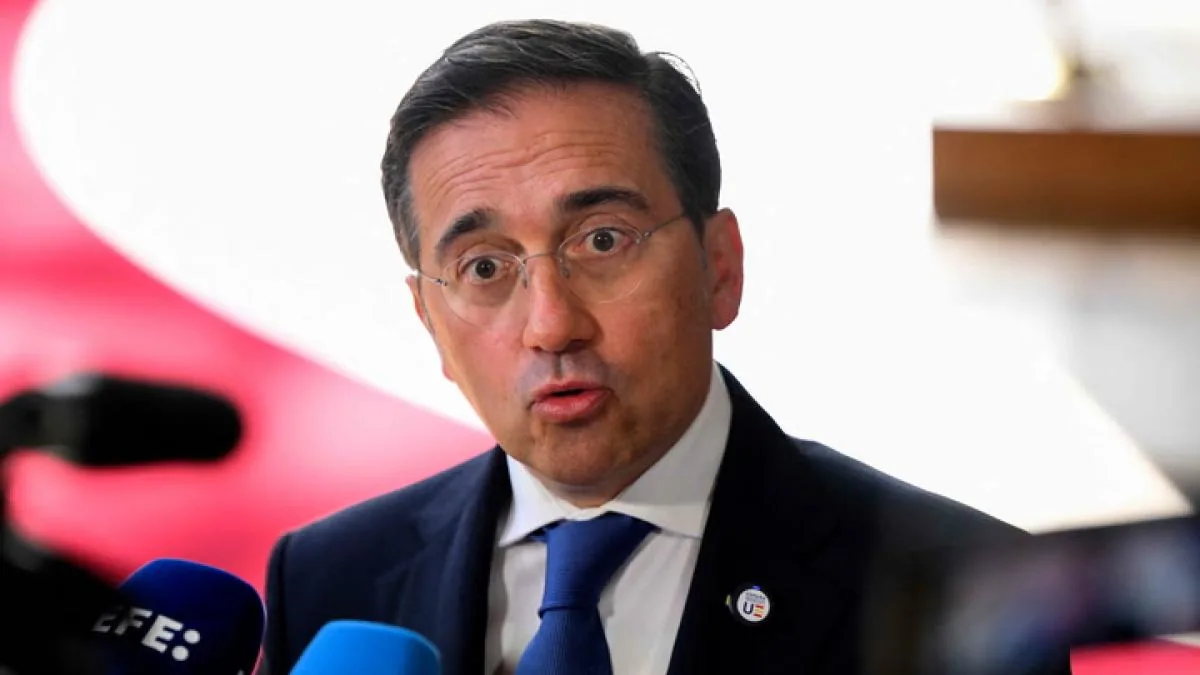
The Minister of Foreign Affairs, European Union and Cooperation, José Manuel Albares, has called this Monday the massive entry of migrants during two consecutive days in the autonomous city of Ceuta an “unprecedented event” and has used the same term to refer to the help provided by Morocco: “A return within 48 hours in total collaboration with Morocco is also an unprecedented event,” said the head of Spanish diplomacy in statements to TVE, where he was especially harsh with Italy, the European country –he emphasized– that registers the most irregular entries on its territory.
Albares attributed what happened, among other issues, to misinformation on social networks, a message similar to that exposed a few hours earlier by the Moroccan Ministry of the Interior through a spokesperson. “There was unusual activity on social networks that amplified and distorted the Supreme Court ruling” from early July on hot returns, he detailed.
Be that as it may, Albares’ words contrast with the assessment of the presidents of the autonomous cities of Ceuta and Melilla, the Popular Party members Juan Jesús Vivas and Juan José Imbroda, who openly criticize Rabat’s role in this crisis, actively or passively. However, according to the Minister of Foreign Affairs, “from the first moment” Morocco offered “its collaboration to try to prevent that flow of people and, above all, so that they would return immediately as is happening.”
Albares highlights the help of the Alaouite kingdom in the return of migrants who crossed the border
But if Albares, who has guaranteed that “up to the last” migrant who crossed the breakwater will return to Morocco, wanted to close ranks with the neighboring country by calling it a “reliable” partner and pointed out that other European capitals “have not been up to the task,” an expression he also used to talk about the opposition, the Minister of Defense, Margarita Robles, has expressed herself in other terms and has demanded that Rabat investigate what happened and “go all the way to find out what happened in those movements” at the border.
Read more The United States Congress has not approved the transfer of Ceuta and Melilla to Morocco
“We cannot look the other way, neither Spain nor Morocco, in the face of this human drama,” said the Defense minister from the Zaragoza air base. Likewise, she warned that the mafias or whoever “has consented to or tolerated” this massive entry of migrants “will have to assume responsibilities” for this crisis.
In another matter, Robles has tried to close the controversy in which the PP tries to dig into whether the intelligence services had properly informed the central Government about the situation in Ceuta, after the Interior Minister, Fernando Grande-Marlaska, denied on Saturday the existence of any kind of warning. “There is no report regarding a situation like the one that occurred on the 30th that could have arisen,” said the Interior minister; a message that this Monday the Minister of Inclusion, Social Security and Migrations and Government spokesperson, Elma Saiz, has reinforced by assuring that the central Government did not have any intelligence report warning of a migratory crisis of the magnitude suffered last Thursday. “There was no report warning of the magnitude of the figures that had to be responded to,” Saiz pointed out in statements to TVE. When asked if there was an intelligence failure, she reiterated that “the magnitude” of what happened “was not known.” “In no way was something so unprecedented foreseen,” she concluded.
Shortly before, Robles had stated that she did not want to enter “into any kind of discussion” about the role of the intelligence services in the migratory crisis and had praised the work of the National Intelligence Center (CNI), the Armed Forces Intelligence Center (CIFAS) and the information services of the Police and the Civil Guard –the latter linked to the Interior Ministry–.
Robles has also wanted to emphasize that “everyone must be very clear that Spanish territorial integrity and sovereignty are untouchable, that Ceuta and Melilla are not to be touched.”
Read more The cursed fortune of Congo