









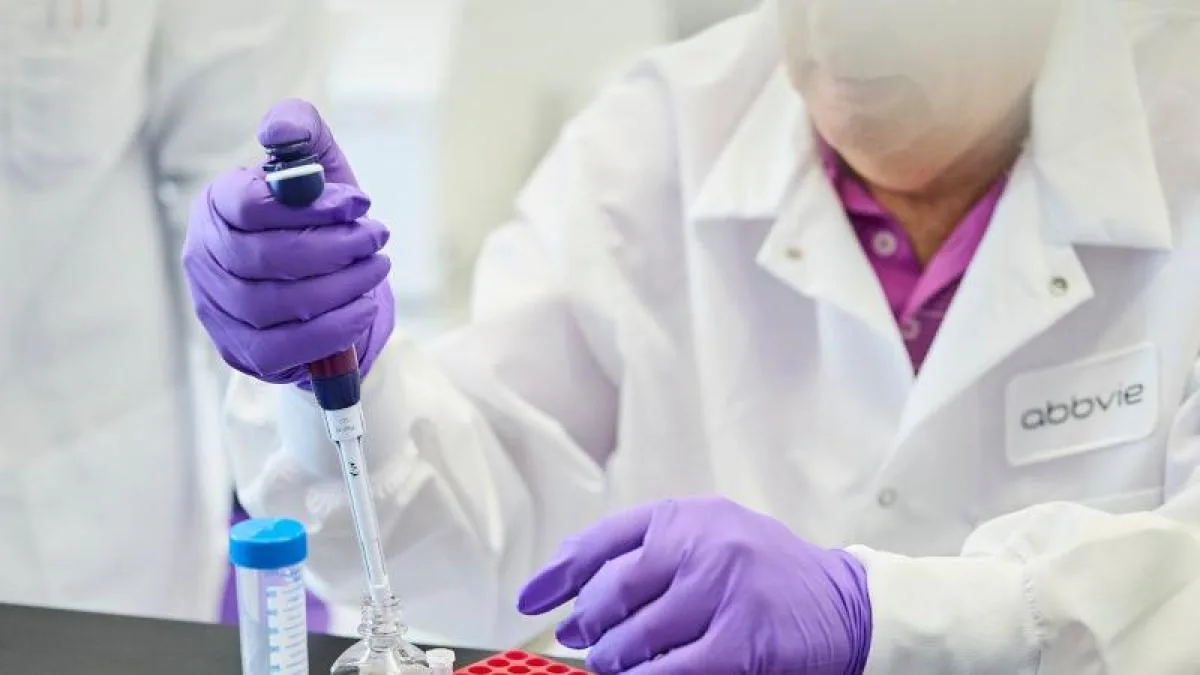
To preserve people’s quality of life, it is necessary to understand that the healthcare system is supported by three basic pillars that make up the “Health Triangle”: healthcare professionals, infrastructures, and medicines.
Read more Tons of ice to cool polar bears in a zoo due to heat waves in Europe
“We can say it is an equilateral triangle because each side is equally important. None of these elements alone is sufficient to meet the current challenges of the system, so they must coexist in balance,” explains Luis Nudelman, medical director of AbbVie Spain. He adds that “it is essential to strengthen coordination among all actors in the healthcare ecosystem to make it more efficient, more sustainable, and above all, more focused on the needs of society.”

If we multiply that efficiency by the millions of citizens served each year, “we understand that putting that innovation at the service of those who need it is the most effective way to protect social well-being.” Because therapeutic innovation helps reduce hospitalizations, sick leaves, dependency, and costs associated with chronic conditions, as well as disability and stigma (5) often associated with it. It also helps improve quality of life, increase productivity, and thus generate economic and social value (6).
It is essential to strengthen coordination among all actors in the healthcare ecosystem to make it more efficient, more sustainable, and above all, more focused on the needs of its users”
Luis Nudelman, medical director of AbbVie Spain
Notably, of the 1.7 years by which life expectancy has increased over the last decade, 1.2 years are attributable to the use of innovative medicines (2). Likewise, these explain 73% of the increase in life expectancy in OECD countries (3). However, the actual availability of these advances can be improved: in Europe, patients take an average of 597 days to access new medicines (4).
According to the doctor, biomedical innovation develops more precise drugs and treatments, with a better safety profile for the patient and with the intention of offering earlier access to advances that can change the course of complex diseases. “The big change consists of moving from addressing a disease generally to intervening on the specific biological mechanisms that cause it in each case.”
“This technological progress, which combines biology, engineering, and artificial intelligence, allows us at AbbVie to set an objective as ambitious as it is realistic: to markedly reduce the time needed to develop new treatments with the highest levels of efficiency and safety.”
The real challenge is to create an environment capable of recognizing the value of innovation, attracting investment, promoting research, and transforming scientific advances into tangible benefits for patients and society”
Luis Nudelman, medical director of AbbVie Spain
AbbVie’s scientific advances in specialties such as oncology, immunology, or neurology define both its current capacity to innovate and its future potential. For example, it develops antibody-drug conjugate (ADC) techniques that directly attack cancer cells and, combined with other therapies such as immuno-oncology, allow for more efficient treatments with fewer side effects.
Read more Dalí, the night and the subconscious
While the siRNA methodology silences specific genes related to some of the most difficult diseases to treat, in vivo CAR-T reprograms the patient’s own cells to reduce toxicity and therapy duration. “This is especially relevant because many traditional treatments like chemotherapy, which remains very important, are not selective and impose a high burden on the patient. Today our drugs can be much more precise,” he adds.
AbbVie is one of the most advanced biopharmaceutical companies in enhancing its research through different AI applications. For example, the AbbVie R&D Convergence Hub (ARCH) platform integrates preclinical and clinical trials, publications, genomes, and databases to multiply knowledge generation and the accuracy of clinical decisions. Meanwhile, the RAISE-UP project anticipates patient response and remission capacity in rheumatology treatments, DELIST identifies the best candidates for advanced Parkinson’s therapies, and LiverTAI identifies factors potentially associated with hepatitis C virus infection in the Spanish population. In ophthalmology, it improves biomarker identification to personalize treatments for conditions such as diabetic macular edema (one of the main causes of vision loss in diabetic people).
These and other research projects developed in Spain contribute to the country’s leadership in clinical trials — a record of more than 900 in 2025 in Spain — for drug innovation. However, maintaining this position against competition from powers like the U.S. or China requires incentivizing and funding R&D as well as promoting high-value projects through a stable regulatory framework.
“Ultimately, the challenge is not only to innovate — concludes the Medical Director of AbbVie Spain —. The real challenge is to create an environment capable of recognizing the value of innovation, attracting investment, promoting research, and transforming scientific advances into tangible benefits for patients and society.”
AbbVie’s contribution to health in Spain and the world
· AbbVie’s therapies reach more than 50 million people in 175 countries and cover more than 75 complex diseases.
· Spain holds a strategic position: it is the affiliate outside the U.S. with the most clinical trials. Of its more than 700 professionals in Spain, one in four works directly in R&D.
· Through AbbVie Spain Research Hub, the company has conducted more than 300 trials in all Autonomous Communities and in all development phases over the last five years.
· Every euro invested in innovative medicines can generate up to four euros in the economy, in addition to contributing to increased life expectancy.
Guaranteeing the right to health protection (Article 43 of the Spanish Constitution) (1) today means ensuring access to the best available innovation.
References:
- https://www.boe.es/buscar/act.php?id=BOE-A-1978-31229
- Lichtenberg FR. The effect of pharmaceutical innovation on longevity: Evidence from the U.S. and 26 high-income countries. Econ Hum Biol.
- The effect of pharmaceutical innovation on longevity: Evidence from the U.S. and 26 high-income countries, PubMed, 2019
- Wait Report: https://www.farmaindustria.es/web/wp-content/uploads/sites/2/2026/05/EFPIA-Patients-W.A.I.T.-Indicator-2025_Final-results.pdf
- Weber (2024). The value of medicine from a social perspective. Madrid, Spain: Weber Foundation
- Afi (International Financial Analysts). (2023). The socioeconomic contribution of medicines and the pharmaceutical industry in Spain.
Read more Who are the ‘short kings’: the men who define the new masculinity