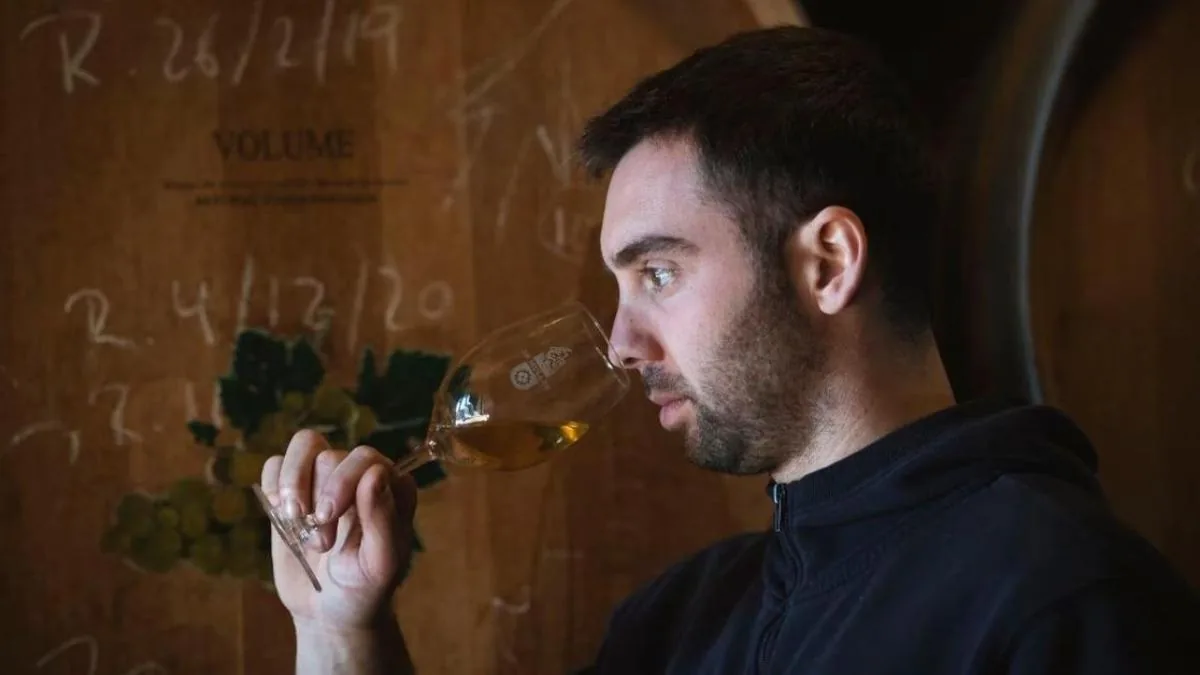
To speak of De Muller is to speak of one of Tarragona’s most historic wineries, but also of a brand that has transcended the winemaking sphere thanks to one of its most emblematic wines: the mass wine which, for decades, has reached the Vatican and forms part of the celebration of the Eucharist. Founded over a century and a half ago, De Muller is present in two designations of origin, Priorat and Tarragona, where it has managed to preserve a legacy built on quality and respect for the territory. And they not only boast their great wines and their curious table wine; they also produce artisanal vermouths with traditional recipes, long-aged soleras, and unique liqueurs that seek to reflect their historical essence.
Eduard Martorell, its general director, advocates for a way of understanding wine in which tradition and innovation do not compete, but rather complement each other. At a time when there is growing interest in wines with identity and indigenous varieties, he champions De Muller’s good work, which has been committed for years to the so-called Tarragona Classic, ‘vino rancio’ (rancid wine), Moscatels, Mistelas, and mass wine.
De Muller is one of Tarragona’s historic wineries, what sets you apart after so much time?
What sets us apart, even if it seems counterintuitive, is that we continue to maintain a bit of the essence and traditional elaborations of what was done in Tarragona, what is called the Tarragona Classic, which would be these wine styles, somewhat similar to Jerez wine styles, what is called ‘vino rancio’ here, which are oxidized, fortified wines, Moscatels, Mistelas, the mass wine that we continue to produce. And then we have known how to adapt to new times; it is about knowing how to combine the traditional historical part, the legacy of our house, what identifies us, and transmitting that history to the entire current of new wines, new styles, and new trends in the sector.
How do you maintain the balance between that tradition and adapting to a consumer who currently seeks a very different type of wine than decades ago?
It’s a bit about knowing how to identify the market, knowing how to identify which wine style best suits each client, and from that identification work, being able to offer, with the wide range we offer, knowing how to offer exactly what best suits each client.
Which grape variety do you consider to be the most representative of this area?
There are several because the area is quite extensive, and we have different varieties that can adapt to our territory. For whites, Macabeu is widely used, a very representative variety of the area. Moscatel also, not only for sweet wines but also for whites. And for reds, we could have Ull de Llebre, Sumoll, which would be something more typical of our home, and Garnacha, both white and red.
If you had to recommend a wine that represents your winery, your philosophy, to someone who doesn’t know it, which one would it be?
It’s strange, but something very representative and also different from everything else would be the mass wine we make for the Church, although its consumption is still mostly destined for the ecclesiastical sector, it is true that it is also sold for restaurants and personal clients.
And a wine of yours that you hold particularly dear?
Well, maybe I would say Granitic. Granitic is a fairly recent wine we’ve made, which is a fantastic wine and hasn’t had time to take off yet. It’s also a rather limited production, but I think as soon as people have the opportunity to get to know it, it will help a lot.
Read also
As a historic winery, what do you think about the role technology plays today in winemaking?
Read more Gentlemen, to the drawing-room, as General Primo de Rivera is coming
It’s super important; science and technology are there to facilitate and improve every industrial process, and ultimately, making and bottling wine is an industrial process. It can be more or less artisanal, but it is an industrial process. Anything that helps the winemaker or, not just the winemaker, but also with stocks, quality control, helps a lot, and the more you invest, the greater the return. We shouldn’t dismiss it, because it seems that being a historic winery and updating oneself cannot go hand in hand.
Your winery is known, among other things, for its mass wine; how did this come about?
This came about because the Vatican, in its day, required a wine for officiating mass, held a competition, and De Muller entered. The Muller family had a very good relationship with the clergy in Spain and managed to present their wine, with the fortune that it won the gold medal and became an official supplier to the Vatican. And this gave prestige to the wine itself and to the De Muller house within the church sector, and years later we continue to produce the wine.
In the Vatican, they don’t want anything that is not inherent to the grape raw material; no chemicals, clarifiers, or stabilizers can be used
Eduard Martorell
General Director of De Muller winery
What are the requirements a wine must meet to be used at a liturgical level?
Well, what is stated in canonical law is that it must be pure. They list a series of ingredients that cannot be used because it would cease to be pure in the sense that they are products not inherent to the grape and the process of transforming must into wine. Therefore, anything not inherent to this raw material cannot be used, such as certain types of chemicals, clarifiers, or stabilizers. It must be a wine, as we would say, natural.
You have also been suppliers to the Royal Household at another time; how do you manage the pressure from such big names?
Well, taking advantage of the good fortune we had in those days to have the opportunity to serve these two great houses, appreciating the trust. On the other hand, we bear the weight of not disappointing, of maintaining that quality and providing the service that has always been given, which also helps us to be demanding of ourselves.
Do you notice that a certain audience comes to you precisely because of this?
Not for the Royal Household, it’s not as well known as the mass wine. Now, with the death of the Pope and the new Pope’s visit to Spain, it has been talked about more, and yes, people with a certain curiosity come.
What would you like to be remembered about the current era 50 years from now?
I would like it to be remembered that we always championed those elaborations that for a long time many wineries in the area stopped making, which are the Tarragona Classic, these more traditional elaborations. I would like us to be remembered as fervent advocates and defenders of our legacy, which now, with all this trend of recovering tradition and returning to indigenous varieties, has seen a shift from the previous current of internationalization, but we have always championed that.
Read more The White House reacts to Ferran Torres’s cap: “Everyone wants to get on the wave”