Longevity is no longer measured only in years, but in the ability to reach advanced ages with health, autonomy, and quality of life. We live longer, yes, but the big question today is: is it possible to live better during those years?
In Spain, life expectancy remains among the highest in Europe: in 2023 it reached 83.77 years, according to the INE. However, this same body places healthy life expectancy at around 61.2 years. A figure that invites us to rethink how we want to age and what we can do to guarantee our well-being during that time.
What do we mean by healthy longevity?
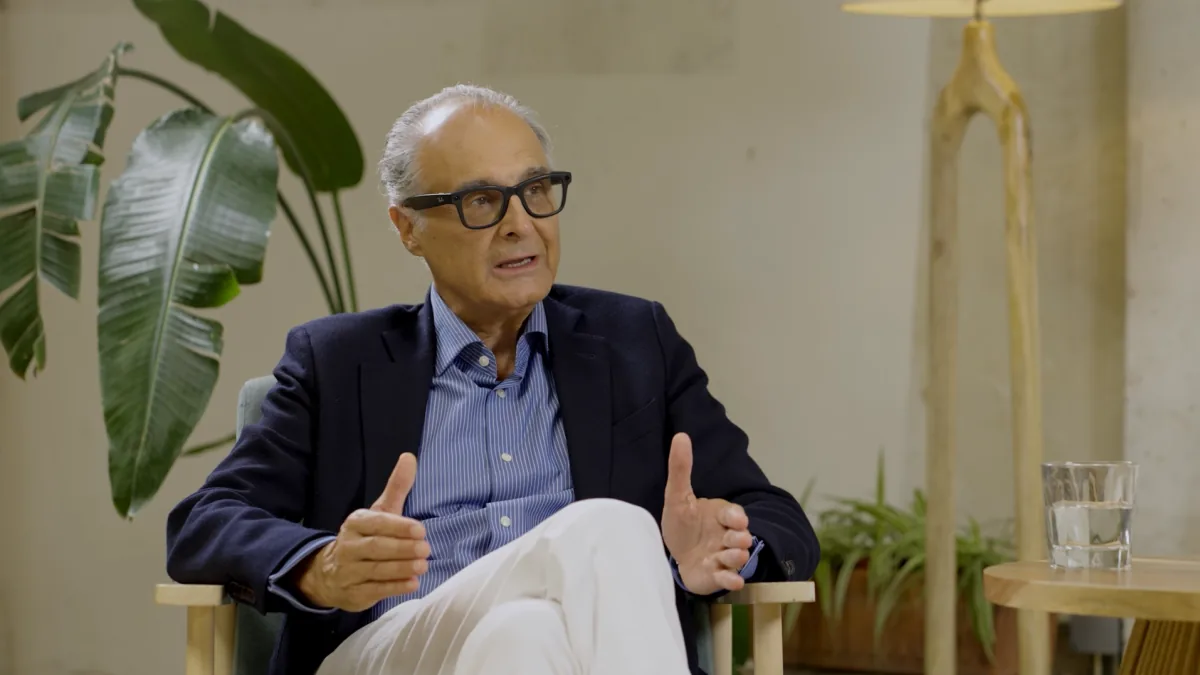
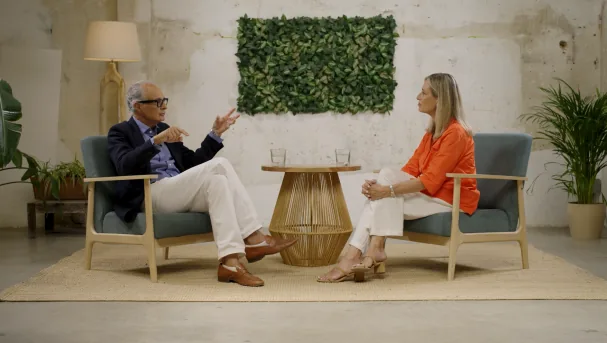
That is precisely the conversation that journalist Elisenda Camps raises in the Adeslas videopodcast ‘Living longer and better’, in an interview with Dr. Manuel J. Castillo, professor of Medical Physiology and expert in longevity. In this episode, the specialist explains what we mean by healthy longevity, when aging really begins, and why it is not enough to add years if those years are not accompanied by well-being.
The World Health Organization defines healthy aging as the process of developing and maintaining the functional capacity that enables well-being in old age
One of the most suggestive ideas from the first episode of the videopodcast is that our body ages progressively, from the moment it reaches its maximum functional performance. The World Health Organization defines healthy aging as the process of developing and maintaining the functional capacity that enables well-being in old age.
From this perspective, the challenge is not to stop the passage of time, but to achieve healthy and successful aging, with a healthy lifestyle, proper self-care, and a commitment to prevention.
How is healthy longevity built?
Healthy longevity is achieved with decisions that seem small, but which, maintained over time, have a decisive impact: sleeping better, moving more, following a balanced diet, staying socially active, and taking care of emotional health make a difference in the long term.
Read more Is Spain the country that smokes the most in the European Union?
Memory also ages
Among the concepts shared by Dr. Manuel J. Castillo, the difference between fluid intelligence and crystallized intelligence stands out, two forms of mental capacity that do not evolve equally with age. The first relates to the agility to solve new problems, adapt, or react quickly; the second, to everything learned, accumulated experience, and the ability to use that knowledge judiciously.
This distinction helps to look at aging with fewer stereotypes. Age can reduce speed in some tasks, but it can also provide perspective, judgment, and a memory built over the years that is very useful.
Prevention and habits
Healthy longevity is not just about living longer, but about preserving for longer what allows us to enjoy life to the fullest: energy, memory, mobility, autonomy, and emotional well-being. And that’s where prevention makes perfect sense: taking care of oneself before, during, and after, without waiting to notice the first ailments.
“Japanese people have a healthy life expectancy 10 years below their total life expectancy. In Spain, it is 15 years,” explains Dr. Manuel J. Castillo
There is also an element that centers this entire conversation and often goes unnoticed: aging does not depend solely on chronological age. In fact, as the expert reveals, we have inherited part of our way of aging from our parents and grandparents. And of course genetics influences, but habits, environment, and the way we live also weigh heavily. In other words, longevity is not written only in the genes; it is also built day by day with healthy habits and proper self-care.
A look to the future
In this episode, our expert provides a close, clear, and useful perspective on how to reach old age better. Because healthy longevity is not a distant goal or an abstract concept. It is, in reality, a way of living today to arrive better tomorrow.
Read more Ice baths: between science and posturing