Japan’s Parliament approved this Friday the reform of the imperial house law to mitigate the issue of the gradual reduction of the Japanese imperial family —in crisis for years due to the lack of male heirs in the family—, but the modification of the rule maintained the traditional system of succession to the throne exclusively through the male line, despite public support for the possibility of having empresses of royal blood.
This reform, the first substantial alteration of the law since 1947, introduced only two changes. On one hand, allowing the adoption of single males aged 15 or older from former branches of the imperial family, who are descendants of former emperors through the male line, and, on the other hand, authorizing women of the family to retain their imperial status even after marrying persons outside the royalty.
Until now, when a Japanese princess married, she ceased to be part of the family, but this will no longer be the case to ensure the number of members of the imperial family who carry out official duties. However, this Friday’s resolution did not address whether these women or their descendants could access the throne, considering it premature to explore that option. What is clear is that, for now, the husbands and children of these princesses will not have royal status.
Despite these historic changes for the world’s oldest hereditary monarchy, they are timid and insufficient compared to the opinion of the Japanese people. Contrary to this normative continuity regarding female succession to the throne, the Japanese public opinion seems more open to change. In May, a Kyodo News survey revealed that 83.0% of respondents supported allowing succession to empresses of the imperial family, while 13.1% opposed the idea.
The ruling conservative coalition, led by Prime Minister Sanae Takaichi, has been criticized by opposition lawmakers due to the insufficiency of parliamentary debates on this reform and condemned the refusal to consider the possibility of a woman occupying the imperial throne. “I deeply appreciate the approval of the law,” Takaichi declared in a parliamentary session, emphasizing that her purpose was “to guarantee a stable number of members of the imperial family.”
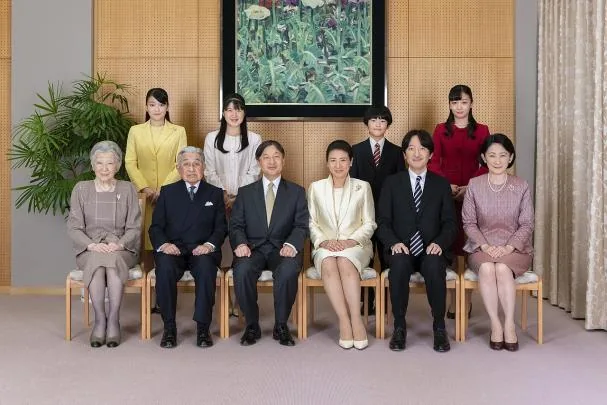
Therefore, the main solution to the succession crisis provided by this legal modification is that single male descendants from the 11 former family branches —who lost their royal status after the end of World War II— integrate into the current imperial family, composed of 16 members. It is said that Japan’s hereditary monarchy dates back more than 2,600 years, including the first emperors whose existence is debated, as well as several empresses who reigned centuries ago. The throne has invariably been passed through the male line.
Read more The Valencian government resolves aid for DANA victims: 80,000 euros per deceased
Also read
The first time the Salic law was questioned in the country was during the succession crisis in the 2000s. It was a hot topic about the imperial family due to the lack of male heirs. Before the birth in 2006 of the nephew of the current Emperor Naruhito, Prince Hisahito —second in the line of succession after his father, Prince Fumihito— there was no clear heir to the Chrysanthemum throne. In contrast, Princess Aiko of Japan, the only daughter of Emperor Naruhito and Empress Masako, is not included in the line of succession, just like Hisahito’s older sisters, Princess Kako and Mako Komuro, who lost her royal status and moved to New York upon marrying in October 2021.
The Japanese government had debated the Salic law on several occasions, especially in those years when there was urgency to guarantee an heir, but after Hisahito’s arrival no new rule was implemented. And that public marginalization of Japanese princesses when marrying men outside the imperial family was even criticized in a report by several non-governmental organizations.
Until early 2025, when a clash occurred between the UN and Japan after the Committee on the Elimination of Discrimination against Women issued a report stating that the Japanese succession law discriminates against women by not allowing them to ascend the throne, among other issues.
Former Prime Minister Shigeru Ishiba announced that he would ensure that Japanese voluntary contributions to the United Nations High Commissioner for Human Rights (UNHCHR) would not be used for any activity of the committee on discrimination against women that issued those judgments. “Eligibility to ascend the throne is not included in fundamental human rights, so limiting succession to males is not discriminatory,” the Japanese Foreign Ministry added at the time, pointing out that it is an internal matter.
Read more Brussels calls out Spain for “limited progress” in the fight against corruption