Since it was announced that Christopher Nolan’s next film after the Oscar-winning Oppenheimer (2023) would be an adaptation of the Odyssey, its development has been scrutinized with archaeological precision. The controversy surrounding the project matches its extraordinary artistic ambition, monumental budget, and the enormous anticipation it has generated. Like Odysseus/Ulysses waiting for the right moment to blind Polyphemus, the harshest critics lurked, searching for any mistake.
Read more La Odyssey: the journey that captivates Catalonia
It did not take long. At the beginning of 2025, the first images were leaked. The networks burned like Troy: the design of the armor, helmets, costumes… And they have continued burning until today: the racial diversity of the cast, the language used, the dark color palette of the images…
These controversies bring back the eternal debate about historical accuracy in film adaptations. The questions reappear: to what extent should a film reproduce with archaeological accuracy the material context of the era it represents? Where does necessary creative freedom end and unjustifiable distortion begin? What historical liberties are we willing to accept as viewers in the name of narrative effectiveness or a certain dramatic truth?
The issue is especially complex in the case of the Odyssey. Does it make sense to present a work composed almost three thousand years ago to a contemporary audience without reinterpretation? In fact, the poem itself is already a reworking of earlier traditions. The work attributed to Homer is a mythological fiction composed centuries after the events it supposedly narrates, mixing elements from different periods of Greek history.
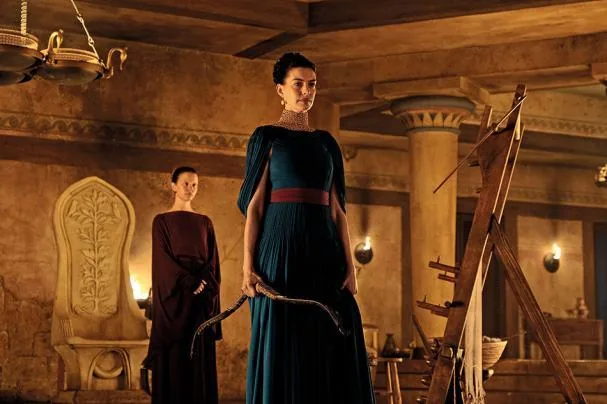
Thus, its heroes use weapons from the Mycenaean Bronze Age (1600-1200 BC), but inhabit a world that also reflects institutions, values, and customs from Archaic Greece (8th century BC), the period when the story probably began to be fixed in writing.
Homer’s liberties
The Odyssey is full of anachronisms. The image of Greece that Homer offers is far from being a faithful historical reconstruction of the time when Ulysses supposedly lived. Although the action is set after the legendary Trojan War, in the last centuries of the Mycenaean Bronze Age, the poem was composed several centuries later. The result is an image of the past built from memories and traditions of different eras, where the legacy of the Mycenaean world mixes with institutions and customs typical of Archaic Greece.
This fusion is especially visible in the political sphere. The great palaces of Mycenae, Pylos, or Tiryns functioned as complex administrative centers managed by officials and scribes. However, Homeric kings appear surrounded by nobles, warriors, and assemblies that rather evoke the aristocracies of Homer’s own time. The same happens with hospitality among elites, personal dependency relationships, or the prestige of lineages, characteristic traits of a society after the collapse of the Mycenaean kingdoms.
And there is more. The economy, architecture, and daily life also reflect this temporal overlap. Wealth is usually expressed in livestock, precious objects, and personal prestige, traits of an aristocratic society based on gift exchange and individual honor, rather than the complex storage and redistribution systems controlled by the Mycenaean Bronze Age palaces.
Similarly, alongside the memory of the great Mycenaean fortresses appear residences and spaces reminiscent of aristocratic houses of Archaic Greece. Even funerary practices reveal this mixture of eras. The cremation of Patroclus in the Iliad, for example, corresponds more to customs widespread in later Greece than those documented in the Mycenaean world.
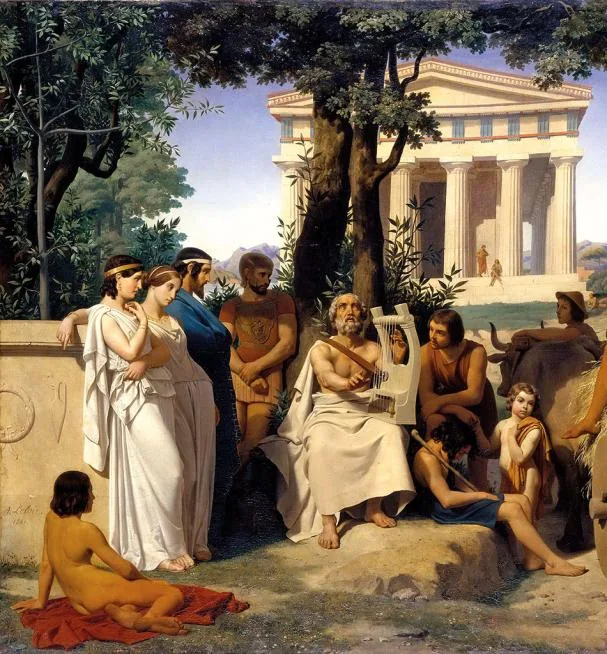
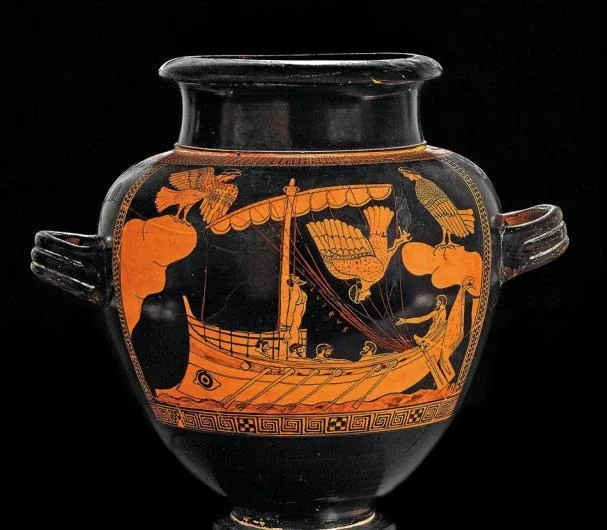
Homeric geography also does not escape this reinterpretation process. The maritime routes and geographic horizon described by the poet, where real places like Ithaca, Sparta, or Troy mix with fantastic territories inhabited by cyclopes, Laestrygonians, and sirens, seem to reflect a Mediterranean closer to the commercial and colonial expansion of Archaic Greece than to the Achaean world in which the action supposedly takes place.
Nolan versus Homer
When analyzing a film from a historical perspective, much of the discussion usually focuses on three aspects. The first is the representation of events: which events are shown, how they are chronologically ordered, and to what extent they align with available sources. The second is the setting, the visual aspect of the past: costumes, weapons, architecture, landscapes, means of transport, or any other element that helps reconstruct a specific era. Finally, the third concerns the language and mentality of the characters, to what extent the dialogues, values, and ways of thinking truly reflect the represented world or respond to contemporary sensibilities.
In the case of The Odyssey, the first point hardly admits debate. Unlike recent productions accused of historical inaccuracies such as Napoleon (2023) or Gladiator II (2024), whose protagonists and plots are inspired by real characters and events, the Homeric poem belongs to the realm of mythological fiction.
It is not a historical reconstruction but a legendary narrative that can be considered one of the main antecedents of epic fantasy and later subgenres like sword and sorcery literature. In this sense, Nolan can be accused of not being faithful to the Homeric text, but hardly to historical facts.
Read more ‘Operation Purifying Fire’, Magyar’s offensive against Orbán’s legacy
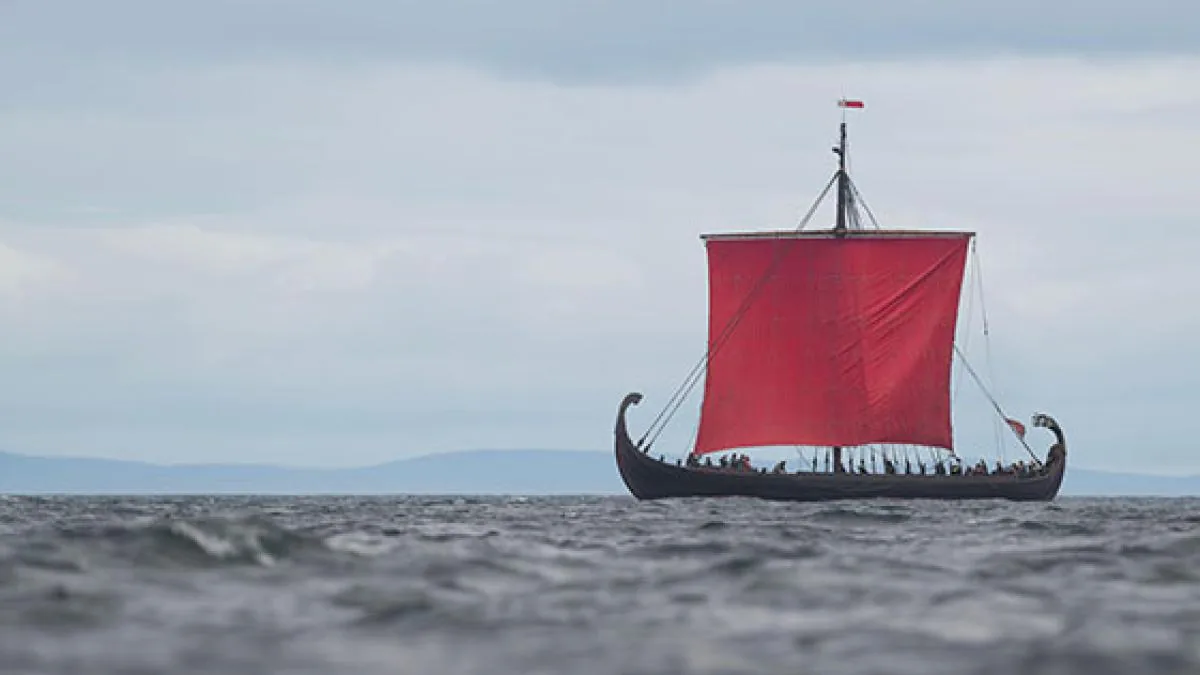
The greatest controversies have therefore focused on the other two aspects. Regarding the setting, critics question the design of certain helmets, armor, clothing, and ships, arguing that they diverge from what we know about the material culture of Mycenaean Greece.
Agamemnon’s black armor has become one of the most cited examples, even humorously compared to Batman’s suit. However, Nolan has defended that the design is inspired by findings of Mycenaean daggers made with blackened bronze, suggesting that artisans of the time could deliberately darken the metal through certain alloys and treatments.
The dark color palette of the images has also sparked debate. Against the bright and marble-like vision popularized for decades by the peplum genre, the director of Dunkirk has opted for a somber and earthy aesthetic, conceived less as a climatic recreation of the Mediterranean than as a visual projection of the emotional state of characters marked by war and nostalgia for a lost home.
The controversy is especially interesting because it reveals how much our image of the past is conditioned by modern artistic conventions. For centuries, Western culture imagined Greece as a civilization visually dominated by white marble. However, archaeology has shown that temples, sculptures, and buildings were originally painted with bright and vivid colors.
Similarly, many of the criticisms directed at the film reflect not only debates about historical accuracy but also the visual expectations that cinema and popular culture have built about Antiquity.
A Greece without Greeks?
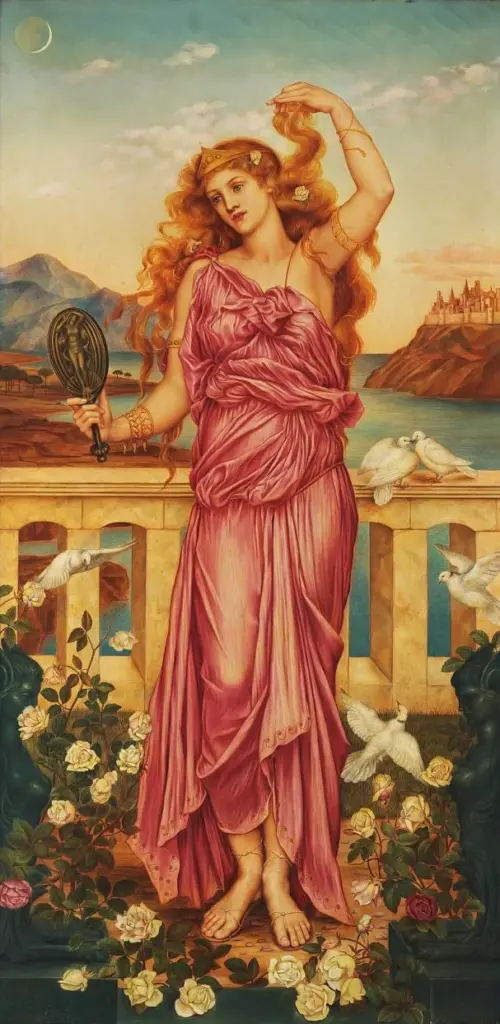
The discussion about the cast composition has been even more intense. Some commentators have accused the film of practicing supposed “forced diversity,” due to the presence of actors of different ethnic backgrounds in characters from the ancient Greek world, especially the choice of actress Lupita Nyong’o to play Helen of Troy. Others have lamented the scarce presence of Greek actors in a production based on one of the foundational works of Hellenic culture.
Its defenders respond that these criticisms, besides primarily reflecting contemporary cultural debates, often stem from an overly homogeneous view of Antiquity. Although Mycenaean Greece was not a multicultural society in the current sense of the term, it was not isolated from the rest of the Mediterranean either, but part of an extensive network of contacts and exchanges much more complex than usually believed. Moreover, these are fictional characters, so perhaps Nolan’s ability to convey the spirit of the Homeric universe is more relevant than a hypothetical ethnic fidelity of the cast.
The issue connects directly with the third aspect: the language and mentality of the characters. Obviously, no adaptation can faithfully reproduce the way men and women spoke or thought almost three thousand years ago. Every translation inevitably involves an update. Homeric heroes inhabit a moral and cultural universe very different from ours, dominated by values such as honor, warrior glory, hospitality, or the constant intervention of gods in human affairs.
Still, some viewers have criticized the use of American accents and colloquial expressions they consider inappropriate for a story set in ancient Greece, as they believe these break historical verisimilitude and trivialize one of the great works of universal literature.
Its defenders respond that this criticism stems from an illusion of authenticity. A Ulysses speaking standard British English would not necessarily be more “historical” than one with the Massachusetts accent of Matt Damon, the actor who plays Odysseus. The only truly faithful alternative would be a practically unfeasible recreation. Characters speaking archaic Greek in a Hollywood blockbuster?
Perhaps, then, the question is not so much whether Nolan takes liberties, but whether those liberties will serve to bring a work born almost three millennia ago closer to today’s audience without distorting it or stripping it of what has made it an undisputed universal classic.
Read more Trump says China hacked records of 220 million voters in 2020 and the “deep state” hid it