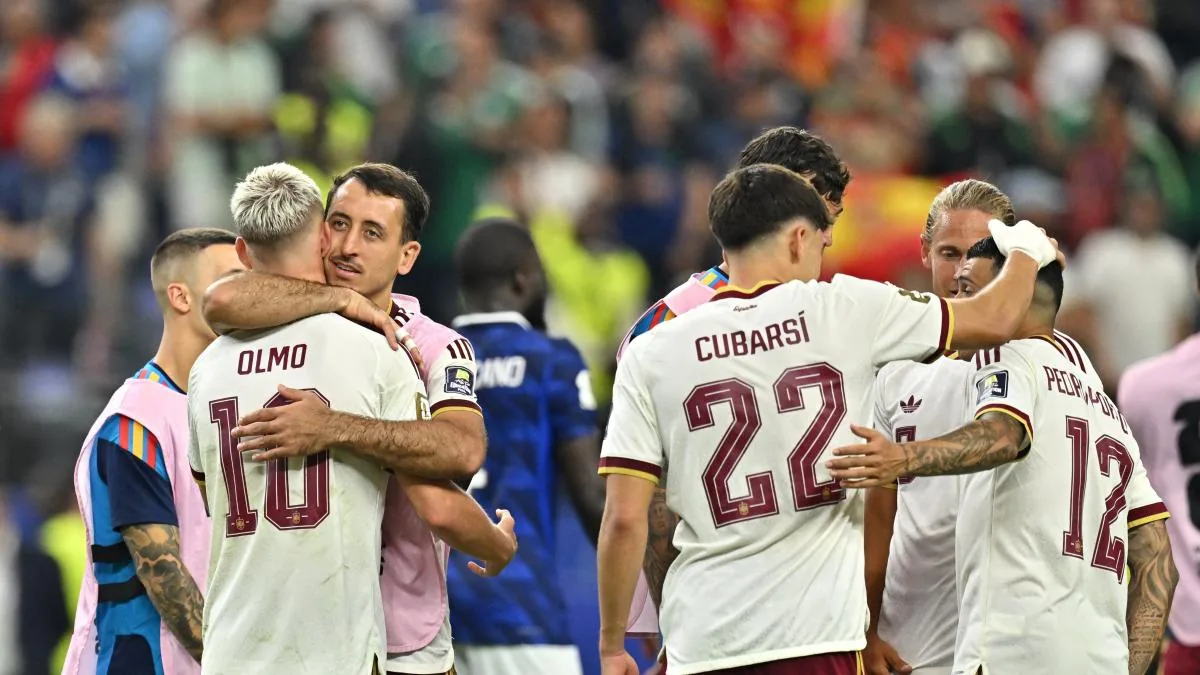
Before the first World Cup semifinal, it was easy to jump on the bandwagon of those who saw France as the favorite. No one underestimated Spain, far from it, but Deschamps’ team was undoubtedly the one leaving the best impressions in the tournament. Four top-level forwards positioned them as the best attacking team. “We are facing the best team…,” De la Fuente began telling his players in the locker room, before they went out to warm up at the AT&T Stadium in Dallas. It was just a prelude to the message he wanted to convey, the concept that is leading him to success. “… But we are the best team,” he concluded to energize the players before attempting what would become an overwhelming storming of the Bastille. July 14 will also be a national holiday in Spain because it opened the way to fight for the second star of la roja.
Read more The Supreme Court before the European justice
Spain’s historic qualification for their second World Cup final has a tip of the iceberg called Luis de la Fuente. Without a doubt, the man from La Rioja is the architect of success with his tactical skill and emotional intelligence, which has resonated in the locker room. A style reminiscent of Vicente del Bosque’s, who ultimately reached glory in 2010. You can give him all the credit in the world, but finding fault with the man from Haro is a very difficult task. He strings one success after another. “The important thing is to know how to choose your travel companions; if you make a mistake, you can have problems. I have always put a lot of interest in choosing normal, generous people who prioritize the common good over the individual. That is the way to make the journey much better,” he repeated after sweeping France, focusing equally off the pitch as on it. The man from La Rioja has a great advantage over others, having coincided with almost all the players in the youth categories, which allows him to know what they can offer with the ball but also what kind of people they are off the field to better choose those “travel companions.”
Also read
As he predicted, his team has grown as the World Cup progressed and the pieces settled. “It is a planned process so that we would arrive at the key moment in the best possible way, with a very high physical and football level of the players,” he boasted. Part of this collective success, still unfinished pending the grand final, is reflected in the difficulty of choosing a star, a leader. Objectively, the coach has managed to build a team in its entirety, a concept sublimated in this World Cup. Laporte? Cubarsí? Rodri? Dani Olmo? Lamine? Even Merino? You can practically point to the eleven starters as potential engines of Spain and surely no one would be wrong. This is how Spain reached the final, putting the common good above everything else.
“We play against the best team… but we are the best team,” De la Fuente emphasized to his men in Dallas
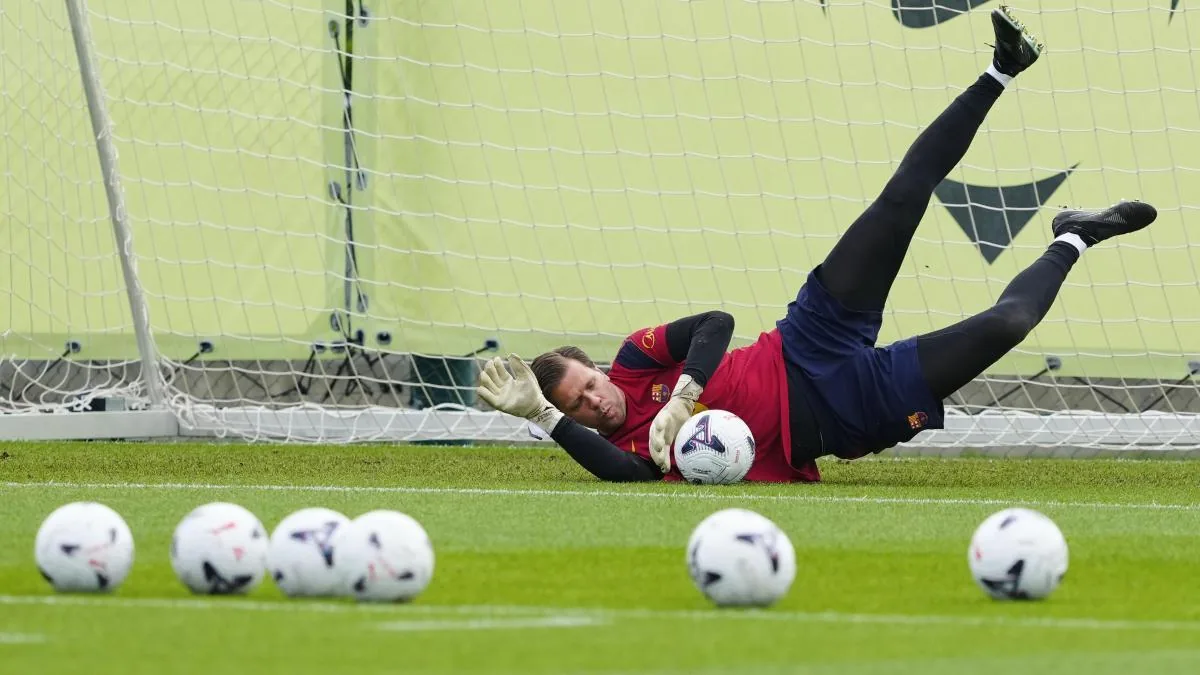
De la Fuente’s successes began from the start of the journey, when he skillfully ended the goalkeeper debate. He chose to call up Joan Garcia, a decision many thought would backfire, that it would create a problem in the locker room. It was quite the opposite. The man from La Rioja is loyal to his own but not oblivious to reality, and the Barça goalkeeper had been, without a doubt, the best in the League. The logical thing was to take him to the World Cup, and so he did, but without that altering the locker room atmosphere. Unai Simón, the captain, was going to be his starting goalkeeper, as he had always been since his arrival in the senior team. Seven matches later, the Athletic player has only conceded one goal, and La Roja is in the final. Once again, De la Fuente hit the right note.
Read more Stripe and a fund launch a $53 billion takeover bid for PayPal
The story continues in other parts of the field with the same success. The Spanish coach is responsible for making the final decision on everything, but he likes it to be collegial, agreed upon with his team. And when they don’t see something clearly, they test until they find a solution that convinces them. This happened in the World Cup with the right back, for example, where De la Fuente practiced the classic trial and error between Marcos Llorente and Pedro Porro, until the Extremaduran clearly won the battle and secured the starting spot.
Although perhaps the midfield is the line that best reflects De la Fuente’s methodology and philosophy, a coach old school but with much more vision of the future than it might seem. His insistence on keeping Rodri, despite it being evident he was not at his best, without giving Zubimendi a chance after his great season at Arsenal, might have seemed like the whim of a coach stuck in the past. A month after those hesitant beginnings, it is clear that the man from La Rioja trusted the 2024 Ballon d’Or because he saw him on the path to recovering his best version. Against France, no one doubted Rodri, who gave a masterclass organizing and managing the finalist’s tempo. However, when he didn’t see it clearly, De la Fuente did not hesitate to make changes. The most evident case is Pedri, an essential piece to understand Spain’s game, whom the coach did not see sharp and whom he did not hesitate to bench at the start of the quarterfinals and semifinals. A decision that was controversial at first but ultimately correct. De la Fuente also had no problem rotating among the options he liked best to play as a number 10, as he himself says. A race that Dani Olmo won by several lengths and that the coach rewarded with an undisputed starting position in all knockout rounds.
The goalkeeper debate, faith in Rodri, the bet on Olmo… the coach strings one success after another
Spain is reaching excellence under an umbrella of apparent normality. That is how Del Bosque’s team triumphed and how De la Fuente’s team is triumphing. The MVP is for everyone.
Read more Three people drown in the Roncal dam