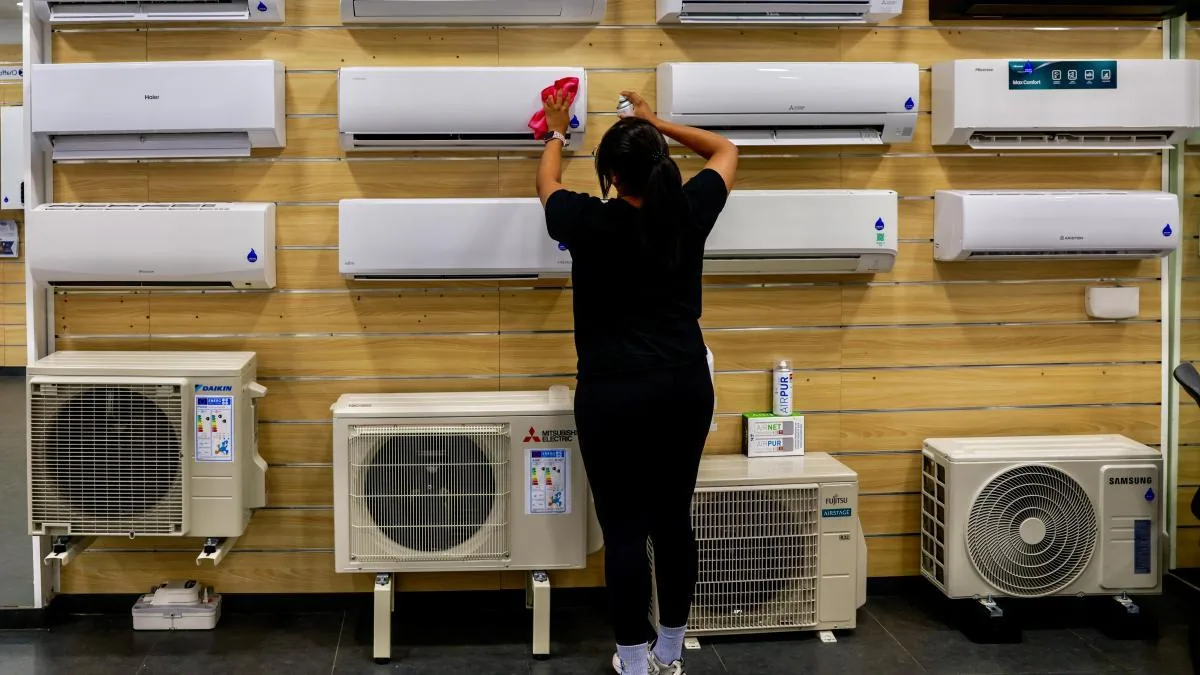
European countries recorded more than 10,000 deaths above average during the unprecedented heatwave that hit the western part of the continent at the end of June. The vast majority – more than 9,000 – were people aged 65 or older, according to data published by EuroMOMO, a network supported by the European Centre for Disease Prevention and Control and the WHO. Extreme heat can cause death by worsening, especially, cardiovascular and respiratory diseases, with older people being the most vulnerable. However, some experts point out that some of the deaths related to high temperatures are actually due to pollution.
Read more The Congress debates today whether to guarantee teleassistance to all dependents
“It is unusual for this type of excess to occur at this time of year. It is a truly high figure,” Lasse Vestergaard, chief physician at Denmark’s Statens Serum Institut, home of EuroMOMO, told Reuters. “It is difficult to explain this high excess mortality by any cause other than extreme heat,” he added.
Scientists emphasize that the heatwave at the end of June would have been “practically impossible” without climate change, which is making these waves more frequent and intense. The data, collected from national mortality statistics of 27 European countries, included excess deaths from all causes, not just those related to high temperatures.
However, the same researchers warn that other important factors, such as COVID outbreaks, which could have contributed to the peak of 10,650 excess deaths recorded that week, are not known (there are experts in Spain, however, who also point to pollution, as we explain later).
From May 15 to July 12
2,056 heat-attributable deaths in Spain
The combined mortality of those same European countries during the previous eight weeks was, on average, about 500 deaths per week below usual levels.
In Spain, according to figures from MoMo (daily mortality monitoring statistical system), coordinated by the Carlos III Health Institute (ISCIII), 2,056 heat-attributable deaths have been recorded so far this summer (from May 15 – the date MoMo sets as the start of the summer period – to July 12). The figure almost doubles those counted in the same period last year, which was 1,171.
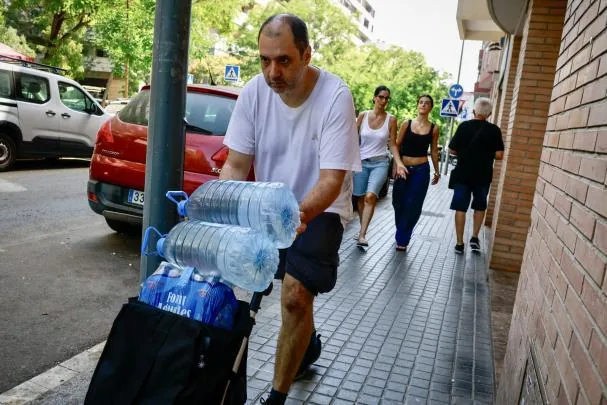
The difference is even greater if 2026 is compared with 2024, 2023, and 2022. During the mentioned period, heat-attributable deaths were 110 (2024), 275 (2023), and 996 (2022).
Read more The employers’ association attacks the possibility of increasing tourism VAT to 21%
However, these figures alone do not provide much information. Why? Because it is necessary to know by how many degrees the heatwave threshold was exceeded. “The 2,056 heat-attributable deaths so far this summer could be few depending on the degrees by which that threshold was exceeded,” Julio Díaz, a researcher at ISCIII, explains to La Vanguardia. If they are few (so to speak), it would be thanks to the heat culture that exists in Spain and not in other countries, less accustomed to high temperatures, he adds.
This researcher recalls that mortality attributable to heatwaves is influenced not only by temperature but also by pollution. He explains that they are working on a study, which will soon be published, where they estimate that about 18% of deaths attributed to temperature are due to pollution. “And we do nothing against it: no one says to wear a mask, and much less is traffic reduction applied,” laments Díaz.
He assures that when there is a stagnation situation, with anticyclonic blocking and Saharan air entering in some cases, not only does the temperature rise, but also ozone, NO₂ (nitrogen dioxide), PM (particulate matter)… “and this affects the same vulnerable groups, the same pathologies, and all at the same time. So, why do we take measures against one factor and not the rest?”
The biggest killer in summer is NO₂”
Julio Díaz
ISCIII researcher
Maybe – Díaz argues – if Saharan dust enters, anthropogenic particulate matter, which is 55%, should be reduced. “The biggest killer in summer is NO₂,” he states. In his opinion, it is useless to have a climate refuge if the people who die in heatwaves are those aged 75 or older, who barely leave their homes, with comorbidities and on multiple medications. “They are not going to go to a climate refuge,” he maintains.
He asserts that what reduces mortality in heatwaves is access to cool places in your home. “Having air conditioning (or failing that, fans); that the home is well insulated; that people take care of the elderly, that they stay hydrated… You have to know how to adapt resources.”
In Catalonia, there is also an increase in heat-attributable deaths (according to MoMo) when comparing the same period this year with the previous four. From May 15 to July 12, 2026, 339 deaths have been recorded, while in 2025, in the same time frame, 300 were counted; none in 2024; 13 in 2023; and 48 in 2022.