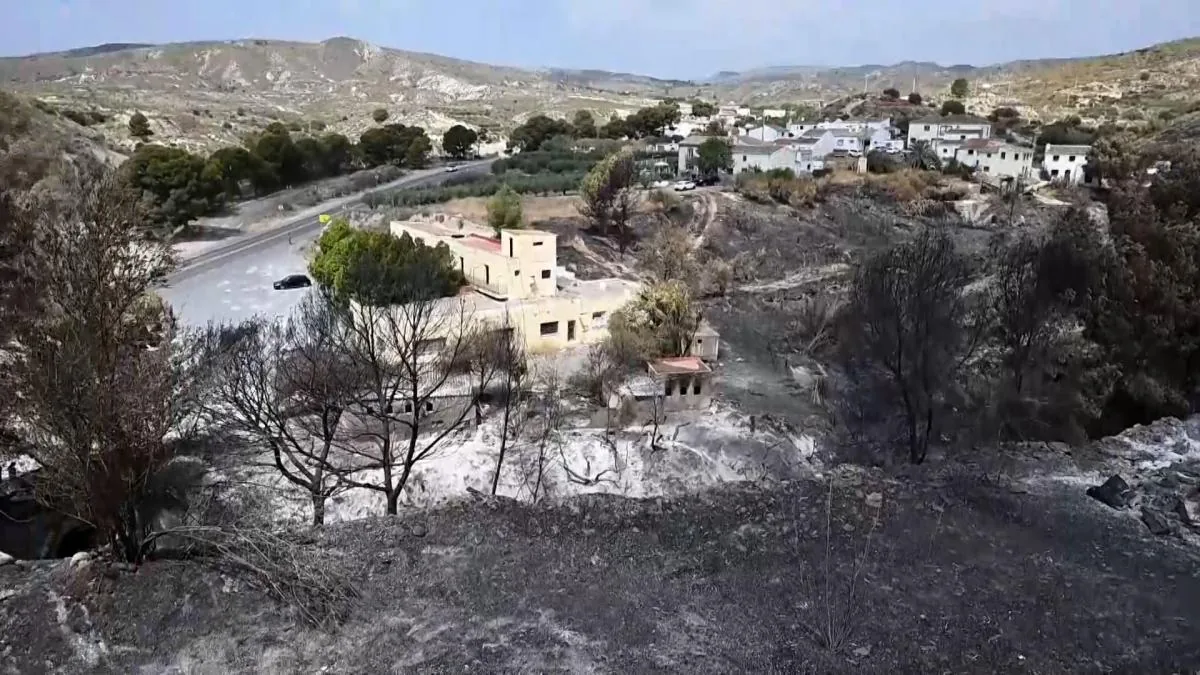
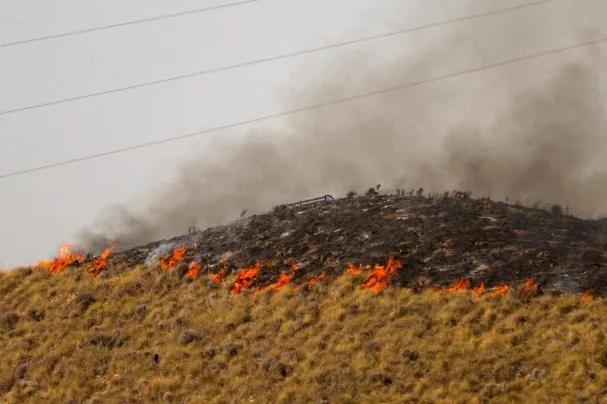
Wildfires are once again proving to be especially severe this year, something that happens after two years of above-average rainfall. But this favorable rainfall has fostered such lush vegetation that, when it dries out in spring, it has become fuel for the flames. Up to July 5, 50,750 hectares of forest have burned in Spain, representing an increase of 148% compared to the data from last year at the same time.
Read more High taxation in Spain hinders households from investing their savings
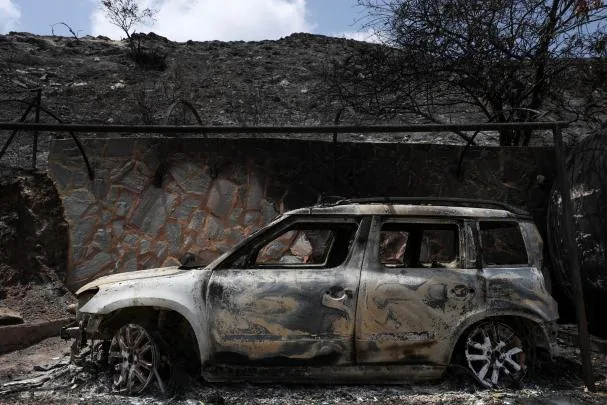
In 2025, up to that date, 20,466 hectares had burned. That is, 2.5 times more area has burned than last year. Considering the Los Gallardos fire in Almería (whose data does not yet appear in the official statistics), the number of hectares burned in Spain already exceeds 57,000.
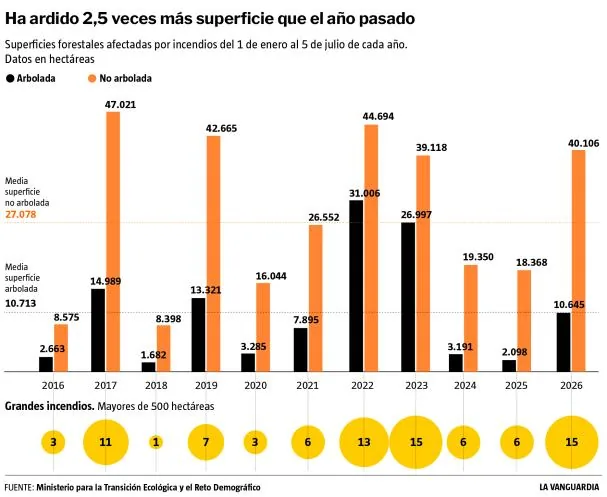
The provisional fire toll is a bad omen, but the final result will not necessarily surpass last year’s, when 350,000 hectares burned, the worst record so far this century according to data collected by the Ministry for the Ecological Transition.
But it is also by no means a reason for hope that so far this year 34% more forest area has burned than the average of the last decade (37,791 hectares).
The number of hectares burned in Spain already exceeds 57,000 this year
What worries experts is the trend toward large fires. When the fire cannot be contained in time and gets out of control, its effects are devastating. Last year, the number of fires decreased by 10% compared to the average, totaling 8,199 incidents – of which 2,598 were actual fires larger than one hectare.
But the number of large wildfires – over 500 hectares – rose to 63, and 47 of them occurred only in August, with the worrying fact that 5 devastated more than 20,000 hectares.
And this year this trend is consolidating. Up to July 5, there were 15 large fires over 500 hectares, the highest number of the decade, matched with those of 2023, not counting the one that burned 2,200 hectares in Les Gavarres.
Another fearsome effect is simultaneity. Last year, in just two weeks of summer, 90% of the total burned area was concentrated, which overwhelmed firefighting resources, complicated evacuations, and reduced the capacity of emergency teams to control so many fronts at once.
The climate crisis combined with rural abandonment and loss of land management are key for WWF
And what are the causes? The climate crisis, lack of prevention, and rural abandonment are three of the main reasons experts from WWF point to as causes of large fires. More specifically, behind these events, they mention “the low investment in prevention, the entrenched use of fire still practiced in rural areas, and the abandonment of the agroforestry landscape.” Added to all this is “the absence of forest management and the lack of territorial planning.”
Read more At least two dead in Argentina during the match and celebrations for the 3-1 against Switzerland
“The climate crisis combined with rural abandonment and loss of land management make the agroforestry landscape increasingly vulnerable to fires,” explains Lourdes Hernández, an expert from WWF Spain. Furthermore, there are a large number of homes located within or near forest areas lacking proper planning or self-protection measures, according to this organization, “which worsens the problem.”
We need a change in strategy that goes beyond firefighting and addresses comprehensive management based on prevention and adapting the territory towards agroforestry mosaics, preventive territorial planning, and sufficient resources to face emergencies,” Hernández adds.
Heat waves and other elements of the debate
Many voices, such as those of WWF, emphasize that the limits of the current wildfire fighting model “have become obsolete in the new climate context.” Currently, 78% of resources in this area are dedicated to firefighting and only 12% to prevention (forest management). The rest goes to restoration.
Another revealing fact is that 95% of these events are caused by sometimes negligent human activities (especially the use of fire as a management tool in rural areas), and the remaining 5% is attributed to lightning. Therefore, there is a wide margin to prevent them.
The European Copernicus program highlights that Spain accounts for 40% of all burned area in the EU in the first half of 2026. The situation coincides with a succession of heat waves that have increased the risk.
Two-thirds of the Peninsula (except Galicia, Asturias, and parts of Castilla y León, Madrid, the province of Valencia, and Andalusia) currently face a very high or extreme wildfire risk. This risk is extremely high in Aragón, Catalonia, Navarra, the Basque Country, and La Rioja.
Broad sectors consider a broad political agreement on this matter key to comprehensively address prevention and territorial adaptation. The Government tried through the proposed State Pact against the Climate Emergency but it did not succeed in Congress.
Read more Two drivers die in a chilling accident at the start of a race in Brno