The concept of European digital sovereignty has become popular. It is the democratic alternative to the techno-oligarchy of the U.S. and the dizzying and unsettling advance of China. The expression is beginning to infiltrate political speeches – at least, those of the less reactionary leaders – in newspaper opinion spaces and in activism.
Read more Vote for the finalists of the Vanguardia de la Ciencia award
There is an application, Charles, that detects in real time the non-European services the user is using. In addition, it proposes “sovereign alternatives.” When working, for example, with Google Docs, the app warns that the site is hosted outside the EU network and offers European variants such as the French CryptPad or the German Nextcloud Office.
Some advances are driven by the European Commission itself, which now intends to reserve government satellite communications for European operators, against the dangerous dominance of companies owned by oligarchs like Elon Musk or Jeff Bezos. Timely, one might say. Brussels is promoting a European AI plan that includes AI Factories. Also the manufacturing of European semiconductors or its own quantum policy.
But it has taken a long time to wake up: for years, it seemed content with drafting its AI Law, very advanced and pioneering, but which is little more than wet paper when trying to apply it to large non-European operators
The rise of the far right raises doubts about the type of technological sovereignty of future Europe
However, something is changing, Brussels is about to launch in the coming days an ambitious plan that could mark a before and after in the attempt to recover digital sovereignty, according to the Financial Times . The roadmap, in any case, is already defined in the EuroStack initiative, promoted by economist Francesca Bria.
Beyond the institutional field, a European company like Mistral, founded in France, is also making advances. This AI firm has raised 890 million dollars in its first financing operation to build data centers in Europe, although, to date, full sovereignty is a chimera: the centers will be equipped with Nvidia chips.
Read more Is the counterrevolution starting?
On the local level, the Barcelona Supercomputing Center (BSC) is also incorporating elements of European digital sovereignty, such as another brand new quantum computer integrated into the European High-Performance Computing Joint Undertaking. And even more relevant, for being innovative and necessary: the BSC has created the first art and science laboratory in a supercomputing center. It is led by Fernando Cucchietti along with commissioner José Luis de Vicente and has advisors such as Ricard Robles (co-founder of Sónar), Mónica Bello (Platform Dalí) or Francesca Bria herself.
This laboratory, through an elaborate policy of alliances, will probably allow Barcelona to lead the cultural discourse within the framework of European digital sovereignty. At the upcoming New European Bauhaus festival, in mid-June, the laboratory will take its first steps in this direction.
Also read
The challenges are now huge, but not only because of the time lost compared to the U.S. and China, but because of the evolution that Europe itself may experience. It is no longer just about gaining sovereignty over others, but about asking what values will underpin it.
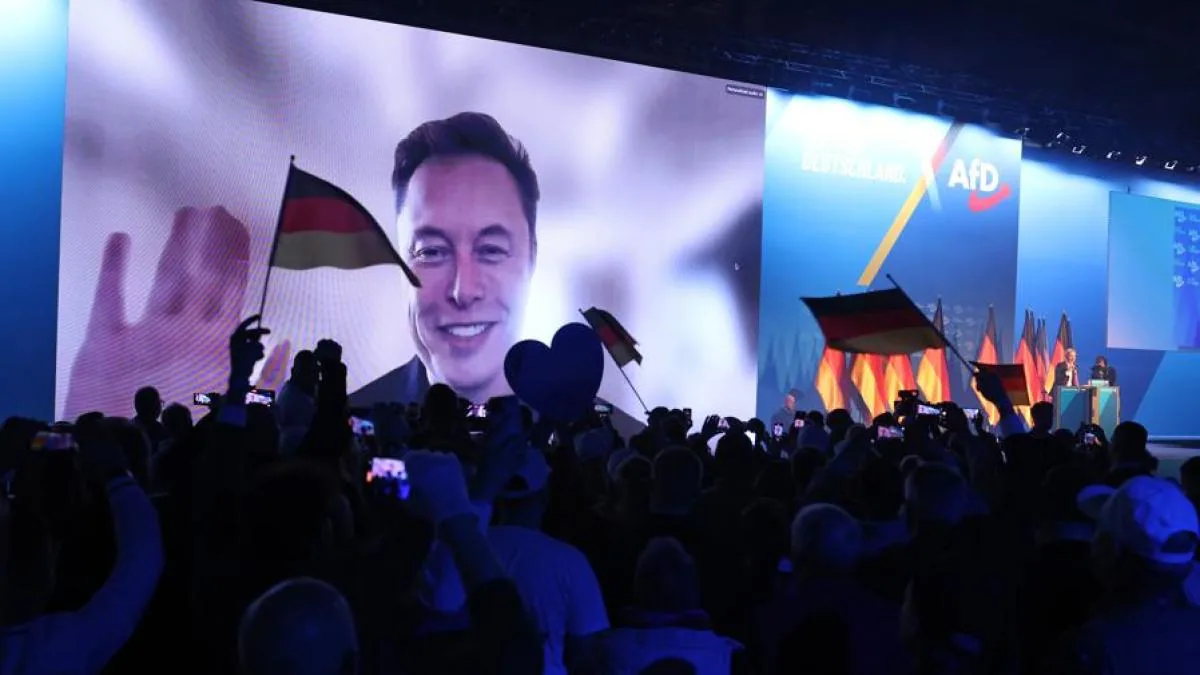
The issue is not minor if one observes the electoral rise of far-right parties, some of them fully aligned with the theses (if such a thing existed) of Donald Trump. The underlying debate is more semantic than technological: it is about determining when the concept of Europe stopped evoking democratic values, freedom, peace, and progress.
To end on a hopeful note: a technology activist comments that, to avoid the risk that European digital sovereignty falls into centralized structures susceptible to being controlled by anti-democratic forces, one should bet on transparent and shared infrastructures, as well as citizen participation. These are ideas.
Read more PSG also serves in agony