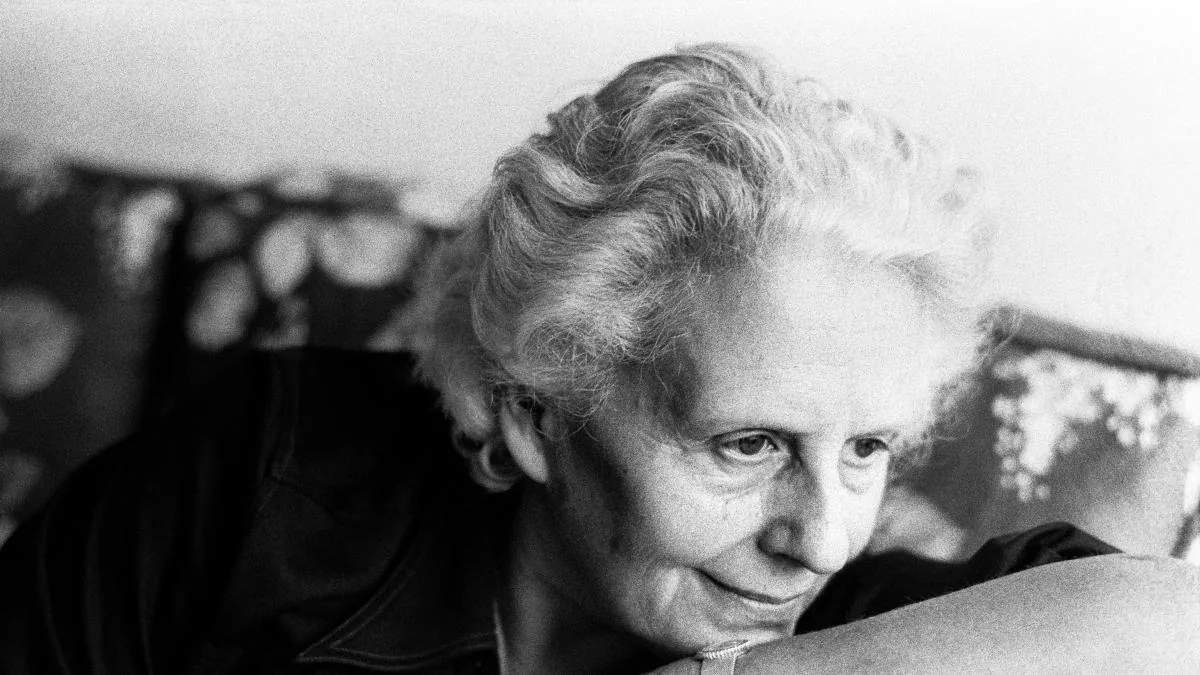
Every so often, Death and Spring resurfaces with force, like an animal that hibernates. Rodoreda wrote it between 1961 and 1963, and let it sleep. Apparently, she resumed it between 1981 and 1983. Although there is no solid evidence for the latter, I personally deduce from her statements that this was the case. But she died in the spring of that last year, without seeing her most iconoclastic novel, ahead of its time, published. It was in 1986 that Núria Folch, married to the writer and editor Joan Sales —grandparents of Maria Bohigas, who currently steers Club Editor, home of Rodoreda’s work— first published this novel. It was translated into several languages, but had humble success. Until, three decades later, the publisher rescued it again, with very careful editions and beautiful afterwords (Mariana Enríquez, Arnau Pons, Eduardo Jordà). It was 2017. And this newspaper named it best novel of the year. Poetic justice.
Read more The life of the party
Now, in 2026, sixty-five years after Rodoreda planted the first wisteria, the first word… a new edition joins the wave of new creations revolving around this work. The text is awakening a powerful interest in new generations, who discover it and are mesmerized: the contemporary dance work by Morau and La Veronal, Maria Arnal’s songs, Marqués-Marcet’s film, Neus Penalba’s exhibition at the CCCB… The living animal that this book is awakens again and shakes us.
It was Josep Maria Miró, National Drama Literature Award winner, who recommended I read it. I had just read The Diamond Plaza and Broken Mirror. I was fascinated by the forcefulness of these two capital works —and unknown to me until I was thirty-two—. Miró told me to prepare myself, that what I was about to read was unparalleled with anything I had read before. That I was going to face a living and almost lysergic text. And he was right. The work enchanted me, it tore me to pieces while filling my head with grotesque and beautiful images; it wounded me and amazed me, it took me from the abyss of death to a field of living flowers. And it became the most cryptic, beautiful, and passionate text I have ever read. Despite the risk of the expression, my favorite novel.
Once I managed to make a place for myself in the publishing world, my first decision was to write to Club Editor and propose a new edition of the Spanish translation of the work. I wanted the cover to show part of the bizarre imagery of the book, to display the colors and some key scenes from the text. In addition, I wanted to write an afterword where I could explain to the reader the reasons why this work could well become one of their favorite novels. The publisher gave me total freedom. And the book came out just a week ago.
Read more Sunset at the Nobel hotel
I leave you with part of the afterword, which I recommend you read before delving into the novel, as it has the spirit of a prologue.
“The torrential cascade of striking images and allegories is unforgettable. Around just one of those images, a great novel could be built. Rodoreda is generous in serving us so many metaphors in a single book, and so many merciless phrases that shake with immense force: like when an old man tells a child that he likes to see people die, or when the same young man assumes that the wind, upon leaving his lungs, is glad to abandon the hindrance he himself poses to it. Rodoreda writes that death is the place where one does not know what things are, and that there are red and white caves like the mouth of a sick person, and that trees have a hard heart that they must remove to bury the dead in their trunks. It is an agonizing text. But, sometimes, artistic works that show us the depth of the abyss of death, of the ravine towards which our insipid existence is oriented, provoke a contrary effect: they make us, after observing them, be flooded with a very pleasant sensation of still being alive.
Read more Contumacy or contumely? The writers’ party
So much life we owe you, Rodoreda.”