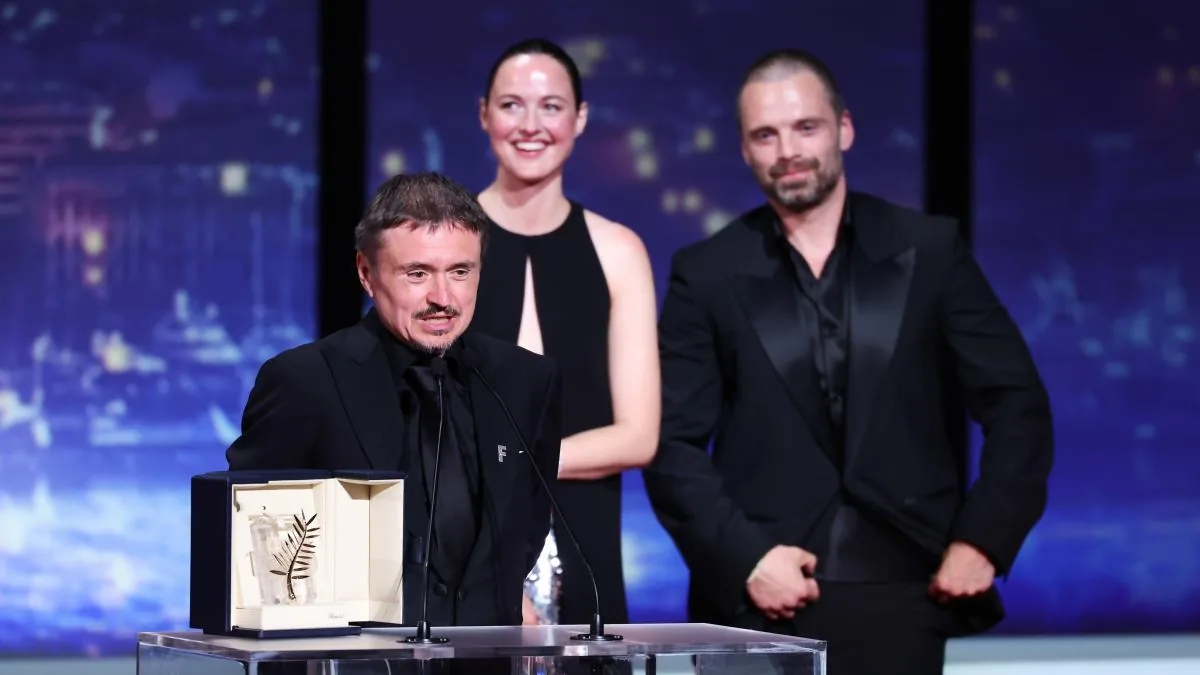
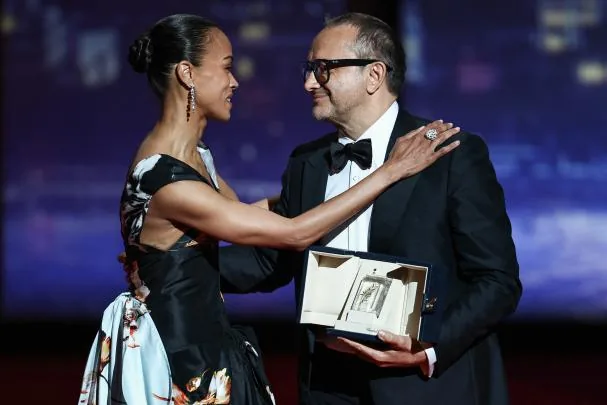
Romanian director Cristian Mungiu has won the Palme d’Or at the Cannes festival with Fjord, a film as uncomfortable as it is necessary, which was among the favorites in a rather uncertain 79th edition. With the audience giving a standing ovation, Mungiu took the stage at the grand Lumière theater to receive from Tilda Swinton an award he had already won in 2007 with 4 Months, 3 Weeks and 2 Days. “It is necessary to talk about relevant things in a society that has become radicalized, and this film is a message of tolerance,” he said referring to the plot of the film starring Sebastian Stan and Renate Reinsve, which narrates how the traditional and religious values of an ultra-conservative Romanian family clash with the supposed progressive values of Norwegian society. Fjord had also been rewarded shortly before with the International Critics’ Prize (Fipresci), the Ecumenical Prize, and the Citizenship Prize.
Minotaur by Russian Andrei Zviaguintsev, another film expected to enter the awards, won the Grand Jury Prize for his excellent work adapting The Unfaithful Wife by Claude Chabrol, set in the context of the war in Ukraine to launch a fierce critique of Putin and Russian corruption. The closing ceremony was marked by shared awards. Javier Calvo and Javier Ambrossi, Los Javis, were honored for their work as directors on La bola negra, just like Polish director Pawel Pawlikowski for Fatherland. Javier Calvo expressed affection for Pedro Almodóvar and Rodrigo Sorogoyen, the other Spanish filmmakers competing for the Palme d’Or with Amarga Navidad and El ser querido, respectively, who left empty-handed, and emphasized that the film “talks about the importance of seeing the other as a human being.”
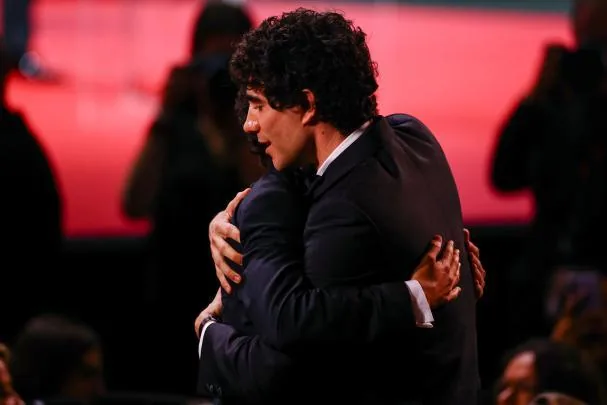
Geena Davis, star alongside Susan Sarandon of Thelma and Louise, the image of this year’s poster, presented the Best Actor award ex aequo to Emmanuel Macchia and Valentin Campagne, the young soldiers who fall in love in the trenches of World War I in Coward, by Belgian Lukas Dhont. The Best Actress award was also shared by Virginie Efira and Tao Okamoto, stars of Soudain, the film by Japanese director Ryusuke Hamaguchi that praises human values and the need for care in nursing homes. Both were very emotional and praised the work of the Japanese director.
The Jury Prize was announced by Ruth Negga for The Dream Adventure, by German Valeska Grisebach, which was screened on the last day of the festival. The Best Screenplay went to Frenchman Emmanuel Marre for Notre salut, a film he also directed that portrays French collaborationism set in the 1940s and based on the experiences of his own great-grandfather.
French diva Isabelle Huppert was in charge of presenting the Honorary Palme d’Or to American actress Barbra Streisand, who could not attend the Croisette due to a knee injury. The festival selected her most emblematic films to immortalize the legacy of the 84-year-old American actress, singer, and director, who sent a thank-you video recalling her difficulties directing her first film, Yentl (1983), and spoke about her love for cinema.
Read more The plot of Plus Ultra: “the prosecutor is a friend, it must be stopped”
Catalan director Carla Simón, who competed last year with Romería, as president of the short films jury, was among the first to take the stage at the Lumière theater to present the Best Short Film award to Mexican Federico Luis for Para los contrincantes, about a young man’s dream of becoming a boxing champion.
The awards for the festival’s parallel sections were announced hours earlier. Everytime, a portrait of grief directed by Austrian Sandra Wollner and filmed in Tenerife, won in Un Certain Regard, while French film La gradiva won in the Critics’ Week, where Catalan Aina Clotet received the Emerging Star Award from the Louis Roederer Foundation for her performance in her directorial debut Viva, in which she plays a woman overcoming breast cancer and facing her fears with the intention of exploring life without limits.
The Spanish project The Black Mirror Experience, created by David Bardos and Damià Ferràndiz, also received a special mention from the Immersive Competition jury, which was won by Katàbasis, by Frenchman Ugo Arsac. And the Caméra d’Or, which honors the best first feature from any festival section, went to Ben’imana, by Marie-Clémentine Dusabejambo.
The Queer Palm – awarded each year to the best Cannes films with LGTBIQ+ representation – went to the American film ‘Adolescence, Sex and Death at Camp Miasma’, by Jane Schoenbrun and starring Hannah Einbinder and Gillian Anderson. A queer revision of the slasher films of the 1980s that caused a sensation at its screening at the start of the festival.
Read more This Barça reaches impossible places