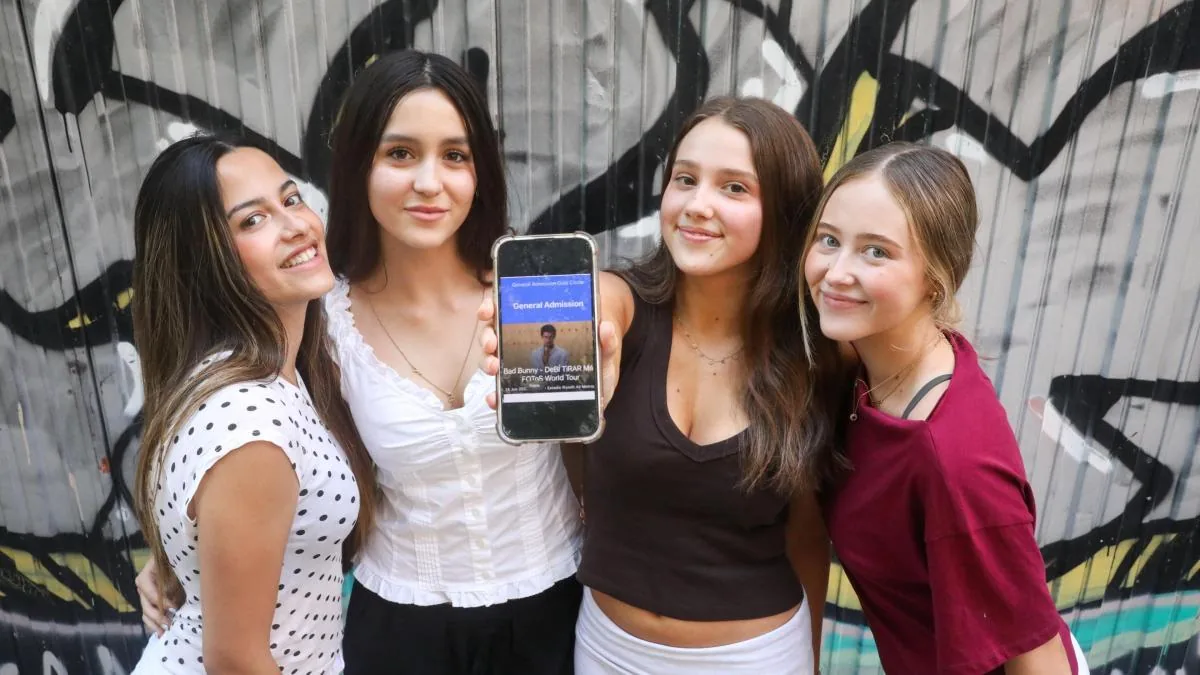
What do today’s global artists like Kendrick Lamar, Rosalía, C. Tangana, and Bad Bunny have in common? They connect with their identity and claim a cultural heritage, whether it’s the Grecas, George Clinton, Camarón, or the Puerto Rican Héctor Lavoe. To the point that this identity ends up being owned by anyone from any generation, social stratum, and geographic location. This explains why among the fans of Bad Bunny who will gather at the Estadi Olímpic in Barcelona this Friday and Saturday, in his first appearance in Spain on the Debí tirar más fotos tour, you can find both fifteen-year-old Catalan girls from affluent backgrounds and young Latin American immigrants or professionals from Barcelona’s avant-garde cultural sector.
Read more The judge of the National Court blocks half a million euros from Rodríguez Zapatero’s accounts
“These are artists with credibility, power, and genuineness that you didn’t find in the traditional urban music artist model, which sometimes tried to pass as American. There was no distinctive trait with which people could identify,” says Marcelus Airlinz, partner at La Séptima, the studio in L’Hospitalet from where the pulse of this working and fighting city is taken, with a young profile of children of immigrants who claim their artists. Like Morad.
It is the post-trap and post-reggaeton phenomenon: the way he claims his roots and connects with the audience is something new
In Bad Bunny’s success, there is the factor of youth’s need to break with what the previous generation established. “He represents the post-trap and post-reggaeton phenomenon: the way he claims his roots, how he connects with the audience is something new. He is not Arcángel, he is something else. Nor is he a Calle 13 who bases his career on political stances, but naturally and fluidly leads what is right or wrong,” adds Airlinz.
And social media has been a source of contagion and a sense of belonging that has consolidated this artist. Andrea Faroppa (1990), head of Sónar+D and daughter of a Uruguayan diplomat who loves music, is one of the fans who stays up all night with friends to secure a ticket for the concert. Her connection with the Puerto Rican, initially more linked to trap, was not immediate, she says.
It was in 2018 that he began to present himself as a Latino man open to diversity and inclusivity. In 2019, he caused a stir by painting his nails, which was a reason for celebration for women to see an artist sending an important message breaking stereotypes and, especially, striking a blow to macho attitudes.
That Sónar confirmed him for its 2019 edition was a moment of ecstasy for her, although Enric Palau, co-founder of the festival, recalls the passionate criticism they suffered from the electronic fanbase: “They took it as an insult to intelligence, for purists he was the enemy at home. But his performance was a phenomenon. For the first time, there was a ballad concert on the main stage, something impressive, an excellent show, and people with Puerto Rican flags, an audience that had never come to Sónar before… and some critics attended and were silent forever.”
Faroppa justifies Sónar’s bet: “It wasn’t just for his music but for his stance. Painting his nails was the preamble to iconic moments like his song Yo perreo sola or Andrea, dedicated to a transgender person murdered in Puerto Rico. Then there was his involvement with the sociopolitical situation during the Puerto Rico blackout. And he accompanied us during the pandemic with Safaera. Bad Bunny continues to have the ability to explore and break with a very ready made copy-and-paste industry. He gives visibility to rhythms and artists from Latin America, and that is something impacting the whole sector and musical creation. And the industry has no choice but to respond. The rhythm is set by the audience, who is prepared and wants to connect with roots, history, traditions…”
Another hardcore fan is Arnau Salvado, editor of the trend magazine METAL, born in Mataró and raised in the reggaeton culture and neighborhood. He sees in Bad Bunny the new wave. “It’s true that at first I rejected him; I wanted to be a cooler and more interesting person and got into other scenes, like the underground electronic scene, because that was a scene without the barriers a gay guy finds in a neighborhood where the music is mega macho and it’s about guys hooking up with girls. Until I saw why I would reject something that interested me and made me dance and feel, which is ultimately the goal of art. I don’t believe in the distinction between high and low culture.”
The pandemic was also decisive, when Bad Bunny released the album Yo hago lo me da la gana, and I put in night and day and put him on a global and mainstream map. My parents’ generation still thinks it’s superficial and macho, and I can understand that. But he releases Yo perreo sola and dresses as a woman when the barriers between cultural interests of gays and straights dissolve. This brought him much closer to youth. He knows how to capture the vibes of what’s happening: if before it was macho guys, fancy cars, AK-47s, and prostitutes in transparencies in a super ugly Miami house, he decided to make a clip that looks like it came from K-pop, with great choreography, millions of extras super well dressed, and him fully drag. And it was much more interesting than everything we had seen until then. And reggaeton is not more macho than other genres. The music you listen to is a small part of your cultural and ideological formation and thinking. You can separate and say that this Saturday you want to get drunk and dance until the floor and sexualize yourself and be happy, and on March 8th you’ll go to the march and ask for rights.”
At the same time, Nora Benhamou (16), a student at the Swiss School of Barcelona and volleyball player with Barça, says she discovered Bad Bunny at 8 years old through her parents, who work at a music festival. She didn’t get a ticket the day they went on sale. What a cry. She would have been hugely upset if her mother hadn’t gotten a ticket for the Olímpic. “I would have suffered FOMO seeing everyone go and I wouldn’t.”
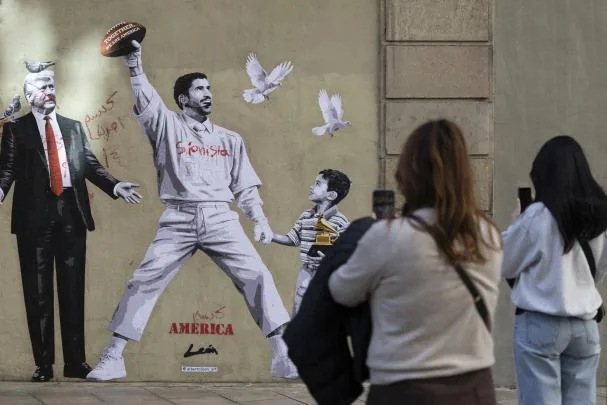
“At 8 years old I didn’t even understand the lyrics with that accent he had – she explains –. But I saw that everyone liked him. He must have had something good. And now I like the change he has made from that more macho reggaeton to talking about political and everyday things, very much from his land. I like that it seems he knows where he comes from. He’s not ashamed of anything. And the issue of the United States and Trump he wanted to express and made a beautiful tribute at the Superbowl. I like not only the music but him as a public figure. My friends and I are all big fans and we talk a lot about his music.”
Finally, there is a young Honduran, Edgar Manito (31), who has been living in Manlleu for four years. He left his last year of engineering in his country and now works in a security company. And no, he hasn’t gotten a ticket for the concert and has kept looking. “There was a time when all were limited and then appeared at a very high price. My limit would have been 150 or 200 euros. If you are a follower of someone, you buy it and then recover. I have been a more faithful follower of Bad Bunny since his 2025 album. It doesn’t seem strange to me that there are so many fans of this artist in Catalonia. Many people, young and old, like the rhythms and mixes. And he is an artist who knows how to reach people. Impressive, yes he is. And I like that he is like that, he represents me as a Latino, he makes you feel connected with my family… I don’t know. I like that he has been himself, which is what we all should be. We live in countries of free expression. And he is a guy who started from nothing and has claimed the Latin countries that are often marginalized.”
But… what about his style attracts him the most?
“More than anything, the party plan. If you put Catalan rumba on me, I get lost too.”