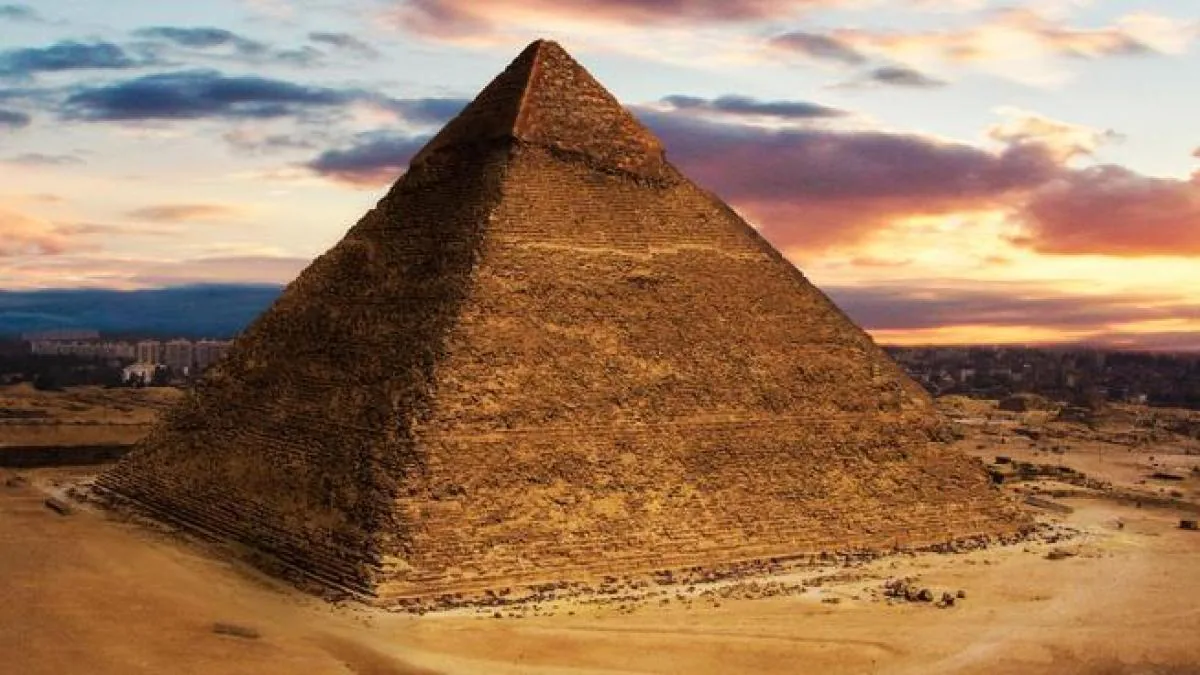
The Pyramid of Khufu (or Cheops) is the oldest pyramid built in Giza (Cairo). More than two million carefully carved and placed stone blocks were raised about 4,600 years ago from a base of 230 meters per side to reach a height of 146 meters on the northwest part of the plateau.
Although over time it has lost the original apex and part of the casing, this wonder of the Old Kingdom of Egypt continues to attract the attention of thousands of people each year, including archaeologists who try to unravel all its secrets.
A stable monumental scale
Something that has intrigued researchers for decades is how the structure of the Great Pyramid was designed to achieve that monumental scale and its stability. An article published in the journal Scientific Reports also points out that these same features have allowed the monument to withstand earthquakes without suffering serious damage for centuries.
The Pyramid of Khufu has eight key elements: the main entrance with descending passage, a second access created by the workers of Caliph al-Ma’mun, the Subterranean Chamber, the Grand Gallery, the Queen’s Chamber, the King’s Chamber, the relieving chambers, and the shafts.
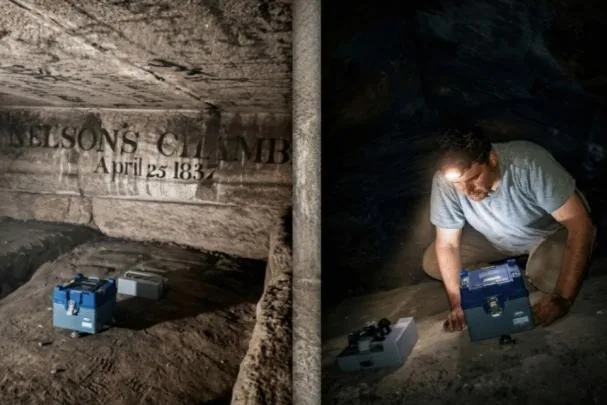
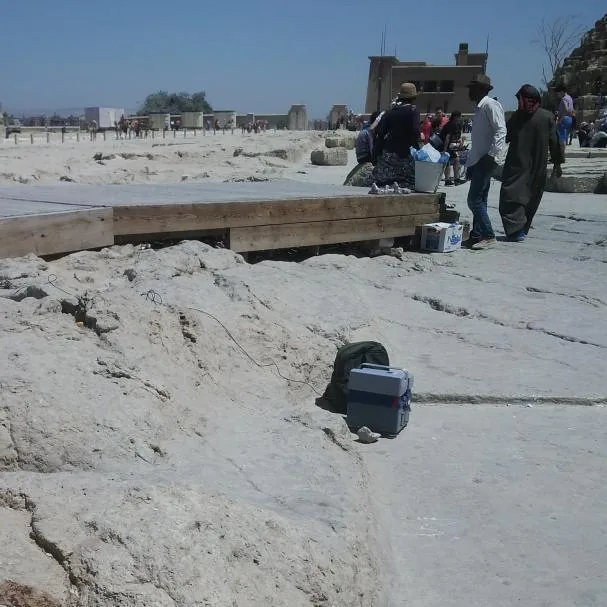
Asem Salama, from the National Institute of Astronomy and Geophysics in Cairo, and his team recorded ambient vibrations generated by human activity, ocean waves, or climate changes at 37 points, including the internal chambers, the building blocks, and the outside ground.
What they discovered is that most of these tremors (76%) recorded inside the structure had a frequency between 2.0 and 2.6 hertz, indicating that mechanical stress is evenly distributed throughout the structure. In contrast, vibrations in the surrounding ground had a frequency of about 0.6 hertz.
Also read
“The difference in these frequencies,” the Egyptian researchers point out, “helps protect the Great Pyramid during periods of seismic activity, as they would limit interactions between the structure and the ground that could amplify tremors.”
The Great Pyramid was completed between 4600 and 4450 years ago and, since then, has experienced earthquakes without suffering significant external or internal damage. One occurred on August 7, 1847, with an estimated magnitude of 6.8, while another, on October 12, 1992, was magnitude 5.8.
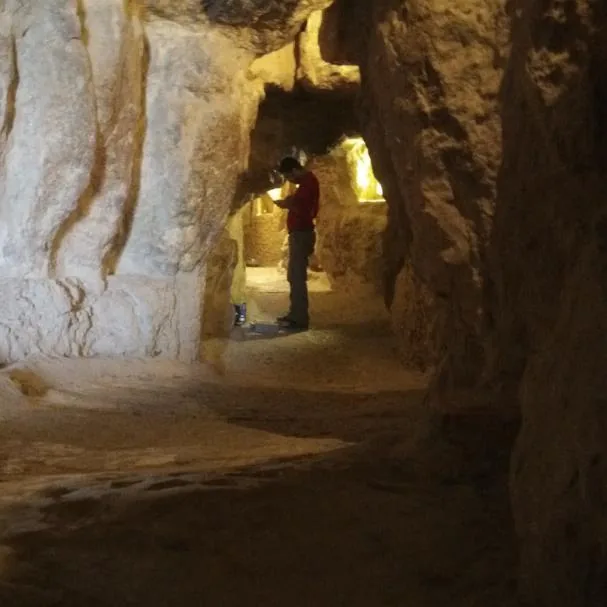
The experts point out that the structure of the Pyramid of Khufu consists of a core and a casing of horizontal stones, with interspersed support blocks. “This intricate arrangement reveals the advanced engineering and architectural planning developed in the Old Kingdom,” say the study’s authors.
Salama and his team also found that the careful arrangement of the monument prevents vibrations from being amplified in the Subterranean Chamber, excavated directly into the bedrock. The amplification factor, however, increases with height, reaching its maximum in the King’s Chamber.
At that point, which is also the central core of the Great Pyramid, vibrations were amplified by a factor of 4.0 compared to the bedrock level. In the relieving chambers, located just above, the amplification factor decreased to 3.0.
The researchers suggest that this factor would reduce the risk of seismic activity damaging the King’s Chamber, consistent with modern theories indicating that the five overlapping relieving chambers provided structural protection to that room (which contains a mysterious empty granite sarcophagus without a lid).
The pyramid was built on hard rock (limestone) and has a low center of gravity, features that could also reduce the risk from seismic activity. “The low vulnerability index suggests that a future earthquake will only cause limited damage to the main body of the pyramid,” say the experts.
“These findings provide compelling quantitative evidence that the architects of ancient Egypt possessed profound geotechnical knowledge, optimizing the design of structures and site characterization to ensure millennial-scale stability against seismic risks,” they conclude.