
“Flying rats,” “city plague,” “winged mice,” “urban pest,” “garbage cats”… pigeons do not have a particularly good reputation, to say the least. It is estimated that there are more than 400 million worldwide, with most concentrated in urban areas, an ideal habitat where they can thrive.
Read more ‘The Mandalorian & Grogu’, the movie with which Star Wars seeks to reclaim the big screen
Large cities like New York, for example, have over a million specimens, while Venice has one of the highest densities, with nearly three of these birds per inhabitant. Of the more than 350 different species that exist, the most common is the rock pigeon (Columba livia).
They were not always an ‘urban pest’
Municipal governments around the world have tried to control these animals. Once mass extermination policies were left behind, cities now focus on reproductive control, deterrent falconry, fines for feeding them, or modifying the urban environment to prevent nesting. But it was not always like this.
Analysis of pigeon bones from Hala Sultan Tekke (Cyprus), from the Late Bronze Age, indicates that they were already being tamed around 1400 BC, pushing back direct evidence of their domestication by almost 1,000 years and challenging the perception of these birds as opportunistic urban pests.

According to archaeologists from the University of Groningen in an article published in the journal Antiquity, rock pigeons have a long history of coexistence with humans, who raised them as pets, consumed their meat, used them as fertilizer, and associated them with various religious beliefs.
“Based mainly on written records from Egypt, we knew that pigeons were domesticated somewhere in the Middle East or the eastern Mediterranean, but we had no idea when or how it happened,” says Anderson Carter, lead author of the research.
Also read
To resolve these doubts, experts studied bird bones from the port city of Hala Sultan Tekke, dating from between 1650 and 1150 BC, using zooarchaeology to identify Columba livia specimens and isotope analysis to examine their diet.
“We already knew that a considerable number of pigeons had been found at Hala Sultan Tekke,” explains Dr. Canan Çakırlar. “The site is located in the heart of the original distribution area of these birds in the eastern Mediterranean,” she adds.
Read more Botox and ‘skincare’, kings of a new literary universe: “It’s not a niche, it affects society”
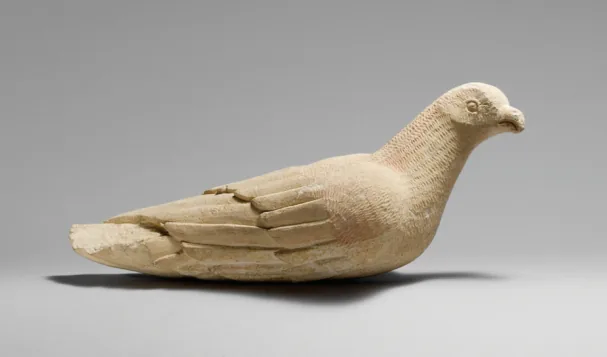
The isotopes revealed that these pigeons living near Larnaca had diets almost identical to those of humans, suggesting they were fed by people or lived close to them. “In any case, this indicates that it is very likely they were domesticated or in the process of being domesticated,” says Çakırlar.
Until now, the oldest direct evidence of domesticated pigeons came from a site in Hellenistic Greece, dated between 323 and 265 BC. Therefore, the current findings push back the origins of pigeon domestication by almost a thousand years.
Consumed during ritual feasts
Furthermore, many of the pigeon bones found in Cyprus were burned and buried along with other charred animal remains in ritual spaces, suggesting they may have been consumed in ritual feasts, an important part of Cypriot culture at the time.
“These findings demonstrate that whether they were raised simply for consumption or had a more symbolic role, pigeons have been an important part of our lives for thousands of years,” the experts add in a statement.
Changing our perception of pigeons
Researchers from the University of Groningen hope their findings will change our perception of pigeons. “They are not just urban opportunists. They played a key role in our development as a species and, in Bronze Age Cyprus, had a significant and constant presence in daily life,” they say.
“Those who previously ignored pigeons on the street now realize that this bird has a fascinating history. That is the ultimate goal: to change how we interact with them and other animal species, and to begin to understand that their history is also ours,” they conclude.
Read more Badell, hematologist: “The first bone marrow transplant was not a failure: leukemia was eradicated”