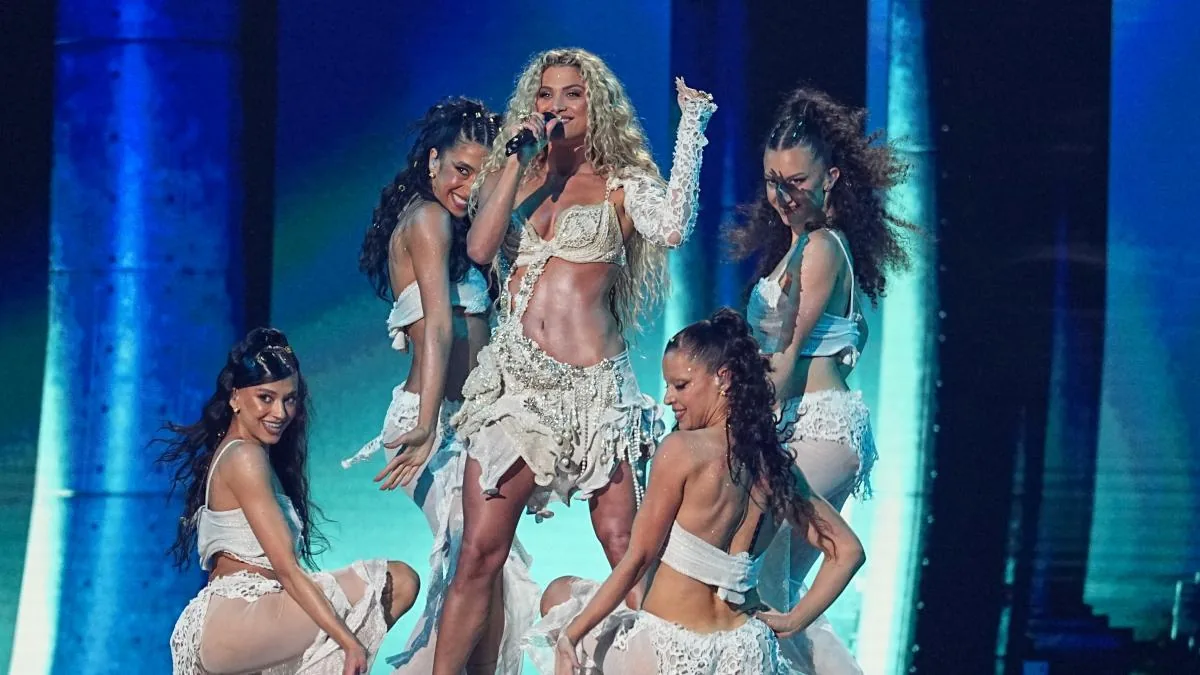
Pending the publication of official international television audience data to verify the extent to which Eurovision has suffered this reputation and participation crisis, the 2026 edition already shows a first sign of wear in its digital broadcasts. The final held this Saturday in Vienna lost viewership on YouTube compared to the previous year, while RTVE also failed to fill the gap left by the festival with La casa de la música, its major alternative bet for Saturday night.
According to TVTOP Spain data, the official broadcast of the music contest on YouTube averaged 955,712 viewers during the four-hour gala. The figure represents a loss of 165,191 followers compared to the 2025 edition, when the festival gathered 1,120,903 users on the platform. In percentage terms, the drop reaches 14.7%.
The decline coincides with an edition remembered for political conflict and absences. Spain, Ireland, the Netherlands, Iceland, and Slovenia decided not to participate in the event as a protest against the support that, in their view, the European Broadcasting Union (EBU) has maintained towards Israel despite the military offensive on Gaza and Lebanon.
Paradoxically, this context suggested an increase in YouTube consumption. Only Iceland and the Netherlands broadcast the final on television among the withdrawn countries, while in Spain, Ireland, and Slovenia viewers who wanted to follow the festival live could only do so online. However, not even that circumstance prevented the audience decline on the digital platform. Nor does the return of countries like Bulgaria, Moldova, and Romania seem to have compensated for the image wear currently affecting the European contest.
Fiasco at RTVE
In contrast, RTVE tried to turn Spain’s absence from the festival into an opportunity for its own programming. The public corporation bet on La casa de la música, a major musical special broadcast on La 1 and hosted by Jesús Vázquez, featuring performances by artists such as Raphael, Mónica Naranjo, Manuel Carrasco, and Ana Belén.
Read more Carlos Sainz, first driver to complete a lap of the Madring, venue of the Spanish GP
However, the strategy did not achieve the expected impact. The show recorded a modest 9.2% audience share and gathered an average of 861,000 viewers, according to Barlovento Comunicación. Although 3,880,000 people tuned in at some point during the broadcast, the program was far from competing for the night’s leadership.
The public broadcaster’s offer ended as the third option in prime time behind La Voz Kids on Antena 3, which led the night with 1,130,000 viewers and a 12.6% share, and also behind the movie Jungle Cruise on Cuatro, which obtained 931,000 viewers and a 10% share. It only managed to surpass Hay una cosa que te quiero decir, Jorge Javier Vázquez’s program on Telecinco, which scored 8.8% and 741,000 viewers.
The figures also highlight the huge gap compared to Eurovision’s usual performance in Spain. Since 2022, all the contest finals had exceeded 4.8 million average viewers on La 1, far from the 861,000 recorded this Saturday by RTVE’s alternative offering.
Read more Eurovision from Tel Aviv: “We must bring Zionists and patriots to the stage”