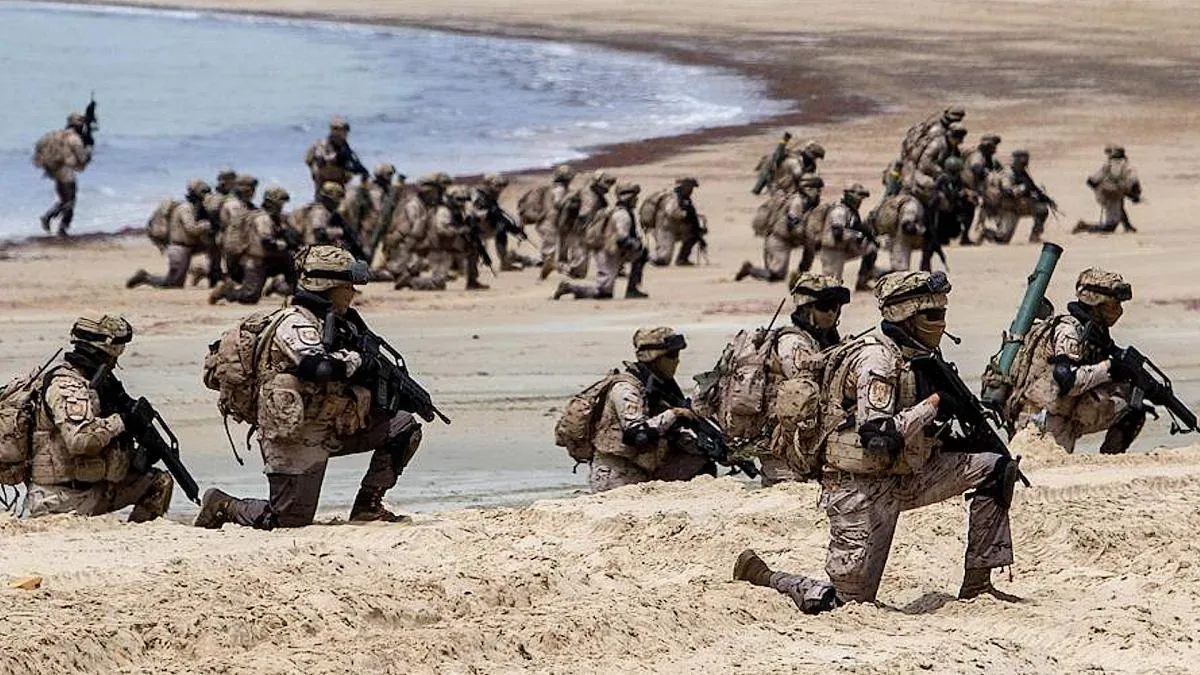
The EU has changed course. In just a decade, the continent has gone from reducing its defense investment to leading one of the largest increases in military spending since the Cold War. What was a political debate for years has now become a strategic priority marked by the war in Ukraine, global instability, and the need to strengthen its security.
Read more Trump and Xi Jinping will discuss the Iran war at Thursday’s summit
But amid this process, a key question arises: what military capacity does the European Union really have, and how does it compare to other major powers like the United States or Russia?
In this video, we analyze the European military potential and the differences compared to the two largest military powers in the world.
Money sets the balance
To understand military power, the starting point is spending. According to the European Council, in 2025, the European Union reached an approximate investment of 381 billion euros in defense, representing a 62.87% growth compared to 2020.
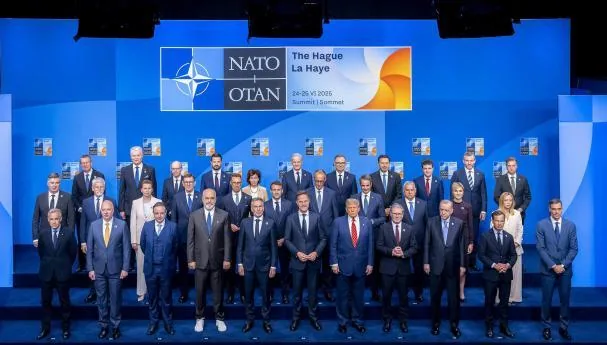
Still, the gap with the United States remains vast. Washington exceeds one trillion dollars (851,500,000,000 euros) in annual spending, more than all of Europe combined. Additionally, within NATO, it contributes nearly two-thirds of the total, reflecting how much the European defense system still depends on U.S. support.
France: the most complete power
Within the European map, France stands out as the country with the most balanced military capacity. Its strength lies in combining army, air force, navy, and nuclear weaponry.
It is also the only European Union country with an operational nuclear aircraft carrier, the Charles de Gaulle. This is complemented by the recent reinforcement of its nuclear deterrence.
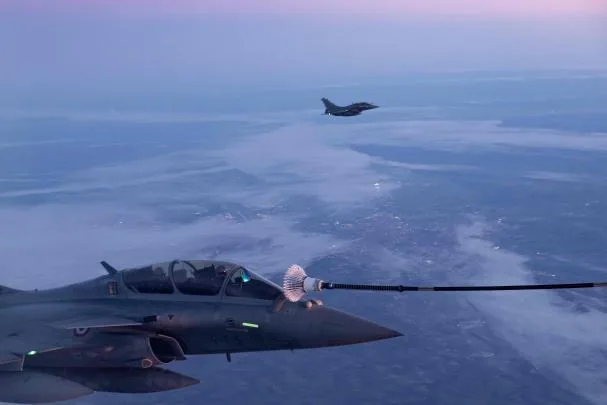
In the air, its Rafale fighter reaches speeds that would allow it to cover the distance between Madrid and Paris in less than an hour.
Germany: the strategic shift
For decades, Germany maintained a policy of military restraint. However, the Russian invasion of Ukraine in 2022 marked a turning point.
The country launched a new strategy, known as “Zeitenwende” —turning point—, which was consolidated in 2025 with sustained increases in defense spending.
Its tanks, considered among the most advanced in the world, reflect this leap in defense, as does its industrial capacity to scale production if needed.
Read more Prozac for Cibeles: another blank season for Real Madrid and directionless
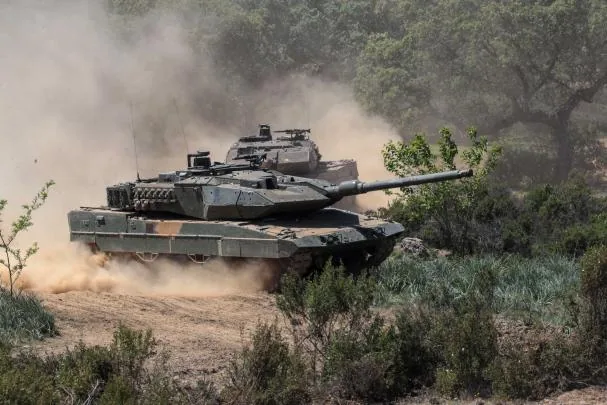
Italy, Spain, and Sweden: one step below
Italy, Spain, and Sweden complete the map of European powers.
Italy combines land, air, and naval capabilities, with special relevance in the Mediterranean. Spain, for its part, stands out in the naval field, with modern frigates and submarines like the S-80, capable of remaining underwater for weeks undetected. Sweden represents the most technological model: a smaller but highly efficient army, strengthened after its recent integration into NATO.
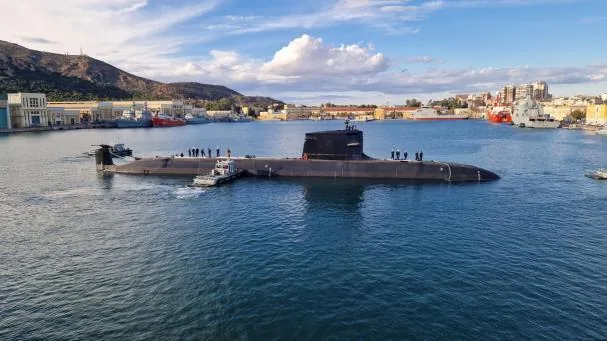
Three models of military power
The comparison between the European Union, Russia, and the United States shows three ways of understanding military power.
Russia bets on volume. It has around 1.1 million active soldiers, thousands of tanks, and a significant air and naval fleet. Its strategy is based on resisting, wearing down, and relying on a structure inherited from the Soviet era.
The European Union, on the other hand, stands out for technology. Altogether, it sums up to 1.5 million soldiers, thousands of aircraft, and a large naval fleet. However, its main weakness is fragmentation: it does not act as a single army.
The United States stands above both. It has a huge air force, more than 11 aircraft carriers, and a global network of military bases. Its advantage is not only quantitative but structural: it combines investment, technology, and coordination.
Europe grows, but remains fragmented
Europe is no longer a secondary military power. It has strengthened its investment, modernized its armies, and improved its industrial capacity. However, its great weakness remains the lack of unity.
Although collectively it can compete with other powers, it does not act as a single actor but as the sum of national interests.
In contrast, the United States maintains its advantage thanks to cohesion, reaction capacity, and a defined global strategy.
The challenge for Europe is clear: it is not just about investing more, but about coordinating better.