The Godmar rectory, an architectural complex annexed to the old church of Sant Sadurní, originally from the 13th century, restored in the 19th century and converted into a space for meetings and conventions, was the setting on the night of last Wednesday for the final farewell to the outgoing CEO of Sabadell, César González-Bueno. It was in the town of Callús, near Manresa in Barcelona, and its owner is precisely Josep Oliu, the bank’s president. By the way, two days before the second anniversary of the failed hostile takeover bid by BBVA. The Catalan bank’s top management attended the farewell: executive team, board of directors, and even some former executives with long careers and strong ties to the financial institution.
Read more The rearmament of the European Union clashes with its greatest weakness: fragmentation
There were, besides the two mentioned, the new CEO, Marc Armengol, the bank’s vice president, Pere Fontana, and practically all the board members: Pere Vinyoles (Colonial); Lluís Deulofeu (Cellnex); Aurora Catà; Mireia Giné Torrens; George Donald Johnston III, María José García Beato; Ana Colonques (Porcelanosa) and her father, former bank director; David Vegara; and the board secretary, Miquel Roca. Among the former executives, Jaume Guardiola, the first executive until González-Bueno’s arrival after the first failed merger attempt with BBVA, and Álvaro Echevarría, now director of the president’s office and corporate affairs at Telefónica. And Mango’s CFO, Margarita Salvans.
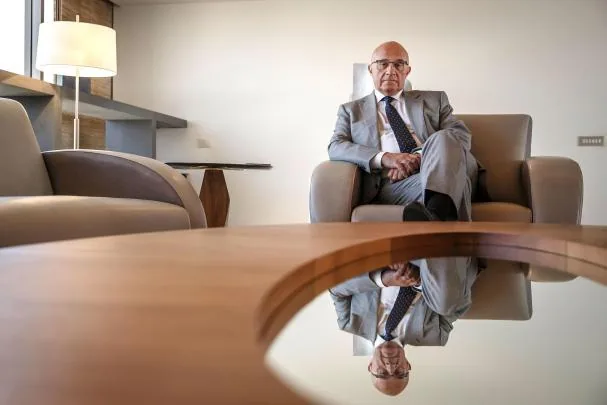
In a festive atmosphere and while enjoying dishes prepared by the kitchen of the Barcelona-based Via Veneto, the president and the former CEO gave speeches. Oliu, with some papers in hand that he occasionally consulted, joked recalling the character differences with his now former top executive at the bank he has presided over for more than a quarter of a century. Differences summed up in a phrase that brought smiles to those present: “César, you are very Madrilenian… but you knew how to adapt,” Oliu declared. This reference seemed to recall episodes from the formation of the new tandem at the end of 2020, a process of adaptation to a presidency without executive powers, which were concentrated in the new CEO.
In his turn, González-Bueno replied in the same jocular tone: “I will keep quiet, president, your peculiarities, which we all know, I will be discreet.” Some of those present wished to hear them. The executive recalled when and how his relationship with the bank began. It all started in a meeting with board member Catà, in an interview where she proposed he join the TSB board. The British bank that, after Brexit, caused many problems for the Catalan bank and whose recovery, during González-Bueno’s management, allowed its sale to Santander, formally closed these days, to be a key, if not decisive, setback to BBVA’s failed takeover bid.
Precisely, at the end of this month, Sabadell shareholders will receive the extraordinary dividend from the sale of TSB. González-Bueno explained that he later understood that his entry into the British board was the start of a trial process that led to the proposal to become Sabadell’s CEO. Unlike Oliu, he did not use paper for his speech. He used teleprompter glasses lent to him by Armengol, a great fan of technological gadgets.
+++
Pau Relat and the corridors of power
Alliances and approaches between businessmen and their organizations are a constant dance. Keys to intuit decisions and replacements. Or future political agreements. It is the balance of power. This week it became known that Pau Relat, president of the Fira and MAT Holding, will be a board member of Roca, the ceramics and sanitary material company. This appointment consolidates Relat as one of the influential nodes among Catalan businessmen. Despite his public discretion; Fira demands it.
Read more Trump and Xi Jinping will discuss the Iran war at Thursday’s summit
For many years the top executive of MAT Holding, a company of phytosanitary products owned by the Matosas family; now president. He became president of the institutional Fira de Barcelona at the end of 2018. With the support of the then president of the Generalitat, Joaquím Torra. Well, actually of the then Minister of the Presidency, Elsa Artadi, a person of utmost trust of Carles Puigdemont, already exiled in Brussels. Artadi agreed on his name with the president of the Chamber, Miquel Valls, who died in 2019 and who was responsible for making the proposal. The consensus also included the mayor of Barcelona at that time, Ada Colau. Later, the relationship between Relat and Puigdemont would deteriorate deeply and remains so.
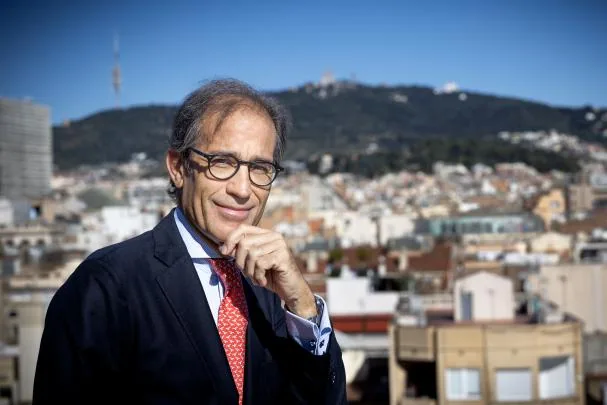
The executive was renewed in December 2024, with the indispensable approval of the three public institutions, now with Salvador Illa as president of the Generalitat and with the also socialist Jaume Collboni in the city council. Josep Santacreu was at the head of the Chamber. An evidence that his relationship with the new Barcelona power was well-oiled.
Precisely, one of Relat’s influence links is his close relationship with the president of the Chamber, whose candidacy he decisively helped incubate and promoted in 2023 against the separatists of Eines de Pais, linked to Junts de Puigdemont, his former sponsor.
The list of Santacreu included nationalist businessmen, many linked to FemCat, the pro-sovereignty association of which Relat was president until his arrival at the Fira.
He also aligns with the ideas of sectors in favor of Junts recovering the practices and speeches of the old Convergència of Jordi Pujol, something FemCat has advocated more or less explicitly. Especially with former president Artur Mas, a defender of this line, although he is not a party member and meets with him regularly. He had less success in the last Barça presidential elections, in which he supported Víctor Font, against the winner Joan Laporta.
Read more Prozac for Cibeles: another blank season for Real Madrid and directionless