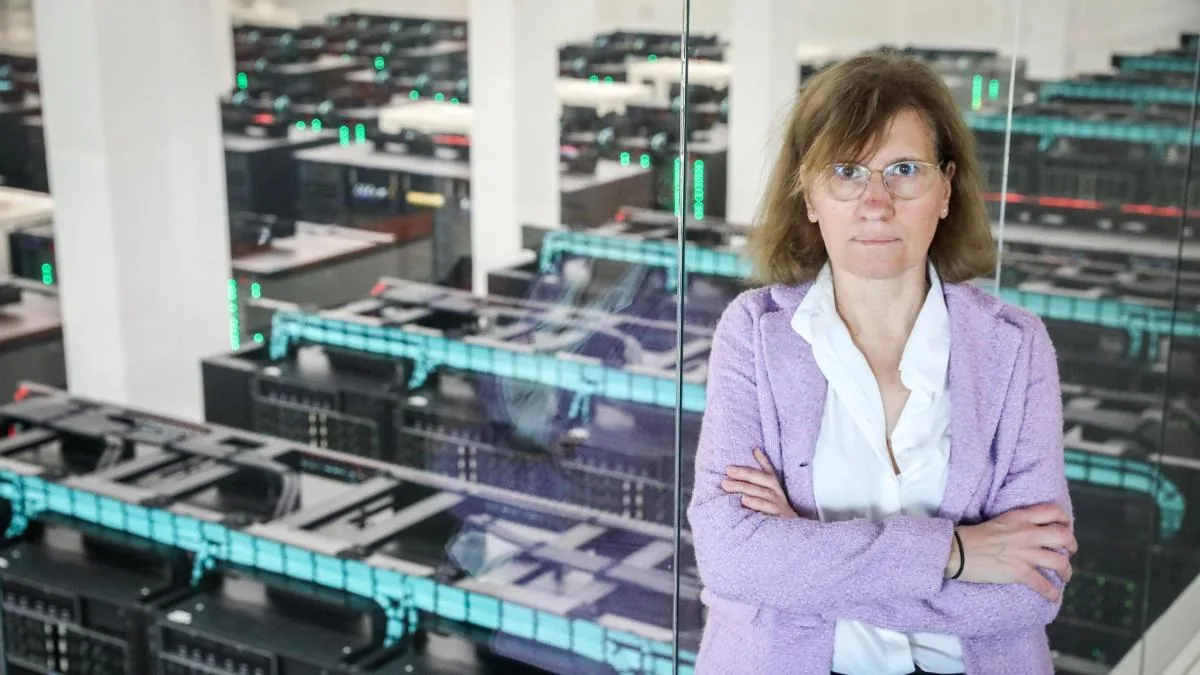
For chemist Núria López, being in the top 1% of the most cited scientists in the world according to the latest Clarivate ranking is not a destination but the result of a sustained trajectory at the elite of research. Her career is marked by intuitions and the idea of turning problems into resources. That logic now guides her work at the Institut Català d’Investigació Química (ICIQ) in Tarragona, where she seeks to convert CO₂ into fuel and close the carbon cycle.
Read more Picasso Museum, let the music not stop
Useful Chemistry
“We transform CO2 into fuel for ships or industrial plants”
But before getting there, there was an environment with few scientific role models and an education built amid shortages. “There were no scientific precedents at home,” she recalls. “But the idea of education as a value was very present.” What attracted her was not so much science as a discipline, but mathematics and physics as languages that reward understanding over memorization. That drive was consolidated at the Infanta Isabel de Aragón high school: “There I learned about freedom and also about women in science. I remember a history teacher, Navales, who said: ‘Since you are always talked about, in this class I am going to talk about you’.”
Scientific Self-esteem
“Spain can lead in sustainable energy, but it needs confidence in its own talent”
Her time at the high school coincided with a complicated moment in the education system.
It was a time of strikes, the year of Cojo Manteca. We lost classes and had to learn to study on our own. Out of 400 students, only five passed the university entrance exam. That gave me autonomy that later served me well during the COVID period.
Why did you choose chemistry?
I wrote chemistry, physics, and mathematics, in that order, in my study plan and my parents asked me: “But didn’t you want to do physics?” I answered yes, but maybe with chemistry I would have more chances to pass and a better job future. I also thought I wouldn’t be able to pass mathematics, one of the things girls sometimes believe about themselves.
How was the leap to university?
I specialized in physical chemistry and, thanks to my grades, the department saw me as a ‘scholarship on legs.’ I did the four years of my thesis in Spain and then went abroad. I wanted a place with the sea. I spent three months in Denmark during my doctorate and decided that would be my place. There I discovered what it means to do real science. I had Jens K. Nørskov as a supervisor, who gave me tools to grow, support, and opened doors for me. He is an exceptional mentor.
After Denmark, how did you face the first years of scientific independence in Spain?
Read more Trump, Macron and the chlorinated chickens
In 2001 I obtained a Ramón y Cajal contract. I was younger than average and there were hesitations about fitting me into the system. Those were years of much resistance until I consolidated my group in 2005. Later I collaborated with Professor Javier Pérez-Ramírez and since 2008 also with industry. We started working on energy and sustainability and were pioneers in using the Barcelona Supercomputing Center through the Spanish Supercomputing Network and have always contributed to committees at local and European levels. We are pioneers from a small, underfunded place, but with exceptional access to supercomputing.
What do your research lines on energy transition focus on?
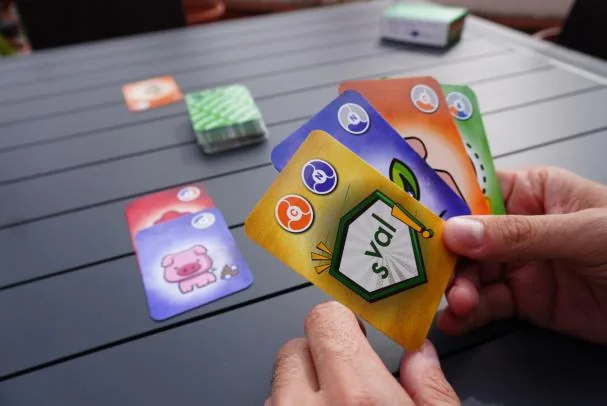
We work on understanding how to convert CO₂, which we normally see as waste, into fuels like methanol, useful for maritime transport or industrial plants. We design very selective catalysts to avoid dangerous or costly-to-manage byproducts. The goal is to close the carbon cycle and turn CO₂ into a resource. We study fundamentally where the reactions occur, which bonds break, and what is the most efficient pathway. Then we collaborate with experimental teams to transfer it to real materials. In the SUPERVAL project, together with Professor Galán-Mascarós, we capture industrial CO₂ and transform it into useful molecules.
How have you experienced the gender dimension in such a male-dominated field?
I remember meetings in Germany where there were 31 people and I was the only woman. In my first years as a group leader, they asked me to appear in photos “so it would be seen that there was a woman.” In the end, you decide where you want to be and how. But I have also had extraordinary mentors and colleagues, men who have always supported me. In Denmark, I never felt that exclusion. Today my group is more diverse, but the challenge lies in education.
What impact has artificial intelligence had on your discipline?
It has been a revolution. Before, we solved the Schrödinger equation directly, with a calculation time that grew exponentially. With AI, we can do those calculations up to ten thousand times faster, optimize processes, and improve catalysts. We have learned other ways of thinking and writing molecules thanks to AI, and that allows theoretical research to have a direct impact on industry and the energy transition.
What do you think Spain should prioritize in sustainable energy?
First, strengthen the electrical grid. The current grid is precarious, and the intermittency of renewables like solar and wind causes stability problems. Second, electrify as much as possible and use renewable surpluses to produce energy vectors like hydrogen or methanol, which can be stored and transported. Third, promote collaboration between science, industry, and administration. Spain can lead in sustainable energy, but it needs confidence in its own talent. Many of our projects are funded from abroad and that is very sad. We have the science we want to pay for and sometimes progress is not prioritized.
Read more The first book by Iván Redondo