In January 1937, when he accepts the commission from the Spanish Republic to create a large mural for the International Exhibition in Paris, Picasso is living what he would later recall as “the worst time of my life.” The painter is 54 years old and his previously carefree polygamy is showing its teeth: the divorce from Olga Koklova has become a nightmare; Marie-Thérèse Walter, the lover with whom he had started a relationship when she was still underage, has made him a father again (Maya), and he has fallen in love again with the artist and photographer Dora Maar.
Read more Fans, cynics, or crazy?
Picasso is bewildered and depressed, but his unease is not only due to his romantic entanglements. The Civil War is destroying his country and he, as an artist who is already part of history, feels he has said it all – on the horizon he watches with concern rivals like Dalí and Miró. He writes poems, but has no idea what to do with the Spanish Government’s commission. “If we have Picasso in body and soul, the impact will be greater than a battle won on the front against the fascists,” Negrín intuited with foresight.
Picasso is bewildered and depressed: the Civil War is destroying his country and he feels that, as an artist, he has already said it all
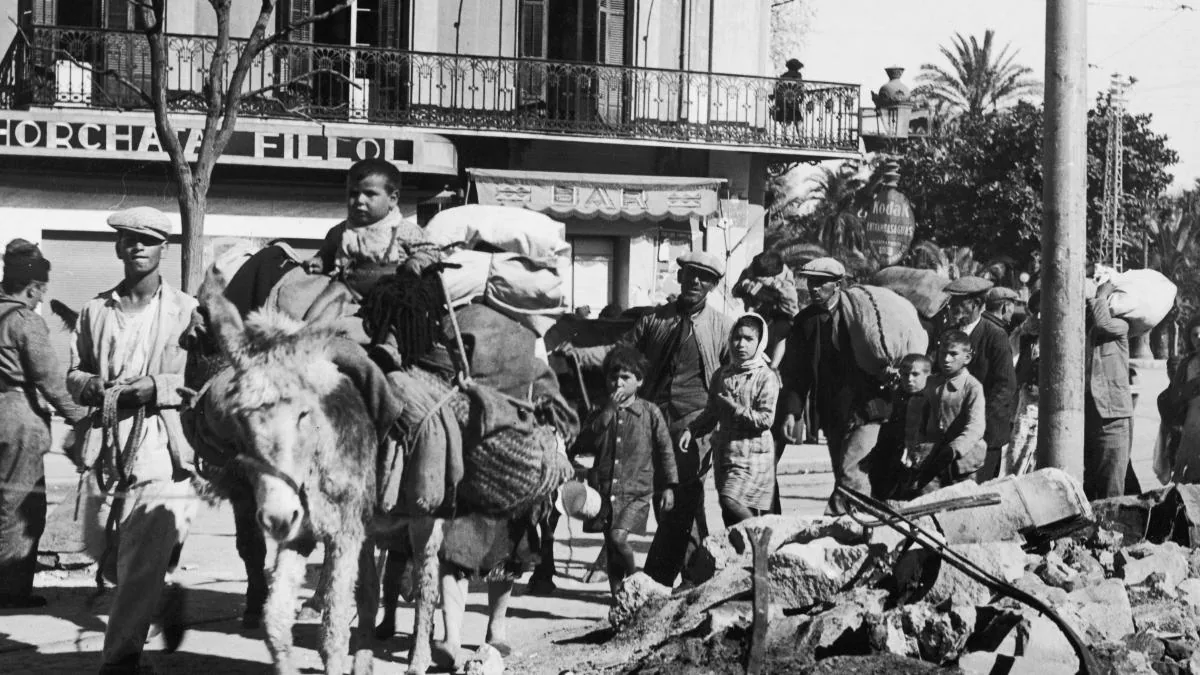
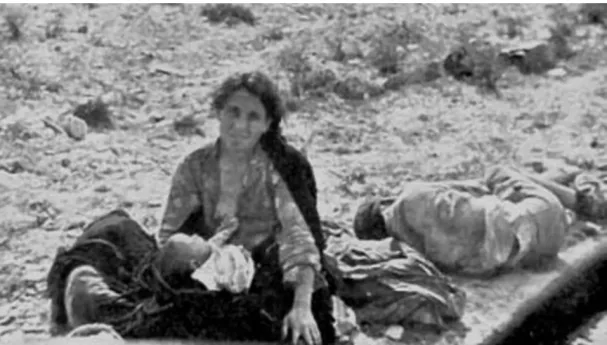
Picasso frequents cafés with the poet Paul Éluard, a communist militant, and his wife Nusch, and walks alongside Dora Maar, a left-wing woman and a key figure without whom “I would never have painted Gernika. I have no proof, but not many doubts either,” says historian Josefina Alix. “Until mid-April he was completely blocked – she notes – and it was not until April 18 and 19 that he began to make a series of drawings for the pavilion, but he was half idiot: the theme was the painter in the studio and only in one of them does an arm appear raised with a sickle and hammer. The theme of the war does not appear at all,” explains Alix, author of a monograph Guernica. History of a painting, from 1993, in which she proposed the possibility that the artist might have been influenced by images that arrived in Paris of the desbandá, as the flight of the Málaga population after the city fell into the hands of Francoist troops is known. The human tide (300,000 people, the largest human exodus in European history) was escaping possible reprisals from the victors, but encountered something worse: it was massacred from the sea by ship bombings and from the air by aviation. Between 4,500 and 6,500 people died on the road from Málaga to Almería, one of the bloodiest and least known episodes of the Civil War.
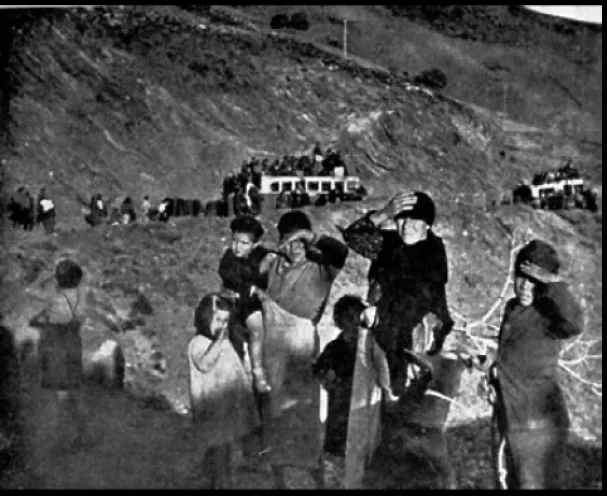
The desbandá took place on February 8 and, according to Alix, Picasso could have learned about the events through the novelist Arthur Koestler, who witnessed them, or André Malraux, whose squadron fought its last battle there. “I am sure the news impacted him, he was born in Málaga and his family still lived there. Everyone is more moved by what happens in their own town than elsewhere. The image of the mother with her dead child in her arms could have been seen in the photographs that circulated of the desbandá, it is certainly impossible that he saw it in the town of Gernika.”
“He was born in Málaga and his family still lived there. Everyone is more moved by what happens in their own town than elsewhere,” says historian Josefina Alix
The collector and researcher Alain Moreau believes he has found the definitive proof that would support this hypothesis. It is a pastel of a mother with her dead child climbing a staircase, dedicated to Paul and Nusch Eluàrd and dated March 5, that is, after the desbandá and before the bombing of Gernika on April 26. Moreau, aware that art history is full of black holes, is convinced that this small work changes the history of the most famous painting of the 20th century, but he only has a photograph. The trail of the original was lost after the collector who acquired it in a London gallery reported it. “They asked Palau i Fabre to authenticate it and he replied: ‘even the best forgers make mistakes,’ believing it was impossible that it had been made before the Basque tragedy. But for me, the very fact that it is dated earlier is what makes me think it is authentic,” argues Moreau, hoping that one day it will come to light (in the On-line Picasso Project, a living biography of the painter promoted by expert Enrique Mallén and hosted at Sam Houston State University, there is no trace of it).
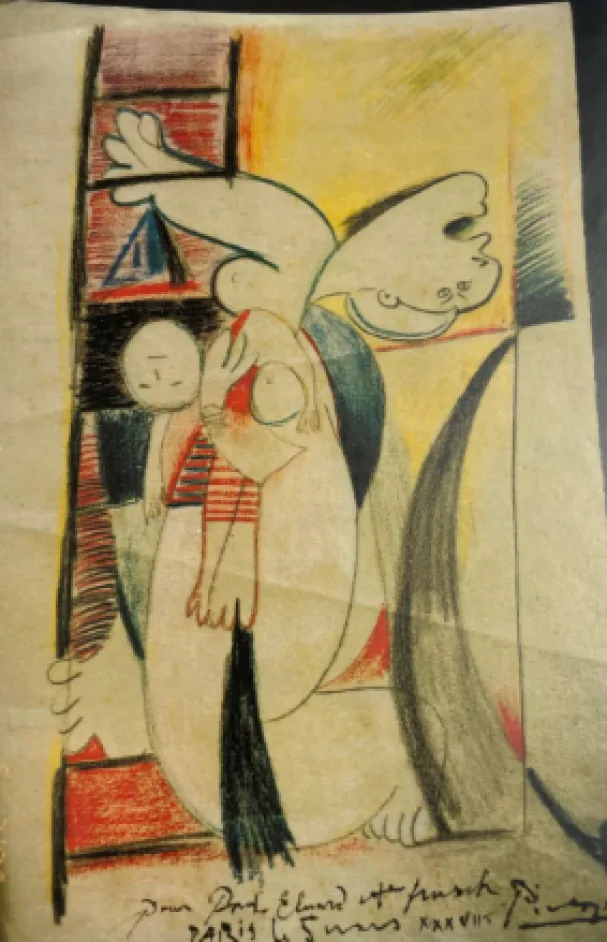
More cautious, Eugenio Carmona, professor of Art History at the University of Málaga, and author along with Pablo Rodríguez of the essay Guernica and Picasso’s Imaginary, thinks that Picasso was not unaware of the desbandá but it cannot be said that he was inspired by it. “The ideogram of the woman with the dead child may indeed be associated with La Desbandá, but it may also relate to images from the film Battleship Potemkin or the Pietà.” Carmona differs from Alix regarding the first sketches in that he does not believe the theme was the painter and the model but that “he wanted to represent the alliance between artists and the cause of the workers.”
Read more The Way of the Cross of the U.S.: the drone, the ‘mosquito’ and the industry
Picasso does not actually start working until May 1, after attending the massive May Day demonstration in Paris
Seven days after those drawings, the bombing of Gernika occurred. Horrifying images were produced, “but it does not seem to have affected his work. Everything changes – he continues – on May 1 after attending the massive May Day demonstration in Paris, which becomes a cry against indiscriminate bombings on the civilian population. He then begins to make the first sketches that would lead him to the final mural.” And he cites the statements he made to Elizabeth McCausland for the Springfield Republican: “In the mural I am currently working on and which I will title Gernika and in all my recent works I clearly express my hatred towards the military caste, which has sunk Spain into an ocean of pain and death.” That is, he expresses his intention to title it thus, not that the events were the starting point.
For Picasso it was much more profitable to title the mural Gernika rather than La desbandá. Except for the sinking of the Titanic, it had been the event with the greatest media coverage in history, and he was very sharp in marketing matters.” Indeed, “of Gernika the Gernika only has the title,” points out Rafael Inglada, biographer and head of publications at the Casa Natal Picasso, who disagrees with the hypothesis that the Málaga massacre influenced the mural, but in return offers another one he is absolutely convinced of.
“Of Gernika the Gernika only has the title,” argues Rafael Inglada, who believes the painter was inspired by Cervantes’ tragedy ‘The Siege of Numantia’
Picasso was inspired by Cervantes’ tragedy The Siege of Numantia, whose theatrical premiere in Paris he attended on April 22. Its protagonist, actor Jean-Louis Barrault, a friend of Picasso, was rehearsing the play at number 7 rue des Grands-Augustins, just at the moment the painter settled in the studio where he painted the picture.
Also read
Gernika is the 20th-century work that has generated the most interpretations, from the little more than five-minute sequence in the film A Farewell to Arms, by Frank Borzage, an anti-war drama inspired by Ernest Hemingway’s novel that premiered in Paris in 1933, as defended by cinematographer José Luis Alcaine, to the idea that it was a tribute to the bullfighter Ignacio Sánchez Mejías.